
Cross reference · 6200 series
6200 Series Deep Groove Ball Bearing Cross Reference
The 6200 series is the light line of the ISO 15 deep groove dimension plan. Each row below is one base designation: the published Open / ZZ / 2RS executions with their boundary dimensions and load rating, and the other-series bearings that share the same bore. Every value is the same model-bound catalog figure as on the linked page — this table adds none. Executions we have not published with evidence are marked for confirmation at quotation, not guessed.
Last updated: 2026-11
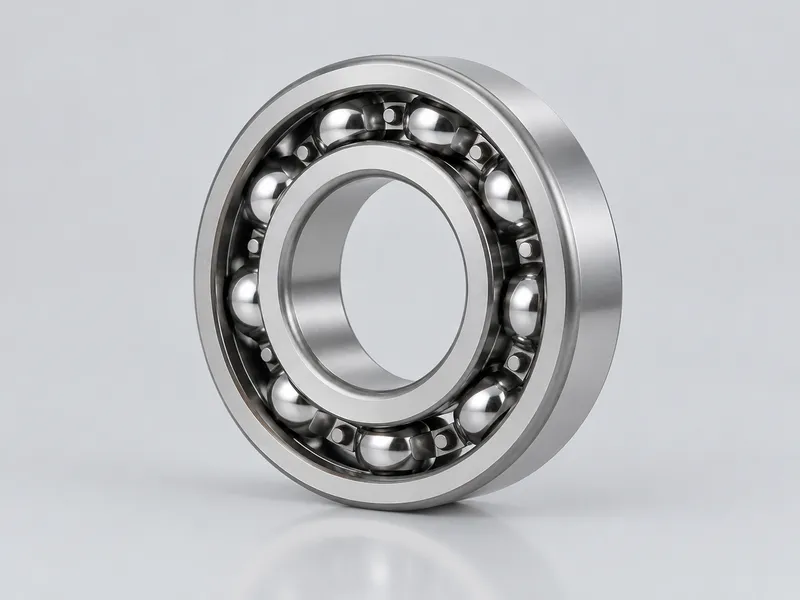
6200 series executions — open, ZZ, 2RS
6204 is the open execution, 6204 ZZ adds two metal shields, 6204 2RS adds two rubber contact seals — all three share the same boundary dimensions, so they fit the same shaft and housing seat. A grey Confirm at quotation cell means we have not published that execution with evidence yet; we supply it on request after confirming the details, we do not quote it from this table. The base designations 6223, 6225, 6227 and 6229 are absent from our collected manufacturer catalog (the pages probe as not listed), so they appear here only in the note — send us the designation and we confirm availability at quotation.
| Base designation | Bore d (mm) | OD D (mm) | Width B (mm) | Cr (open) | Open | Shielded (ZZ) | Sealed (2RS) | RFQ |
|---|---|---|---|---|---|---|---|---|
| 6200 Koyo / JTEKT | 10 | 30 | 9 | 6.4 kN | 6200 Koyo / JTEKT | Confirm at quotation | Confirm at quotation | Request quote |
| 6201 Koyo / JTEKT | 12 | 32 | 10 | 8.5 kN | 6201 Koyo / JTEKT | Confirm at quotation | Confirm at quotation | Request quote |
| 6202 Koyo / JTEKT | 15 | 35 | 11 | 9.55 kN | 6202 Koyo / JTEKT | Confirm at quotation | Confirm at quotation | Request quote |
| 6203 Koyo / JTEKT | 17 | 40 | 12 | 12 kN | 6203 Koyo / JTEKT | Confirm at quotation | Confirm at quotation | Request quote |
| 6204 Koyo / JTEKT | 20 | 47 | 14 | 16 kN | 6204 Koyo / JTEKT | 6204 ZZ Koyo / JTEKT | 6204 2RS Koyo / JTEKT | Request quote |
| 6205 Koyo / JTEKT | 25 | 52 | 15 | 17.5 kN | 6205 Koyo / JTEKT | Confirm at quotation | Confirm at quotation | Request quote |
| 6206 Koyo / JTEKT | 30 | 62 | 16 | 24.3 kN | 6206 Koyo / JTEKT | Confirm at quotation | Confirm at quotation | Request quote |
| 6207 Koyo / JTEKT | 35 | 72 | 17 | 32.1 kN | 6207 Koyo / JTEKT | Confirm at quotation | Confirm at quotation | Request quote |
| 6208 Koyo / JTEKT | 40 | 80 | 18 | 36.4 kN | 6208 Koyo / JTEKT | Confirm at quotation | Confirm at quotation | Request quote |
| 6209 Koyo / JTEKT | 45 | 85 | 19 | 40.9 kN | 6209 Koyo / JTEKT | Confirm at quotation | Confirm at quotation | Request quote |
| 6210 Koyo / JTEKT | 50 | 90 | 20 | 43.9 kN | 6210 Koyo / JTEKT | Confirm at quotation | Confirm at quotation | Request quote |
| 6211 Koyo / JTEKT | 55 | 100 | 21 | 54.2 kN | 6211 Koyo / JTEKT | Confirm at quotation | Confirm at quotation | Request quote |
| 6212 Koyo / JTEKT | 60 | 110 | 22 | 65.6 kN | 6212 Koyo / JTEKT | Confirm at quotation | Confirm at quotation | Request quote |
| 6213 Koyo / JTEKT | 65 | 120 | 23 | 71.5 kN | 6213 Koyo / JTEKT | Confirm at quotation | Confirm at quotation | Request quote |
| 6214 Koyo / JTEKT | 70 | 125 | 24 | 77.8 kN | 6214 Koyo / JTEKT | Confirm at quotation | Confirm at quotation | Request quote |
| 6215 Koyo / JTEKT | 75 | 130 | 25 | 84.3 kN | 6215 Koyo / JTEKT | Confirm at quotation | Confirm at quotation | Request quote |
| 6216 Koyo / JTEKT | 80 | 140 | 26 | 90.9 kN | 6216 Koyo / JTEKT | Confirm at quotation | Confirm at quotation | Request quote |
| 6217 Koyo / JTEKT | 85 | 150 | 28 | 105 kN | 6217 Koyo / JTEKT | Confirm at quotation | Confirm at quotation | Request quote |
| 6218 Koyo / JTEKT | 90 | 160 | 30 | 120 kN | 6218 Koyo / JTEKT | Confirm at quotation | Confirm at quotation | Request quote |
| 6219 Koyo / JTEKT | 95 | 170 | 32 | 136 kN | 6219 Koyo / JTEKT | Confirm at quotation | Confirm at quotation | Request quote |
| 6220 Koyo / JTEKT | 100 | 180 | 34 | 153 kN | 6220 Koyo / JTEKT | Confirm at quotation | Confirm at quotation | Request quote |
| 6221 Koyo / JTEKT | 105 | 190 | 36 | 166 kN | 6221 Koyo / JTEKT | Confirm at quotation | 6221 2RS Koyo / JTEKT | Request quote |
| 6222 Koyo / JTEKT | 110 | 200 | 38 | 180 kN | 6222 Koyo / JTEKT | Confirm at quotation | 6222 2RS Koyo / JTEKT | Request quote |
| 6224 Koyo / JTEKT | 120 | 215 | 40 | 194 kN | 6224 Koyo / JTEKT | Confirm at quotation | 6224 2RS Koyo / JTEKT | Request quote |
| 6226 Koyo / JTEKT | 130 | 230 | 40 | 209 kN | 6226 Koyo / JTEKT | Confirm at quotation | 6226 2RS Koyo / JTEKT | Request quote |
| 6228 Koyo / JTEKT | 140 | 250 | 42 | 208 kN | 6228 Koyo / JTEKT | Confirm at quotation | 6228 2RS Koyo / JTEKT | Request quote |
| 6230 Koyo / JTEKT | 150 | 270 | 45 | 220 kN | 6230 Koyo / JTEKT | Confirm at quotation | Confirm at quotation | Request quote |
Sealed and shielded executions carry lower catalog limiting speeds than the open execution of the same designation — the linked model pages list the speed per execution. Details in 2RS vs ZZ: sealed or shielded bearing.
Same-bore companions across the other series
Within the ISO 15 dimension plan, several series share bores but trade width and outer diameter against load capacity: the extra-light 6000 series, the light 6200 series, the medium 6300 series and the thin-wall 6800 / 6900 series. For each 62xx designation, the companions below are published pages whose bore dimension was checked equal — a thin-wall companion fits the same shaft with a smaller housing envelope and a lower load capacity, a 63xx companion the same shaft with a wider, higher-load envelope. Same bore is still only the first check: clearance class, seal design and speed capability can differ between series and brands, so confirm the substitution against your application or send us the original designation.
| 6200-series designation | Bore d (mm) | Published same-bore companions | Companion boundary (d × D × B, mm) |
|---|---|---|---|
| 6200 | 10 | 6000 (Koyo / JTEKT) , 6300 (Koyo / JTEKT) , 6800 (Koyo / JTEKT) , 6900 (Koyo / JTEKT) | 6000 (Koyo / JTEKT): 10 × 26 × 8 · 6300 (Koyo / JTEKT): 10 × 35 × 11 · 6800 (Koyo / JTEKT): 10 × 19 × 5 · 6900 (Koyo / JTEKT): 10 × 22 × 6 |
| 6201 | 12 | 6001 (Koyo / JTEKT) , 6301 (Koyo / JTEKT) , 6801 (Koyo / JTEKT) , 6901 (Koyo / JTEKT) | 6001 (Koyo / JTEKT): 12 × 28 × 8 · 6301 (Koyo / JTEKT): 12 × 37 × 12 · 6801 (Koyo / JTEKT): 12 × 21 × 5 · 6901 (Koyo / JTEKT): 12 × 24 × 6 |
| 6202 | 15 | 6002 (Koyo / JTEKT) , 6302 (Koyo / JTEKT) , 6802 (Koyo / JTEKT) , 6902 (Koyo / JTEKT) | 6002 (Koyo / JTEKT): 15 × 32 × 9 · 6302 (Koyo / JTEKT): 15 × 42 × 13 · 6802 (Koyo / JTEKT): 15 × 24 × 5 · 6902 (Koyo / JTEKT): 15 × 28 × 7 |
| 6203 | 17 | 6003 (Koyo / JTEKT) , 6303 (Koyo / JTEKT) , 6803 (Koyo / JTEKT) , 6903 (Koyo / JTEKT) | 6003 (Koyo / JTEKT): 17 × 35 × 10 · 6303 (Koyo / JTEKT): 17 × 47 × 14 · 6803 (Koyo / JTEKT): 17 × 26 × 5 · 6903 (Koyo / JTEKT): 17 × 30 × 7 |
| 6204 | 20 | 6004 (Koyo / JTEKT) , 6304 (Koyo / JTEKT) , 6804 (Koyo / JTEKT) , 6904 (Koyo / JTEKT) | 6004 (Koyo / JTEKT): 20 × 42 × 12 · 6304 (Koyo / JTEKT): 20 × 52 × 15 · 6804 (Koyo / JTEKT): 20 × 32 × 7 · 6904 (Koyo / JTEKT): 20 × 37 × 9 |
| 6205 | 25 | 6005 (Koyo / JTEKT) , 6305 (Koyo / JTEKT) , 6805 (Koyo / JTEKT) , 6905 (Koyo / JTEKT) | 6005 (Koyo / JTEKT): 25 × 47 × 12 · 6305 (Koyo / JTEKT): 25 × 62 × 17 · 6805 (Koyo / JTEKT): 25 × 37 × 7 · 6905 (Koyo / JTEKT): 25 × 42 × 9 |
| 6206 | 30 | 6006 (Koyo / JTEKT) , 6306 (Koyo / JTEKT) , 6806 (Koyo / JTEKT) , 6906 (Koyo / JTEKT) | 6006 (Koyo / JTEKT): 30 × 55 × 13 · 6306 (Koyo / JTEKT): 30 × 72 × 19 · 6806 (Koyo / JTEKT): 30 × 42 × 7 · 6906 (Koyo / JTEKT): 30 × 47 × 9 |
| 6207 | 35 | 6007 (Koyo / JTEKT) , 6307 (Koyo / JTEKT) , 6807 (Koyo / JTEKT) , 6907 (Koyo / JTEKT) | 6007 (Koyo / JTEKT): 35 × 62 × 14 · 6307 (Koyo / JTEKT): 35 × 80 × 21 · 6807 (Koyo / JTEKT): 35 × 47 × 7 · 6907 (Koyo / JTEKT): 35 × 55 × 10 |
| 6208 | 40 | 6008 (Koyo / JTEKT) , 6308 (Koyo / JTEKT) , 6808 (Koyo / JTEKT) , 6908 (Koyo / JTEKT) | 6008 (Koyo / JTEKT): 40 × 68 × 15 · 6308 (Koyo / JTEKT): 40 × 90 × 23 · 6808 (Koyo / JTEKT): 40 × 52 × 7 · 6908 (Koyo / JTEKT): 40 × 62 × 12 |
| 6209 | 45 | 6009 (Koyo / JTEKT) , 6309 (Koyo / JTEKT) , 6809 (Koyo / JTEKT) , 6909 (Koyo / JTEKT) | 6009 (Koyo / JTEKT): 45 × 75 × 16 · 6309 (Koyo / JTEKT): 45 × 100 × 25 · 6809 (Koyo / JTEKT): 45 × 58 × 7 · 6909 (Koyo / JTEKT): 45 × 68 × 12 |
| 6210 | 50 | 6010 (Koyo / JTEKT) , 6310 (Koyo / JTEKT) , 6810 (Koyo / JTEKT) , 6910 (Koyo / JTEKT) | 6010 (Koyo / JTEKT): 50 × 80 × 16 · 6310 (Koyo / JTEKT): 50 × 110 × 27 · 6810 (Koyo / JTEKT): 50 × 65 × 7 · 6910 (Koyo / JTEKT): 50 × 72 × 12 |
| 6211 | 55 | 6011 (Koyo / JTEKT) , 6311 (Koyo / JTEKT) , 6811 (Koyo / JTEKT) , 6911 (Koyo / JTEKT) | 6011 (Koyo / JTEKT): 55 × 90 × 18 · 6311 (Koyo / JTEKT): 55 × 120 × 29 · 6811 (Koyo / JTEKT): 55 × 72 × 9 · 6911 (Koyo / JTEKT): 55 × 80 × 13 |
| 6212 | 60 | 6012 (Koyo / JTEKT) , 6312 (Koyo / JTEKT) , 6812 (Koyo / JTEKT) , 6912 (Koyo / JTEKT) | 6012 (Koyo / JTEKT): 60 × 95 × 18 · 6312 (Koyo / JTEKT): 60 × 130 × 31 · 6812 (Koyo / JTEKT): 60 × 78 × 10 · 6912 (Koyo / JTEKT): 60 × 85 × 13 |
| 6213 | 65 | 6013 (Koyo / JTEKT) , 6313 (Koyo / JTEKT) , 6813 (Koyo / JTEKT) , 6913 (Koyo / JTEKT) | 6013 (Koyo / JTEKT): 65 × 100 × 18 · 6313 (Koyo / JTEKT): 65 × 140 × 33 · 6813 (Koyo / JTEKT): 65 × 85 × 10 · 6913 (Koyo / JTEKT): 65 × 90 × 13 |
| 6214 | 70 | 6014 (Koyo / JTEKT) , 6314 (Koyo / JTEKT) , 6814 (Koyo / JTEKT) , 6914 (Koyo / JTEKT) | 6014 (Koyo / JTEKT): 70 × 110 × 20 · 6314 (Koyo / JTEKT): 70 × 150 × 35 · 6814 (Koyo / JTEKT): 70 × 90 × 10 · 6914 (Koyo / JTEKT): 70 × 100 × 16 |
| 6215 | 75 | 6015 (Koyo / JTEKT) , 6315 (Koyo / JTEKT) , 6815 (Koyo / JTEKT) , 6915 (Koyo / JTEKT) | 6015 (Koyo / JTEKT): 75 × 115 × 20 · 6315 (Koyo / JTEKT): 75 × 160 × 37 · 6815 (Koyo / JTEKT): 75 × 95 × 10 · 6915 (Koyo / JTEKT): 75 × 105 × 16 |
| 6216 | 80 | 6016 (Koyo / JTEKT) , 6316 (Koyo / JTEKT) , 6816 (Koyo / JTEKT) , 6916 (Koyo / JTEKT) | 6016 (Koyo / JTEKT): 80 × 125 × 22 · 6316 (Koyo / JTEKT): 80 × 170 × 39 · 6816 (Koyo / JTEKT): 80 × 100 × 10 · 6916 (Koyo / JTEKT): 80 × 110 × 16 |
| 6217 | 85 | 6017 (Koyo / JTEKT) , 6317 (Koyo / JTEKT) , 6817 (Koyo / JTEKT) , 6917 (Koyo / JTEKT) | 6017 (Koyo / JTEKT): 85 × 130 × 22 · 6317 (Koyo / JTEKT): 85 × 180 × 41 · 6817 (Koyo / JTEKT): 85 × 110 × 13 · 6917 (Koyo / JTEKT): 85 × 120 × 18 |
| 6218 | 90 | 6018 (Koyo / JTEKT) , 6318 (Koyo / JTEKT) , 6818 (Koyo / JTEKT) , 6918 (Koyo / JTEKT) | 6018 (Koyo / JTEKT): 90 × 140 × 24 · 6318 (Koyo / JTEKT): 90 × 190 × 43 · 6818 (Koyo / JTEKT): 90 × 115 × 13 · 6918 (Koyo / JTEKT): 90 × 125 × 18 |
| 6219 | 95 | 6019 (Koyo / JTEKT) , 6319 (Koyo / JTEKT) , 6919 (Koyo / JTEKT) | 6019 (Koyo / JTEKT): 95 × 145 × 24 · 6319 (Koyo / JTEKT): 95 × 200 × 45 · 6919 (Koyo / JTEKT): 95 × 130 × 18 |
| 6220 | 100 | 6020 (Koyo / JTEKT) , 6320 (Koyo / JTEKT) , 6820 (Koyo / JTEKT) , 6920 (Koyo / JTEKT) | 6020 (Koyo / JTEKT): 100 × 150 × 24 · 6320 (Koyo / JTEKT): 100 × 215 × 47 · 6820 (Koyo / JTEKT): 100 × 125 × 13 · 6920 (Koyo / JTEKT): 100 × 140 × 20 |
| 6221 | 105 | 6021 (Koyo / JTEKT) , 6321 (Koyo / JTEKT) | 6021 (Koyo / JTEKT): 105 × 160 × 26 · 6321 (Koyo / JTEKT): 105 × 225 × 49 |
| 6222 | 110 | 6022 (Koyo / JTEKT) , 6322 (Koyo / JTEKT) | 6022 (Koyo / JTEKT): 110 × 170 × 28 · 6322 (Koyo / JTEKT): 110 × 240 × 50 |
| 6224 | 120 | 6024 (Koyo / JTEKT) , 6324 (Koyo / JTEKT) | 6024 (Koyo / JTEKT): 120 × 180 × 28 · 6324 (Koyo / JTEKT): 120 × 260 × 55 |
| 6226 | 130 | 6026 (Koyo / JTEKT) , 6326 (Koyo / JTEKT) | 6026 (Koyo / JTEKT): 130 × 200 × 33 · 6326 (Koyo / JTEKT): 130 × 280 × 58 |
| 6228 | 140 | 6028 (Koyo / JTEKT) , 6328 (Koyo / JTEKT) | 6028 (Koyo / JTEKT): 140 × 210 × 33 · 6328 (Koyo / JTEKT): 140 × 300 × 62 |
| 6230 | 150 | 6030 (Koyo / JTEKT) , 6330 (Koyo / JTEKT) | 6030 (Koyo / JTEKT): 150 × 225 × 35 · 6330 (Koyo / JTEKT): 150 × 320 × 65 |
Where the 6200 series fits
The 6000, 6200 and 6300 designations belong to the metric single-row deep groove ball bearing dimension plan codified by ISO 15 (implemented in the German standard DIN 625). That is why a 6204 from any conforming manufacturer occupies the same 20 × 47 × 14 mm boundary envelope: the dimension plan is standardized, and our published model pages confirm their dimensions against it. What the plan does not standardize away: internal clearance class, seal and shield design, cage material and noise characteristics can all differ between brands and executions — so treat any equivalent as a candidate, not a confirmed swap. The checking sequence is described in how to find a replacement for an existing bearing model.
This page covers the 6200 (light) series only. The 6000 and 6300 series rows, and the open / ZZ / 2RS execution notes that apply to them, live on the main deep groove ball bearing cross reference hub, with the 60xx series detailed on its own 6000 series cross reference page and the 63xx series on its own 6300 series cross reference page.
Failure modes in service — 6200 series
The 6200 series is the default bearing of general industry, which means it is also the default replacement — swapped into motor ends, fans and pumps by designation match, often by whoever was nearest the machine. The failure modes below are the documented ways a fresh 62xx dies early, concentrated on the substitution moment itself: the mounting, the shelf life, the grease nobody renewed, the drive the position grew onto, and the alignment the old failure left behind.
Mounting damage during the exchange
The most common way a replacement 62xx fails is before its first hour: damage done while fitting it. The documented cause list reads like a maintenance log: "incorrect mounting force, using a hammer or improvised tooling instead of proper induction heaters or hydraulic mounting tools, incorrect interference fit, or skipping cleanliness procedures during assembly… the rolling elements and raceways can be damaged by shock loads transmitted through the rings during mounting — even if the damage isn't visible immediately" (premature spindle failure analysis). A bearing pressed through the rolling elements carries the dent for life.
The mounting discipline is unglamorous and effective: "whether you are pressing, heating, or assembling bearings, always apply controlled, gradual force… avoid rapid temperature changes during heating or cooling, as thermal shock can cause material stress or distortion. Apply the minimum necessary force" (bearing selection factors guide). Drive on the ring being fitted, heat with an induction heater, keep the workbench clean — and a 6205 that survives mounting will usually outlive the machine's next overhaul.
The spare that stood still too long
A 62xx pulled from stores has usually been standing still under its own gravity and the building's vibration, and if it was shelved unwrapped or parked in a housing under residual load, the raceways may already carry false brinelling — shallow depressions at rolling-element pitch, formed "due to micro movements… under cyclic vibrations. Since it occurs when the bearing is stationary and loaded, the damage appears at rolling element pitch" (SKF bearing-damage documentation). The damage is indistinguishable from a manufacturing defect at first glance and does its work from the first start-up.
Reading the teardown honestly saves the second replacement: "true brinelling shows clean indents at exact roller spacing on the raceway, with no corrosion or rust colour — pure mechanical impact… False brinelling shows rust-coloured fretting marks… Cause is micro-vibration at zero rotation — bearings transported on a truck, motors stored next to vibrating equipment, or standby pumps that never rotate" (anti-friction bearing field guide). Store sealed spares in original packaging, rotate stored assemblies, and commission with the pitch-mark check.
Grease: the consumable nobody renews
In an open 62xx the grease is a wear part, and the failure table for neglecting it is documented line by line: "wrong grease type — bearings seize or wear rapidly; over-greasing — seal blow-out, heat rise, churning; under-greasing — surface fatigue, metal-to-metal contact; incompatible grease mix — softening/hardening, loss of EP film" (industrial grease application guide). The replacement moment is when the lubrication decision silently happens: whatever was in the gun last time gets pumped in again.
Grease life arithmetic makes the neglect quantitative: "factory-greased 2RS sealed bearings run 20,000 to 40,000 hours in typical horizontal electric motor applications at 1,800 RPM and 70 °C. Halve the estimate for every 15 °C above 70 °C" (deep groove bearing application guide). A relubrication schedule that survives the bearing swap — matched thickener, documented intervals, small increments — costs less than one premature 62xx and the downtime around it.
Electrical fluting when the drive arrives
Many 62xx positions spend their lives on motors that were later fitted with variable-frequency drives, and the failure statistics concentrate the consequence: "bearings account for approximately 51% of all electric motor failures. The most prevalent failure mode is lubrication breakdown, responsible for roughly 80% of those bearing-related outages" — with "electrical fluting from stray shaft currents" among the severe modes (motor bearing reliability data). The washboard pattern it leaves reads unambiguously at teardown, and it recurs with every same-designation replacement.
The fix is electrical, and the practical review matters: "hybrid bearings also need a practical review, not a checkbox decision. In VFD-driven motors and high-speed applications, ceramic hybrid bearings can reduce electrical damage risk" while grounding and insulation do the rest (motor bearing field guide). If the failed 62xx came out fluted, say so in the inquiry — the next quotation should change the execution, not repeat it.
Inherit the misalignment, inherit the failure
A cross-reference replacement fits the same shaft, and if that shaft is misaligned the new bearing inherits the fault untouched: "misalignment significantly shortens bearing longevity by causing uneven load distribution, increased friction, and excessive wear… stress concentrates on specific areas… leading to localized fatigue and premature failure" (bearing misalignment analysis). The old bearing did not cause it and the new one cannot survive it; the failure simply changes part numbers.
That is why the failed bearing is worth reading before the new one is fitted: "when you remove a bearing for inspection or replacement, the condition of the failed bearing itself is a valuable diagnostic tool. Understanding what caused the failure helps you prevent it from happening again" (plant maintenance checklist). Spalling in one load zone, fluting, edge wear, reddish seat dust — each points at a different inheritance, and each is cheaper to correct at the changeover than after the second failure.
The damage atlas behind this section is in our failure-modes overview, and execution trade-offs (open, ZZ, 2RS) in the 2RS vs ZZ explainer. Each designation above links to its model-bound specification page.