
Cross reference · 6800 series
6800 Series Deep Groove Ball Bearing Cross Reference
The 6800 series is the thinnest line of the ISO 15 deep groove dimension plan: the same bores as the 60xx, 62xx and 63xx series in a very narrow ring section, for housings where radial space is extremely tight and loads are light. Each row below is one base designation with its published boundary dimensions and load rating, and the other-series bearings that share the same bore. Every value is the same model-bound catalog figure as on the linked page — this table adds none. Executions we have not published with evidence are marked for confirmation at quotation, not guessed.
Last updated: 2026-11
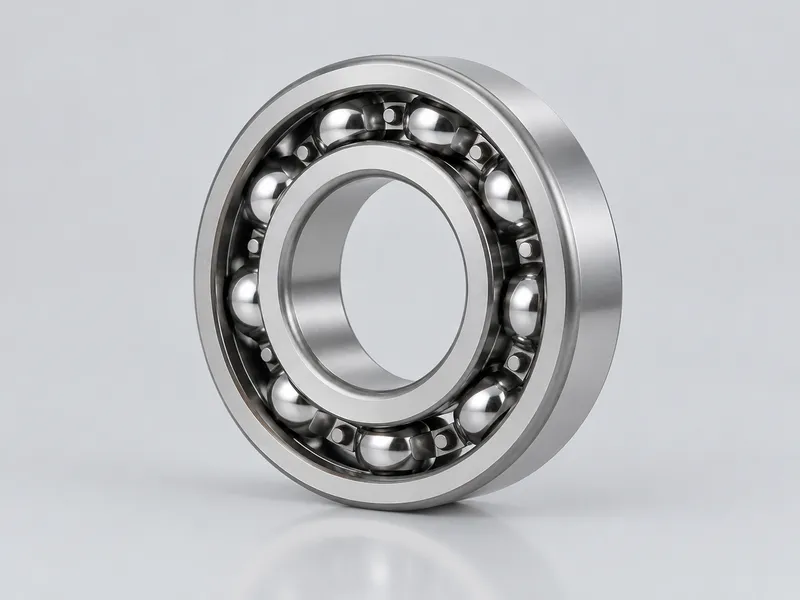
6800 series executions — open, ZZ, 2RS
6804 is the open execution; 6804 ZZ would add two metal shields and 6804 2RS two rubber contact seals, all sharing the same boundary dimensions. Our published evidence for the 6800 series currently covers the open execution, so the shielded and sealed cells below are shown as Confirm at quotation: we supply those executions on request after confirming the details, we do not quote them from this table. The designation 6819 does not appear in our collected manufacturer catalog, so it appears here only in the note — send us the designation and we confirm availability at quotation.
| Base designation | Bore d (mm) | OD D (mm) | Width B (mm) | Cr (open) | Open | Shielded (ZZ) | Sealed (2RS) | RFQ |
|---|---|---|---|---|---|---|---|---|
| 6800 Koyo / JTEKT | 10 | 19 | 5 | 2.15 kN | 6800 Koyo / JTEKT | Confirm at quotation | Confirm at quotation | Request quote |
| 6801 Koyo / JTEKT | 12 | 21 | 5 | 2.4 kN | 6801 Koyo / JTEKT | Confirm at quotation | Confirm at quotation | Request quote |
| 6802 Koyo / JTEKT | 15 | 24 | 5 | 2.6 kN | 6802 Koyo / JTEKT | Confirm at quotation | Confirm at quotation | Request quote |
| 6803 Koyo / JTEKT | 17 | 26 | 5 | 3.3 kN | 6803 Koyo / JTEKT | Confirm at quotation | Confirm at quotation | Request quote |
| 6804 Koyo / JTEKT | 20 | 32 | 7 | 5 kN | 6804 Koyo / JTEKT | Confirm at quotation | Confirm at quotation | Request quote |
| 6805 Koyo / JTEKT | 25 | 37 | 7 | 5.4 kN | 6805 Koyo / JTEKT | Confirm at quotation | Confirm at quotation | Request quote |
| 6806 Koyo / JTEKT | 30 | 42 | 7 | 5.65 kN | 6806 Koyo / JTEKT | Confirm at quotation | Confirm at quotation | Request quote |
| 6807 Koyo / JTEKT | 35 | 47 | 7 | 5.95 kN | 6807 Koyo / JTEKT | Confirm at quotation | Confirm at quotation | Request quote |
| 6808 Koyo / JTEKT | 40 | 52 | 7 | 6.15 kN | 6808 Koyo / JTEKT | Confirm at quotation | Confirm at quotation | Request quote |
| 6809 Koyo / JTEKT | 45 | 58 | 7 | 7.75 kN | 6809 Koyo / JTEKT | Confirm at quotation | Confirm at quotation | Request quote |
| 6810 Koyo / JTEKT | 50 | 65 | 7 | 8.2 kN | 6810 Koyo / JTEKT | Confirm at quotation | Confirm at quotation | Request quote |
| 6811 Koyo / JTEKT | 55 | 72 | 9 | 11 kN | 6811 Koyo / JTEKT | Confirm at quotation | Confirm at quotation | Request quote |
| 6812 Koyo / JTEKT | 60 | 78 | 10 | 14.3 kN | 6812 Koyo / JTEKT | Confirm at quotation | Confirm at quotation | Request quote |
| 6813 Koyo / JTEKT | 65 | 85 | 10 | 14.9 kN | 6813 Koyo / JTEKT | Confirm at quotation | Confirm at quotation | Request quote |
| 6814 Koyo / JTEKT | 70 | 90 | 10 | 15.1 kN | 6814 Koyo / JTEKT | Confirm at quotation | Confirm at quotation | Request quote |
| 6815 Koyo / JTEKT | 75 | 95 | 10 | 15.7 kN | 6815 Koyo / JTEKT | Confirm at quotation | Confirm at quotation | Request quote |
| 6816 Koyo / JTEKT | 80 | 100 | 10 | 15.9 kN | 6816 Koyo / JTEKT | Confirm at quotation | Confirm at quotation | Request quote |
| 6817 Koyo / JTEKT | 85 | 110 | 13 | 23.4 kN | 6817 Koyo / JTEKT | Confirm at quotation | Confirm at quotation | Request quote |
| 6818 Koyo / JTEKT | 90 | 115 | 13 | 23.8 kN | 6818 Koyo / JTEKT | Confirm at quotation | Confirm at quotation | Request quote |
| 6820 Koyo / JTEKT | 100 | 125 | 13 | 24.5 kN | 6820 Koyo / JTEKT | Confirm at quotation | Confirm at quotation | Request quote |
Sealed and shielded executions carry lower catalog limiting speeds than the open execution of the same designation. Details in 2RS vs ZZ: sealed or shielded bearing.
Same-bore companions across the other series
Within the ISO 15 dimension plan, several series share bores but trade width and outer diameter against load capacity: the extra-light 6000 series, the light 6200 series, the medium 6300 series and the thin-wall 6800 / 6900 series. For each 68xx designation, the companions below are published pages whose bore dimension was checked equal — a 60xx companion fits the same shaft in a taller ring with a higher load rating, a 62xx or 63xx companion in a still wider and taller envelope. Same bore is still only the first check: clearance class, seal design and speed capability can differ between series and brands, so confirm the substitution against your application or send us the original designation.
| 6800-series designation | Bore d (mm) | Published same-bore companions | Companion boundary (d × D × B, mm) |
|---|---|---|---|
| 6800 | 10 | 6000 (Koyo / JTEKT) , 6200 (Koyo / JTEKT) , 6300 (Koyo / JTEKT) , 6900 (Koyo / JTEKT) | 6000 (Koyo / JTEKT): 10 × 26 × 8 · 6200 (Koyo / JTEKT): 10 × 30 × 9 · 6300 (Koyo / JTEKT): 10 × 35 × 11 · 6900 (Koyo / JTEKT): 10 × 22 × 6 |
| 6801 | 12 | 6001 (Koyo / JTEKT) , 6201 (Koyo / JTEKT) , 6301 (Koyo / JTEKT) , 6901 (Koyo / JTEKT) | 6001 (Koyo / JTEKT): 12 × 28 × 8 · 6201 (Koyo / JTEKT): 12 × 32 × 10 · 6301 (Koyo / JTEKT): 12 × 37 × 12 · 6901 (Koyo / JTEKT): 12 × 24 × 6 |
| 6802 | 15 | 6002 (Koyo / JTEKT) , 6202 (Koyo / JTEKT) , 6302 (Koyo / JTEKT) , 6902 (Koyo / JTEKT) | 6002 (Koyo / JTEKT): 15 × 32 × 9 · 6202 (Koyo / JTEKT): 15 × 35 × 11 · 6302 (Koyo / JTEKT): 15 × 42 × 13 · 6902 (Koyo / JTEKT): 15 × 28 × 7 |
| 6803 | 17 | 6003 (Koyo / JTEKT) , 6203 (Koyo / JTEKT) , 6303 (Koyo / JTEKT) , 6903 (Koyo / JTEKT) | 6003 (Koyo / JTEKT): 17 × 35 × 10 · 6203 (Koyo / JTEKT): 17 × 40 × 12 · 6303 (Koyo / JTEKT): 17 × 47 × 14 · 6903 (Koyo / JTEKT): 17 × 30 × 7 |
| 6804 | 20 | 6004 (Koyo / JTEKT) , 6204 (Koyo / JTEKT) , 6304 (Koyo / JTEKT) , 6904 (Koyo / JTEKT) | 6004 (Koyo / JTEKT): 20 × 42 × 12 · 6204 (Koyo / JTEKT): 20 × 47 × 14 · 6304 (Koyo / JTEKT): 20 × 52 × 15 · 6904 (Koyo / JTEKT): 20 × 37 × 9 |
| 6805 | 25 | 6005 (Koyo / JTEKT) , 6205 (Koyo / JTEKT) , 6305 (Koyo / JTEKT) , 6905 (Koyo / JTEKT) | 6005 (Koyo / JTEKT): 25 × 47 × 12 · 6205 (Koyo / JTEKT): 25 × 52 × 15 · 6305 (Koyo / JTEKT): 25 × 62 × 17 · 6905 (Koyo / JTEKT): 25 × 42 × 9 |
| 6806 | 30 | 6006 (Koyo / JTEKT) , 6206 (Koyo / JTEKT) , 6306 (Koyo / JTEKT) , 6906 (Koyo / JTEKT) | 6006 (Koyo / JTEKT): 30 × 55 × 13 · 6206 (Koyo / JTEKT): 30 × 62 × 16 · 6306 (Koyo / JTEKT): 30 × 72 × 19 · 6906 (Koyo / JTEKT): 30 × 47 × 9 |
| 6807 | 35 | 6007 (Koyo / JTEKT) , 6207 (Koyo / JTEKT) , 6307 (Koyo / JTEKT) , 6907 (Koyo / JTEKT) | 6007 (Koyo / JTEKT): 35 × 62 × 14 · 6207 (Koyo / JTEKT): 35 × 72 × 17 · 6307 (Koyo / JTEKT): 35 × 80 × 21 · 6907 (Koyo / JTEKT): 35 × 55 × 10 |
| 6808 | 40 | 6008 (Koyo / JTEKT) , 6208 (Koyo / JTEKT) , 6308 (Koyo / JTEKT) , 6908 (Koyo / JTEKT) | 6008 (Koyo / JTEKT): 40 × 68 × 15 · 6208 (Koyo / JTEKT): 40 × 80 × 18 · 6308 (Koyo / JTEKT): 40 × 90 × 23 · 6908 (Koyo / JTEKT): 40 × 62 × 12 |
| 6809 | 45 | 6009 (Koyo / JTEKT) , 6209 (Koyo / JTEKT) , 6309 (Koyo / JTEKT) , 6909 (Koyo / JTEKT) | 6009 (Koyo / JTEKT): 45 × 75 × 16 · 6209 (Koyo / JTEKT): 45 × 85 × 19 · 6309 (Koyo / JTEKT): 45 × 100 × 25 · 6909 (Koyo / JTEKT): 45 × 68 × 12 |
| 6810 | 50 | 6010 (Koyo / JTEKT) , 6210 (Koyo / JTEKT) , 6310 (Koyo / JTEKT) , 6910 (Koyo / JTEKT) | 6010 (Koyo / JTEKT): 50 × 80 × 16 · 6210 (Koyo / JTEKT): 50 × 90 × 20 · 6310 (Koyo / JTEKT): 50 × 110 × 27 · 6910 (Koyo / JTEKT): 50 × 72 × 12 |
| 6811 | 55 | 6011 (Koyo / JTEKT) , 6211 (Koyo / JTEKT) , 6311 (Koyo / JTEKT) , 6911 (Koyo / JTEKT) | 6011 (Koyo / JTEKT): 55 × 90 × 18 · 6211 (Koyo / JTEKT): 55 × 100 × 21 · 6311 (Koyo / JTEKT): 55 × 120 × 29 · 6911 (Koyo / JTEKT): 55 × 80 × 13 |
| 6812 | 60 | 6012 (Koyo / JTEKT) , 6212 (Koyo / JTEKT) , 6312 (Koyo / JTEKT) , 6912 (Koyo / JTEKT) | 6012 (Koyo / JTEKT): 60 × 95 × 18 · 6212 (Koyo / JTEKT): 60 × 110 × 22 · 6312 (Koyo / JTEKT): 60 × 130 × 31 · 6912 (Koyo / JTEKT): 60 × 85 × 13 |
| 6813 | 65 | 6013 (Koyo / JTEKT) , 6213 (Koyo / JTEKT) , 6313 (Koyo / JTEKT) , 6913 (Koyo / JTEKT) | 6013 (Koyo / JTEKT): 65 × 100 × 18 · 6213 (Koyo / JTEKT): 65 × 120 × 23 · 6313 (Koyo / JTEKT): 65 × 140 × 33 · 6913 (Koyo / JTEKT): 65 × 90 × 13 |
| 6814 | 70 | 6014 (Koyo / JTEKT) , 6214 (Koyo / JTEKT) , 6314 (Koyo / JTEKT) , 6914 (Koyo / JTEKT) | 6014 (Koyo / JTEKT): 70 × 110 × 20 · 6214 (Koyo / JTEKT): 70 × 125 × 24 · 6314 (Koyo / JTEKT): 70 × 150 × 35 · 6914 (Koyo / JTEKT): 70 × 100 × 16 |
| 6815 | 75 | 6015 (Koyo / JTEKT) , 6215 (Koyo / JTEKT) , 6315 (Koyo / JTEKT) , 6915 (Koyo / JTEKT) | 6015 (Koyo / JTEKT): 75 × 115 × 20 · 6215 (Koyo / JTEKT): 75 × 130 × 25 · 6315 (Koyo / JTEKT): 75 × 160 × 37 · 6915 (Koyo / JTEKT): 75 × 105 × 16 |
| 6816 | 80 | 6016 (Koyo / JTEKT) , 6216 (Koyo / JTEKT) , 6316 (Koyo / JTEKT) , 6916 (Koyo / JTEKT) | 6016 (Koyo / JTEKT): 80 × 125 × 22 · 6216 (Koyo / JTEKT): 80 × 140 × 26 · 6316 (Koyo / JTEKT): 80 × 170 × 39 · 6916 (Koyo / JTEKT): 80 × 110 × 16 |
| 6817 | 85 | 6017 (Koyo / JTEKT) , 6217 (Koyo / JTEKT) , 6317 (Koyo / JTEKT) , 6917 (Koyo / JTEKT) | 6017 (Koyo / JTEKT): 85 × 130 × 22 · 6217 (Koyo / JTEKT): 85 × 150 × 28 · 6317 (Koyo / JTEKT): 85 × 180 × 41 · 6917 (Koyo / JTEKT): 85 × 120 × 18 |
| 6818 | 90 | 6018 (Koyo / JTEKT) , 6218 (Koyo / JTEKT) , 6318 (Koyo / JTEKT) , 6918 (Koyo / JTEKT) | 6018 (Koyo / JTEKT): 90 × 140 × 24 · 6218 (Koyo / JTEKT): 90 × 160 × 30 · 6318 (Koyo / JTEKT): 90 × 190 × 43 · 6918 (Koyo / JTEKT): 90 × 125 × 18 |
| 6820 | 100 | 6020 (Koyo / JTEKT) , 6220 (Koyo / JTEKT) , 6320 (Koyo / JTEKT) , 6920 (Koyo / JTEKT) | 6020 (Koyo / JTEKT): 100 × 150 × 24 · 6220 (Koyo / JTEKT): 100 × 180 × 34 · 6320 (Koyo / JTEKT): 100 × 215 × 47 · 6920 (Koyo / JTEKT): 100 × 140 × 20 |
Where the 6800 series fits
The 6800 designations belong to the metric single-row deep groove ball bearing dimension plan codified by ISO 15 (implemented in the German standard DIN 625) — the thinnest section of the plan. That is why a 6804 from any conforming manufacturer occupies the same 20 × 32 × 7 mm boundary envelope: the dimension plan is standardized, and our published model pages confirm their dimensions against it. What the plan does not standardize away: internal clearance class, seal and shield design, cage material and noise characteristics can all differ between brands and executions — so treat any equivalent as a candidate, not a confirmed swap. The checking sequence is described in how to find a replacement for an existing bearing model.
This page covers the 6800 (thin-wall) series only. The 60xx, 62xx and 63xx series rows, and the open / ZZ / 2RS execution notes that apply to them, live on the main deep groove ball bearing cross reference hub, with each series on its own sub-series page and the 6900 thin-wall series on its own 6900 series cross reference page.
Failure modes in service — 6800 series
A thin-wall deep groove bearing is the most sensitive bearing in the dimension plan to everything that is not printed on the table: the rings are compliant, the section for the rolling elements is minimal, and the same 20 × 32 × 7 mm envelope that makes a 6804 attractive leaves no surplus steel to absorb a bad seat, a dirty environment or a marginal lubrication choice. These are the failure modes that actually end 68xx bearings early — the load rating rarely does.
Housing roundness and fits on a thin ring
A thin outer ring cannot correct its seat — it follows it. Any out-of-roundness, burr or dirt trapped between the OD and the housing bore transfers directly into the raceway as a deformation the balls ride through on every revolution, so the machining quality of the housing matters more for a 68xx than for any thicker-series companion. The same logic applies to fits: an interference fit expands the inner ring into the clearance, and a tight housing fit compresses the outer ring further — enough to drive internal clearance negative, "effectively rendering the shaft bigger than the hole", with excessive friction and early failure as the documented result (bearing damage and fits documentation). Because the 68xx section is small, a given fit error consumes a proportionally larger share of the total clearance.
On the other side, a fit too loose for the load lets the ring creep on its seat: creep wears the seat, generates heat and fretting debris, and progressively loosens the fit further — "left long enough, the shaft seat is destroyed along with the bearing" (bearing fits and tolerances documentation). On a thin-section position, check the seat every time the bearing comes out; mounting a new 68xx on a crept seat restarts the same failure in weeks.
False brinelling in storage and transport
False brinelling — frictional-corrosion damage in the rolling contact under cyclic vibration while the bearing is stationary and loaded — appears at rolling-element pitch as shallow, dull, often reddish depressions (SKF bearing-damage documentation). Thin-wall bearings are frequent victims precisely because they are the bearings of compact, lightly loaded equipment: machines shipped by road, stored spares installed in housings under residual belt or coupling load, assemblies vibrated on a shelf. The damage is done before the first start-up.
The field triage rule is worth learning once: "brinelling suggests impact or false brinelling from vibration at standstill" while spalling points at fatigue and fluting points at electrical damage (motor bearing damage-pattern guide). Reddish-brown dust at the seals of a 68xx that never ran, or pitch-spaced marks found at commissioning, mean the storage and transport plan failed — not the bearing. Mount from the packaging at installation time, unclamp drive belts on stored machines, and the mode largely disappears.
Skidding under light load
The 68xx series exists at the small end of the load range, and its failure logic includes the opposite of overload: too little load. A rolling bearing needs a minimum load for the rolling elements to roll rather than skid; below it, the balls slide across the raceway, lubrication breaks down and smearing damage follows — the practitioner's rule being that "the bearing is not loaded enough to prevent skidding, so you need to select a different bearing that will meet the minimum load. Usually that just means a smaller bearing" (bearing selection discussion). An oversized 68xx in a lightly loaded position is exactly that case.
The series also carries a documented counterweight: compared with medium or heavy series, thin-section bearings feature smaller balls, which significantly reduces centrifugal force and skidding at high speeds, at the expense of overall load capacity (high-speed motor bearing selection guide). So the same geometry that limits a 68xx in heavy duty protects it at speed — as long as the position actually needs the light section. If the load calculation says minimum load is not met, the honest answer is a 60xx or 62xx companion at the same bore, not a harder run.
Clearance loss from fits and temperature
The thin section makes the 68xx clearance budget the tightest in the deep groove plan, and three documented mechanisms all spend from the same account: interference fits that expand the rings, housing fits that compress the outer ring, and operating temperature — the shaft growing faster than the housing sheds heat. Run a tight clearance class on a press-fit shaft that grows with temperature and you preload the bearing, cut fatigue life sharply and start cooking the grease (bearing geometry and clearance discussion). Negative clearance — preload — then produces the heat that accelerates it.
The practical sequence for a 68xx position: choose the clearance class after the fits and the operating temperature are known, not before; and treat unexplained heat in a thin-wall bearing as a clearance question first. Our designation-level pages publish the boundary and abutment dimensions these checks input; the clearance classes themselves are confirmed at quotation.
Lubrication and electrical erosion
Motor-duty statistics concentrate the problem: bearings account for roughly 51% of electric motor failures, and lubrication breakdown for about 80% of those bearing-related outages — with electrical fluting and solid contamination as the other severe modes, capable of collapsing a theoretical L10 life of tens of thousands of hours into months of service (motor bearing reliability data). A thin-wall bearing tolerates this arithmetic no better than a thick one: grease that has aged past its life, the wrong grease for the speed, or over-filling that overheats the bearing all end it early.
For grease selection the same guidance applies as everywhere: no EP additives for ball bearings in motor positions, and the grease family matched to the duty temperature (industrial grease application tables). And where the 68xx runs on a variable-frequency drive, plan for shaft currents from the start — stray current arcs through the oil film and micro-craters the raceway long before anyone hears noise; the countermeasure is an insulated or hybrid bearing and shaft grounding, not a better grease.
For the damage atlas behind this section see our bearing failure modes overview, and for execution trade-offs on these designations the 2RS vs ZZ explainer. Each designation above links to its model-bound page for the dimensions these checks input.