
Cross reference · 6900 series
6900 Series Deep Groove Ball Bearing Cross Reference
The 6900 series is the second-thinnest line of the ISO 15 deep groove dimension plan: the same bores as the 60xx, 62xx and 63xx series in a narrow ring section, for housings where radial space is tight and loads are light to moderate. Each row below is one base designation with its published boundary dimensions and load rating, and the other-series bearings that share the same bore. Every value is the same model-bound catalog figure as on the linked page — this table adds none. Executions we have not published with evidence are marked for confirmation at quotation, not guessed.
Last updated: 2026-11
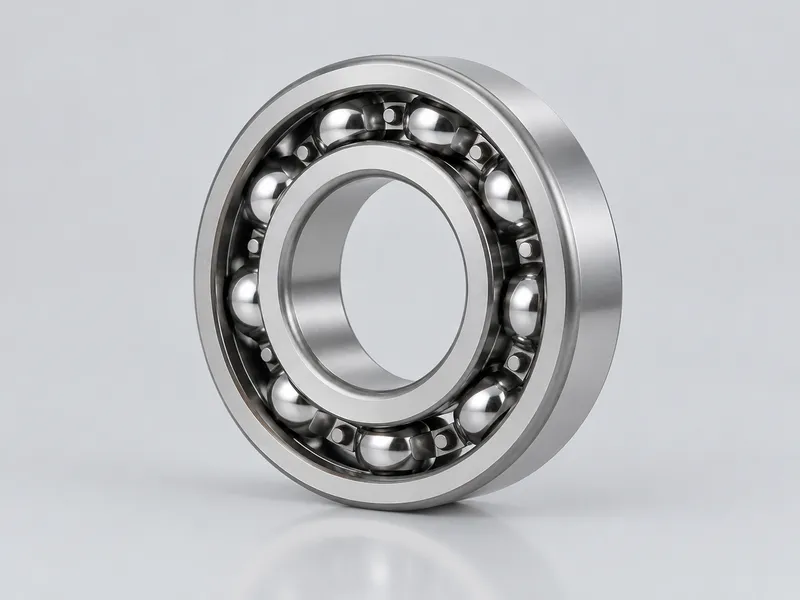
6900 series executions — open, ZZ, 2RS
6904 is the open execution; 6904 ZZ would add two metal shields and 6904 2RS two rubber contact seals, all sharing the same boundary dimensions. Our published evidence for the 6900 series currently covers the open execution, so the shielded and sealed cells below are shown as Confirm at quotation: we supply those executions on request after confirming the details, we do not quote them from this table. The base designations 6900 through 6920 are all present in our collected manufacturer catalog and all published below.
| Base designation | Bore d (mm) | OD D (mm) | Width B (mm) | Cr (open) | Open | Shielded (ZZ) | Sealed (2RS) | RFQ |
|---|---|---|---|---|---|---|---|---|
| 6900 Koyo / JTEKT | 10 | 22 | 6 | 3.35 kN | 6900 Koyo / JTEKT | Confirm at quotation | Confirm at quotation | Request quote |
| 6901 Koyo / JTEKT | 12 | 24 | 6 | 3.6 kN | 6901 Koyo / JTEKT | Confirm at quotation | Confirm at quotation | Request quote |
| 6902 Koyo / JTEKT | 15 | 28 | 7 | 5.4 kN | 6902 Koyo / JTEKT | Confirm at quotation | Confirm at quotation | Request quote |
| 6903 Koyo / JTEKT | 17 | 30 | 7 | 5.75 kN | 6903 Koyo / JTEKT | Confirm at quotation | Confirm at quotation | Request quote |
| 6904 Koyo / JTEKT | 20 | 37 | 9 | 7.95 kN | 6904 Koyo / JTEKT | Confirm at quotation | Confirm at quotation | Request quote |
| 6905 Koyo / JTEKT | 25 | 42 | 9 | 8.75 kN | 6905 Koyo / JTEKT | Confirm at quotation | Confirm at quotation | Request quote |
| 6906 Koyo / JTEKT | 30 | 47 | 9 | 9.05 kN | 6906 Koyo / JTEKT | Confirm at quotation | Confirm at quotation | Request quote |
| 6907 Koyo / JTEKT | 35 | 55 | 10 | 13.6 kN | 6907 Koyo / JTEKT | Confirm at quotation | Confirm at quotation | Request quote |
| 6908 Koyo / JTEKT | 40 | 62 | 12 | 17.1 kN | 6908 Koyo / JTEKT | Confirm at quotation | Confirm at quotation | Request quote |
| 6909 Koyo / JTEKT | 45 | 68 | 12 | 17.7 kN | 6909 Koyo / JTEKT | Confirm at quotation | Confirm at quotation | Request quote |
| 6910 Koyo / JTEKT | 50 | 72 | 12 | 18.2 kN | 6910 Koyo / JTEKT | Confirm at quotation | Confirm at quotation | Request quote |
| 6911 Koyo / JTEKT | 55 | 80 | 13 | 20.8 kN | 6911 Koyo / JTEKT | Confirm at quotation | Confirm at quotation | Request quote |
| 6912 Koyo / JTEKT | 60 | 85 | 13 | 25.2 kN | 6912 Koyo / JTEKT | Confirm at quotation | Confirm at quotation | Request quote |
| 6913 Koyo / JTEKT | 65 | 90 | 13 | 21.7 kN | 6913 Koyo / JTEKT | Confirm at quotation | Confirm at quotation | Request quote |
| 6914 Koyo / JTEKT | 70 | 100 | 16 | 29.7 kN | 6914 Koyo / JTEKT | Confirm at quotation | Confirm at quotation | Request quote |
| 6915 Koyo / JTEKT | 75 | 105 | 16 | 30.5 kN | 6915 Koyo / JTEKT | Confirm at quotation | Confirm at quotation | Request quote |
| 6916 Koyo / JTEKT | 80 | 110 | 16 | 31.2 kN | 6916 Koyo / JTEKT | Confirm at quotation | Confirm at quotation | Request quote |
| 6917 Koyo / JTEKT | 85 | 120 | 18 | 39.9 kN | 6917 Koyo / JTEKT | Confirm at quotation | Confirm at quotation | Request quote |
| 6918 Koyo / JTEKT | 90 | 125 | 18 | 41 kN | 6918 Koyo / JTEKT | Confirm at quotation | Confirm at quotation | Request quote |
| 6919 Koyo / JTEKT | 95 | 130 | 18 | 42.1 kN | 6919 Koyo / JTEKT | Confirm at quotation | Confirm at quotation | Request quote |
| 6920 Koyo / JTEKT | 100 | 140 | 20 | 56.2 kN | 6920 Koyo / JTEKT | Confirm at quotation | Confirm at quotation | Request quote |
Sealed and shielded executions carry lower catalog limiting speeds than the open execution of the same designation. Details in 2RS vs ZZ: sealed or shielded bearing.
Same-bore companions across the other series
Within the ISO 15 dimension plan, several series share bores but trade width and outer diameter against load capacity: the extra-light 6000 series, the light 6200 series, the medium 6300 series and the thin-wall 6800 / 6900 series. For each 69xx designation, the companions below are published pages whose bore dimension was checked equal — a 60xx companion fits the same shaft in a taller ring with a higher load rating, a 62xx or 63xx companion in a still wider and taller envelope, and a 68xx companion in a thinner ring with a lower load rating. Same bore is still only the first check: clearance class, seal design and speed capability can differ between series and brands, so confirm the substitution against your application or send us the original designation.
| 6900-series designation | Bore d (mm) | Published same-bore companions | Companion boundary (d × D × B, mm) |
|---|---|---|---|
| 6900 | 10 | 6000 (Koyo / JTEKT) , 6200 (Koyo / JTEKT) , 6300 (Koyo / JTEKT) , 6800 (Koyo / JTEKT) | 6000 (Koyo / JTEKT): 10 × 26 × 8 · 6200 (Koyo / JTEKT): 10 × 30 × 9 · 6300 (Koyo / JTEKT): 10 × 35 × 11 · 6800 (Koyo / JTEKT): 10 × 19 × 5 |
| 6901 | 12 | 6001 (Koyo / JTEKT) , 6201 (Koyo / JTEKT) , 6301 (Koyo / JTEKT) , 6801 (Koyo / JTEKT) | 6001 (Koyo / JTEKT): 12 × 28 × 8 · 6201 (Koyo / JTEKT): 12 × 32 × 10 · 6301 (Koyo / JTEKT): 12 × 37 × 12 · 6801 (Koyo / JTEKT): 12 × 21 × 5 |
| 6902 | 15 | 6002 (Koyo / JTEKT) , 6202 (Koyo / JTEKT) , 6302 (Koyo / JTEKT) , 6802 (Koyo / JTEKT) | 6002 (Koyo / JTEKT): 15 × 32 × 9 · 6202 (Koyo / JTEKT): 15 × 35 × 11 · 6302 (Koyo / JTEKT): 15 × 42 × 13 · 6802 (Koyo / JTEKT): 15 × 24 × 5 |
| 6903 | 17 | 6003 (Koyo / JTEKT) , 6203 (Koyo / JTEKT) , 6303 (Koyo / JTEKT) , 6803 (Koyo / JTEKT) | 6003 (Koyo / JTEKT): 17 × 35 × 10 · 6203 (Koyo / JTEKT): 17 × 40 × 12 · 6303 (Koyo / JTEKT): 17 × 47 × 14 · 6803 (Koyo / JTEKT): 17 × 26 × 5 |
| 6904 | 20 | 6004 (Koyo / JTEKT) , 6204 (Koyo / JTEKT) , 6304 (Koyo / JTEKT) , 6804 (Koyo / JTEKT) | 6004 (Koyo / JTEKT): 20 × 42 × 12 · 6204 (Koyo / JTEKT): 20 × 47 × 14 · 6304 (Koyo / JTEKT): 20 × 52 × 15 · 6804 (Koyo / JTEKT): 20 × 32 × 7 |
| 6905 | 25 | 6005 (Koyo / JTEKT) , 6205 (Koyo / JTEKT) , 6305 (Koyo / JTEKT) , 6805 (Koyo / JTEKT) | 6005 (Koyo / JTEKT): 25 × 47 × 12 · 6205 (Koyo / JTEKT): 25 × 52 × 15 · 6305 (Koyo / JTEKT): 25 × 62 × 17 · 6805 (Koyo / JTEKT): 25 × 37 × 7 |
| 6906 | 30 | 6006 (Koyo / JTEKT) , 6206 (Koyo / JTEKT) , 6306 (Koyo / JTEKT) , 6806 (Koyo / JTEKT) | 6006 (Koyo / JTEKT): 30 × 55 × 13 · 6206 (Koyo / JTEKT): 30 × 62 × 16 · 6306 (Koyo / JTEKT): 30 × 72 × 19 · 6806 (Koyo / JTEKT): 30 × 42 × 7 |
| 6907 | 35 | 6007 (Koyo / JTEKT) , 6207 (Koyo / JTEKT) , 6307 (Koyo / JTEKT) , 6807 (Koyo / JTEKT) | 6007 (Koyo / JTEKT): 35 × 62 × 14 · 6207 (Koyo / JTEKT): 35 × 72 × 17 · 6307 (Koyo / JTEKT): 35 × 80 × 21 · 6807 (Koyo / JTEKT): 35 × 47 × 7 |
| 6908 | 40 | 6008 (Koyo / JTEKT) , 6208 (Koyo / JTEKT) , 6308 (Koyo / JTEKT) , 6808 (Koyo / JTEKT) | 6008 (Koyo / JTEKT): 40 × 68 × 15 · 6208 (Koyo / JTEKT): 40 × 80 × 18 · 6308 (Koyo / JTEKT): 40 × 90 × 23 · 6808 (Koyo / JTEKT): 40 × 52 × 7 |
| 6909 | 45 | 6009 (Koyo / JTEKT) , 6209 (Koyo / JTEKT) , 6309 (Koyo / JTEKT) , 6809 (Koyo / JTEKT) | 6009 (Koyo / JTEKT): 45 × 75 × 16 · 6209 (Koyo / JTEKT): 45 × 85 × 19 · 6309 (Koyo / JTEKT): 45 × 100 × 25 · 6809 (Koyo / JTEKT): 45 × 58 × 7 |
| 6910 | 50 | 6010 (Koyo / JTEKT) , 6210 (Koyo / JTEKT) , 6310 (Koyo / JTEKT) , 6810 (Koyo / JTEKT) | 6010 (Koyo / JTEKT): 50 × 80 × 16 · 6210 (Koyo / JTEKT): 50 × 90 × 20 · 6310 (Koyo / JTEKT): 50 × 110 × 27 · 6810 (Koyo / JTEKT): 50 × 65 × 7 |
| 6911 | 55 | 6011 (Koyo / JTEKT) , 6211 (Koyo / JTEKT) , 6311 (Koyo / JTEKT) , 6811 (Koyo / JTEKT) | 6011 (Koyo / JTEKT): 55 × 90 × 18 · 6211 (Koyo / JTEKT): 55 × 100 × 21 · 6311 (Koyo / JTEKT): 55 × 120 × 29 · 6811 (Koyo / JTEKT): 55 × 72 × 9 |
| 6912 | 60 | 6012 (Koyo / JTEKT) , 6212 (Koyo / JTEKT) , 6312 (Koyo / JTEKT) , 6812 (Koyo / JTEKT) | 6012 (Koyo / JTEKT): 60 × 95 × 18 · 6212 (Koyo / JTEKT): 60 × 110 × 22 · 6312 (Koyo / JTEKT): 60 × 130 × 31 · 6812 (Koyo / JTEKT): 60 × 78 × 10 |
| 6913 | 65 | 6013 (Koyo / JTEKT) , 6213 (Koyo / JTEKT) , 6313 (Koyo / JTEKT) , 6813 (Koyo / JTEKT) | 6013 (Koyo / JTEKT): 65 × 100 × 18 · 6213 (Koyo / JTEKT): 65 × 120 × 23 · 6313 (Koyo / JTEKT): 65 × 140 × 33 · 6813 (Koyo / JTEKT): 65 × 85 × 10 |
| 6914 | 70 | 6014 (Koyo / JTEKT) , 6214 (Koyo / JTEKT) , 6314 (Koyo / JTEKT) , 6814 (Koyo / JTEKT) | 6014 (Koyo / JTEKT): 70 × 110 × 20 · 6214 (Koyo / JTEKT): 70 × 125 × 24 · 6314 (Koyo / JTEKT): 70 × 150 × 35 · 6814 (Koyo / JTEKT): 70 × 90 × 10 |
| 6915 | 75 | 6015 (Koyo / JTEKT) , 6215 (Koyo / JTEKT) , 6315 (Koyo / JTEKT) , 6815 (Koyo / JTEKT) | 6015 (Koyo / JTEKT): 75 × 115 × 20 · 6215 (Koyo / JTEKT): 75 × 130 × 25 · 6315 (Koyo / JTEKT): 75 × 160 × 37 · 6815 (Koyo / JTEKT): 75 × 95 × 10 |
| 6916 | 80 | 6016 (Koyo / JTEKT) , 6216 (Koyo / JTEKT) , 6316 (Koyo / JTEKT) , 6816 (Koyo / JTEKT) | 6016 (Koyo / JTEKT): 80 × 125 × 22 · 6216 (Koyo / JTEKT): 80 × 140 × 26 · 6316 (Koyo / JTEKT): 80 × 170 × 39 · 6816 (Koyo / JTEKT): 80 × 100 × 10 |
| 6917 | 85 | 6017 (Koyo / JTEKT) , 6217 (Koyo / JTEKT) , 6317 (Koyo / JTEKT) , 6817 (Koyo / JTEKT) | 6017 (Koyo / JTEKT): 85 × 130 × 22 · 6217 (Koyo / JTEKT): 85 × 150 × 28 · 6317 (Koyo / JTEKT): 85 × 180 × 41 · 6817 (Koyo / JTEKT): 85 × 110 × 13 |
| 6918 | 90 | 6018 (Koyo / JTEKT) , 6218 (Koyo / JTEKT) , 6318 (Koyo / JTEKT) , 6818 (Koyo / JTEKT) | 6018 (Koyo / JTEKT): 90 × 140 × 24 · 6218 (Koyo / JTEKT): 90 × 160 × 30 · 6318 (Koyo / JTEKT): 90 × 190 × 43 · 6818 (Koyo / JTEKT): 90 × 115 × 13 |
| 6919 | 95 | 6019 (Koyo / JTEKT) , 6219 (Koyo / JTEKT) , 6319 (Koyo / JTEKT) | 6019 (Koyo / JTEKT): 95 × 145 × 24 · 6219 (Koyo / JTEKT): 95 × 170 × 32 · 6319 (Koyo / JTEKT): 95 × 200 × 45 |
| 6920 | 100 | 6020 (Koyo / JTEKT) , 6220 (Koyo / JTEKT) , 6320 (Koyo / JTEKT) , 6820 (Koyo / JTEKT) | 6020 (Koyo / JTEKT): 100 × 150 × 24 · 6220 (Koyo / JTEKT): 100 × 180 × 34 · 6320 (Koyo / JTEKT): 100 × 215 × 47 · 6820 (Koyo / JTEKT): 100 × 125 × 13 |
Where the 6900 series fits
The 6900 designations belong to the metric single-row deep groove ball bearing dimension plan codified by ISO 15 (implemented in the German standard DIN 625). That is why a 6904 from any conforming manufacturer occupies the same 20 × 37 × 9 mm boundary envelope: the dimension plan is standardized, and our published model pages confirm their dimensions against it. What the plan does not standardize away: internal clearance class, seal and shield design, cage material and noise characteristics can all differ between brands and executions — so treat any equivalent as a candidate, not a confirmed swap. The checking sequence is described in how to find a replacement for an existing bearing model.
This page covers the 6900 (thin-wall) series only. The 60xx, 62xx and 63xx series rows, and the open / ZZ / 2RS execution notes that apply to them, live on the main deep groove ball bearing cross reference hub, with each series on its own sub-series page and the 6800 thin-wall series on its own 6800 series cross reference page.
Failure modes in service — 6900 series
The 6900 series is one step taller than the 6800 in the same thin-wall family, which buys a little load capacity and a little tolerance — but every mode below is still driven by the geometry: compliant rings, small rolling elements, and a clearance budget that fits and temperature spend first. These are the documented ways 69xx bearings die young, in the order they are usually found.
Fretting at the seats and ring creep
Where the fit is marginal for the load, the loaded ring microslips on its seat; the interface lubrication is destroyed and reddish-brown fretting debris forms — often mistaken for rust on the inner-ring bore or outer-ring OD. Creep "wears the seat, generates heat and fretting debris, and progressively loosens the fit further", until the shaft seat is destroyed along with the bearing (bearing fits and tolerances documentation). On a compliant thin-wall ring the microslip also flexes the section, so the damage reaches the raceway side faster than in a stiff series.
Two inspection consequences: reddish dust around a 69xx housing is a stop-and-inspect signal, not housekeeping; and when a failed 69xx comes off a polished, discolored or circumferentially scored seat, the failure is recorded as a fit problem, not a bearing problem — the replacement will repeat it unless the seat is repaired and the fit corrected.
False brinelling in transit and standby
Under cyclic vibration a stationary, loaded bearing breaks through its lubricant film locally; metal-to-metal contact corrodes, and shallow depressions form at rolling-element pitch — dull, discoloured, sometimes reddish (SKF bearing-damage documentation). For 69xx positions this is chiefly a logistics failure: equipment vibrated in transport, spare rotors stored assembled, standby machines that stand still under residual load. The damage pattern reads unambiguously at teardown — "brinelling suggests impact or false brinelling from vibration at standstill" (motor bearing damage-pattern guide).
Prevention lives outside the bearing: ship machines with loads off the bearings, rotate stored spares periodically, and inspect at pitch spacing when commissioning equipment that travelled. A 69xx found with pitch-spaced marks before its first hour has already consumed its life — replacement, not running-in, is the response.
Misalignment and thermal shift in high-speed duty
Misalignment concentrates the load on one edge of the raceway instead of distributing it across the rolling elements; the documented signs are asymmetric wear patterns, elevated running temperature and a vibration signature at 1× and 2× rotational frequency, with shaft deflection, housing machining tolerances and thermal expansion as the usual culprits (bearing failure causes analysis). Deep groove bearings — thin-wall series included — absorb almost none of it: calculated capacity assumes misalignment staying near 0.0005 rad, beyond which delivered life falls below calculation (bearing capacity documentation).
The high-speed case adds a trap: alignment that passes cold can load the bearing incorrectly once frame, shaft and coupled equipment grow at different rates — "in high-speed service, thermal misalignment is one of the most missed causes" (motor bearing field guide). For a 69xx position on a hot running shaft, verify alignment at operating temperature, not just at ambient.
Lubrication ageing and temperature limits
Grease is a wear part inside a sealed or shielded 69xx. Standard 52100-steel bearings with standard grease operate from about −20 °C to +120 °C, high-temperature grease extends the upper limit to roughly 150 °C, and below −20 °C the switch is to stainless steel and low-temperature grease (deep groove bearing application guide). Field life arithmetic for factory-greased sealed bearings runs 20,000 to 40,000 hours in typical horizontal motor duty at 1,800 rpm and 70 °C — halved for every 15 °C above 70 °C. A thin-wall position running hot therefore ages its grease far faster than its rating table suggests.
Wrong grease family is the second documented entry: no EP additives for ball bearings in motor positions, and the thickener matched to the duty (industrial grease application tables). And where the machine sits on a drive, add the electrical check — stray currents arc through the thin oil film and machine the raceway into fluting before noise appears; the fix is insulation and shaft grounding, not relubrication.
Cage damage and skidding at the margins
The cage in a thin-wall bearing spaces small balls with minimal section, and it fails the documented ways: under minimum load not met, the rolling elements skid instead of rolling, smearing the raceways; with debris or wear in the pockets the cage wears and eventually fractures — and "once the cage breaks", the elements bunch and the failure becomes total (bearing damage-pattern discussions). Below the minimum load the practitioner's answer is selection, not lubrication: a smaller or differently loaded bearing that meets the minimum load.
Rapid speed cycling loads the cage inertially and has been documented to fatigue cages to end-of-life even with no raceway spall, fixed by a more robust cage design (bearing speed-limit documentation). The published per-designation limiting speeds on the linked 69xx pages are the ceiling that keeps the cage out of this regime; the cage material itself is confirmed per quotation.
Root-cause chains and photographic identification for every mode above are in our failure-modes overview; execution trade-offs (open, ZZ, 2RS) in the 2RS vs ZZ explainer. Each designation above links to its model-bound specification page.