
Deep Groove Ball Bearings
Deep groove ball bearing 6306
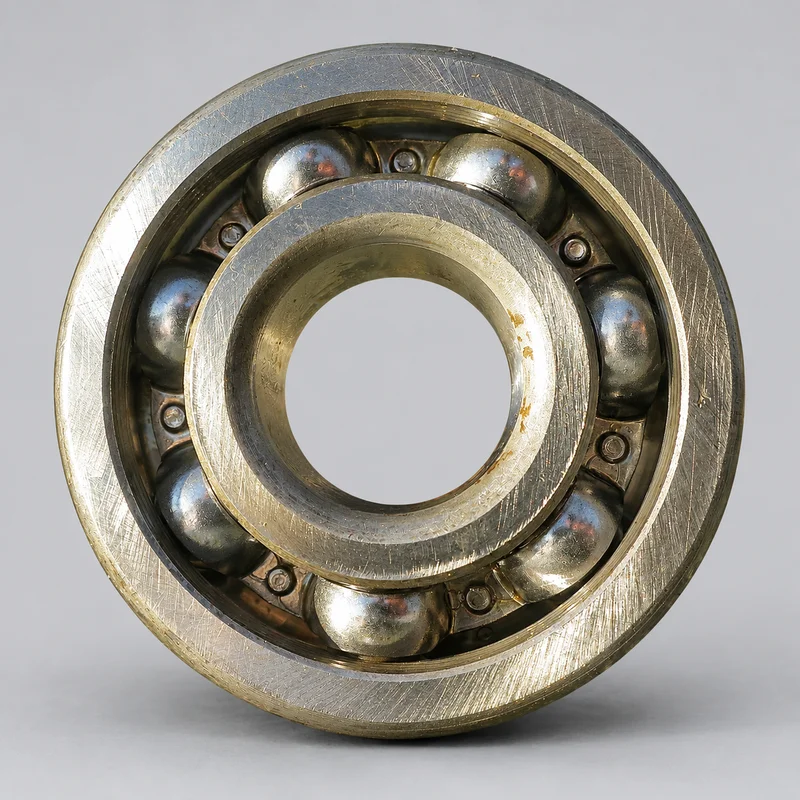
Deep groove ball bearing 6306, open, boundary dimensions, boundary dimensions 30 mm × 72 mm × 19 mm. Specifications below are model-bound published values; the source class is identified for each parameter. Send your application details through the RFQ for a confirmed quotation.
Last updated: 2026-11
Specifications
| Specification | Value | Parameter class | Source publisher |
|---|---|---|---|
| Bore diameter (d) | 30 mm | Model designation & boundary dimension | jtekt.co.jpManufacturer-published specification |
| Outside diameter (D) | 72 mm | Model designation & boundary dimension | jtekt.co.jpManufacturer-published specification |
| Width (B) | 19 mm | Model designation & boundary dimension | jtekt.co.jpManufacturer-published specification |
| Minimum chamfer (r min.) | 1.1 mm | Model designation & boundary dimension | jtekt.co.jpManufacturer-published specification |
| Basic dynamic load rating (Cr) | 33.3 kN Basic dynamic load rating is a catalog reference used in bearing-life calculations; confirm equivalent load, speed, reliability and required service life for the application. | Manufacturer catalog reference — not a supply guarantee | jtekt.co.jpManufacturer-published specification |
| Basic static load rating (C0r) | 15 kN Basic static load rating is a catalog reference; verify equivalent static load and the required static safety factor for the application. | Manufacturer catalog reference — not a supply guarantee | jtekt.co.jpManufacturer-published specification |
| Fatigue load limit (Cu) | 1.15 kN Fatigue load limit is a catalog reference, not a standalone allowable-load or service-life guarantee; verify application duty and lubrication conditions. | Manufacturer catalog reference — not a supply guarantee | jtekt.co.jpManufacturer-published specification |
| Limiting speed, grease lubrication | 9600 min-1 Catalog limiting speed for grease lubrication, not an application operating recommendation. Confirm lubricant, temperature, load, sealing and duty conditions before selection. | Manufacturer catalog reference — not a supply guarantee | jtekt.co.jpManufacturer-published specification |
| Limiting speed, oil lubrication | 12000 min-1 Catalog limiting speed for oil lubrication, not an application operating recommendation. Confirm lubricant, temperature, load, sealing and duty conditions before selection. | Manufacturer catalog reference — not a supply guarantee | jtekt.co.jpManufacturer-published specification |
| Reference mass | 0.325 kg | Industry reference — not manufacturer-specific | bearingcalculators.comIndustry reference chart |
| Shaft abutment diameter (da min.) | 36.5 mm | Model designation & boundary dimension | jtekt.co.jpManufacturer-published specification |
| Housing abutment diameter (Da max.) | 65.5 mm | Model designation & boundary dimension | jtekt.co.jpManufacturer-published specification |
| Fillet radius (r max.) | 1 mm | Model designation & boundary dimension | jtekt.co.jpManufacturer-published specification |
Parameter classes: Model designation & boundary dimension — what identifies the model (boundary dimensions follow the designation). Manufacturer catalog reference — the named manufacturer's published catalog data for this designation; it is not a guarantee that every unit we supply reaches these exact figures. Industry reference — a third-party or industry-published value; it is not specific to the named manufacturer and is not a supply guarantee. Supplier-confirmed — a value we have confirmed for our own supply. Order-confirmed — the value fixed in a specific order. None of the values on this page are supplier-confirmed yet; supply-specific figures (tolerance class, clearance, seal variant availability, lead time) are confirmed with your quotation.
The source publisher shown on each row identifies where that parameter was published; it is not necessarily the manufacturer supplying your order. Manufacturer-published specifications are linked where the source is approved for public linking. Industry-reference publishers are shown as text.
All values above are model-bound catalog values traceable to a collected source. Fields without collected evidence are not published; ask with your inquiry and we confirm them at quotation.
Manufacturer / model attribution: Koyo / JTEKT — 6306 (open, boundary dimensions). This is the manufacturer named by the model-evidence record; it does not establish that every item supplied for an inquiry comes from this manufacturer. The actual manufacturer, original model and supplying source are confirmed in the quotation.
Source per specification field
| Specification | Source |
|---|---|
| Bore diameter (d) | jtekt.co.jp — manufacturer-published specification |
| Outside diameter (D) | jtekt.co.jp — manufacturer-published specification |
| Width (B) | jtekt.co.jp — manufacturer-published specification |
| Minimum chamfer (r min.) | jtekt.co.jp — manufacturer-published specification |
| Basic dynamic load rating (Cr) | jtekt.co.jp — manufacturer-published specification |
| Basic static load rating (C0r) | jtekt.co.jp — manufacturer-published specification |
| Fatigue load limit (Cu) | jtekt.co.jp — manufacturer-published specification |
| Limiting speed, grease lubrication | jtekt.co.jp — manufacturer-published specification |
| Limiting speed, oil lubrication | jtekt.co.jp — manufacturer-published specification |
| Reference mass | bearingcalculators.com — industry reference chart |
| Shaft abutment diameter (da min.) | jtekt.co.jp — manufacturer-published specification |
| Housing abutment diameter (Da max.) | jtekt.co.jp — manufacturer-published specification |
| Fillet radius (r max.) | jtekt.co.jp — manufacturer-published specification |
6306 vs 6305 ZZ vs 6305 vs 6307 — same-manufacturer series comparison
Nearest published designations in the same series. A manufacturer is named only when the evidence record identifies a bearing maker; otherwise the column says it is not identified. Source configuration and each field's publisher attribution remain separate. When more than one manufacturer appears, this is a cross-manufacturer catalog comparison, not an equivalence, interchangeability or common-source claim. Highlighted rows are the parameters that differ across these published records; unhighlighted rows have identical published values, not necessarily identical performance in service.
| Parameter | 6306 (this page) Manufacturer: Koyo / JTEKT Source configuration: open, boundary dimensions | 6305 ZZ Manufacturer: Koyo / JTEKT Source configuration: double metal shield | 6305 Manufacturer: Koyo / JTEKT Source configuration: open | 6307 Manufacturer: Koyo / JTEKT Source configuration: open, boundary dimensions |
|---|---|---|---|---|
| Bore diameter (d) | 30 mm standard-model · jtekt.co.jp · Manufacturer-published specification | 25 mm standard-model · koyo.jtekt.co.jp · Manufacturer-published specification | 25 mm standard-model · jtekt.co.jp · Manufacturer-published specification | 35 mm standard-model · jtekt.co.jp · Manufacturer-published specification |
| Outside diameter (D) | 72 mm standard-model · jtekt.co.jp · Manufacturer-published specification | 62 mm standard-model · koyo.jtekt.co.jp · Manufacturer-published specification | 62 mm standard-model · jtekt.co.jp · Manufacturer-published specification | 80 mm standard-model · jtekt.co.jp · Manufacturer-published specification |
| Width (B) | 19 mm standard-model · jtekt.co.jp · Manufacturer-published specification | 17 mm standard-model · koyo.jtekt.co.jp · Manufacturer-published specification | 17 mm standard-model · jtekt.co.jp · Manufacturer-published specification | 21 mm standard-model · jtekt.co.jp · Manufacturer-published specification |
| Basic dynamic load rating (Cr) | 33.3 kN reference-manufacturer · jtekt.co.jp · Manufacturer-published specification · Basic dynamic load rating is a catalog reference used in bearing-life calculations; confirm equivalent load, speed, reliability and required service life for the application. | 25.7 kN reference-manufacturer · koyo.jtekt.co.jp · Manufacturer-published specification · Basic dynamic load rating is a catalog reference used in bearing-life calculations; confirm equivalent load, speed, reliability and required service life for the application. | 25.7 kN reference-manufacturer · jtekt.co.jp · Manufacturer-published specification · Basic dynamic load rating is a catalog reference used in bearing-life calculations; confirm equivalent load, speed, reliability and required service life for the application. | 41.7 kN reference-manufacturer · jtekt.co.jp · Manufacturer-published specification · Basic dynamic load rating is a catalog reference used in bearing-life calculations; confirm equivalent load, speed, reliability and required service life for the application. |
| Basic static load rating (C0r) | 15 kN reference-manufacturer · jtekt.co.jp · Manufacturer-published specification · Basic static load rating is a catalog reference; verify equivalent static load and the required static safety factor for the application. | 11.3 kN reference-manufacturer · koyo.jtekt.co.jp · Manufacturer-published specification · Basic static load rating is a catalog reference; verify equivalent static load and the required static safety factor for the application. | 11.3 kN reference-manufacturer · jtekt.co.jp · Manufacturer-published specification · Basic static load rating is a catalog reference; verify equivalent static load and the required static safety factor for the application. | 19.3 kN reference-manufacturer · jtekt.co.jp · Manufacturer-published specification · Basic static load rating is a catalog reference; verify equivalent static load and the required static safety factor for the application. |
| Fatigue load limit (Cu) | 1.15 kN reference-manufacturer · jtekt.co.jp · Manufacturer-published specification · Fatigue load limit is a catalog reference, not a standalone allowable-load or service-life guarantee; verify application duty and lubrication conditions. | 0.86 kN reference-manufacturer · koyo.jtekt.co.jp · Manufacturer-published specification · Fatigue load limit is a catalog reference, not a standalone allowable-load or service-life guarantee; verify application duty and lubrication conditions. | Not published for this designation | 1.45 kN reference-manufacturer · jtekt.co.jp · Manufacturer-published specification · Fatigue load limit is a catalog reference, not a standalone allowable-load or service-life guarantee; verify application duty and lubrication conditions. |
| Limiting speed, grease | 9600 min-1 reference-manufacturer · jtekt.co.jp · Manufacturer-published specification · Catalog limiting speed for grease lubrication, not an application operating recommendation. Confirm lubricant, temperature, load, sealing and duty conditions before selection. | 11000 min-1 reference-manufacturer · koyo.jtekt.co.jp · Manufacturer-published specification · Catalog limiting speed for grease lubrication, not an application operating recommendation. Confirm lubricant, temperature, load, sealing and duty conditions before selection. | 11000 min-1 reference-manufacturer · jtekt.co.jp · Manufacturer-published specification · Catalog limiting speed for grease lubrication, not an application operating recommendation. Confirm lubricant, temperature, load, sealing and duty conditions before selection. | 8500 min-1 reference-manufacturer · jtekt.co.jp · Manufacturer-published specification · Catalog limiting speed for grease lubrication, not an application operating recommendation. Confirm lubricant, temperature, load, sealing and duty conditions before selection. |
| Limiting speed, oil | 12000 min-1 reference-manufacturer · jtekt.co.jp · Manufacturer-published specification · Catalog limiting speed for oil lubrication, not an application operating recommendation. Confirm lubricant, temperature, load, sealing and duty conditions before selection. | Not published for this designation | 13000 min-1 reference-manufacturer · jtekt.co.jp · Manufacturer-published specification · Catalog limiting speed for oil lubrication, not an application operating recommendation. Confirm lubricant, temperature, load, sealing and duty conditions before selection. | 10000 min-1 reference-manufacturer · jtekt.co.jp · Manufacturer-published specification · Catalog limiting speed for oil lubrication, not an application operating recommendation. Confirm lubricant, temperature, load, sealing and duty conditions before selection. |
Each published cell carries its own parameter tier and publisher attribution; each column identifies the manufacturer only when the evidence record names one, plus the source configuration. A source publisher is not necessarily the supplying source for an order. Cross-manufacturer values are shown for catalog context only: they do not establish interchangeability, equivalent quality, common manufacturing origin or a preferred supply route. Compare values only within the stated parameter class, publisher, configuration and operating conditions. Industry-reference values are not manufacturer-specific. Confirm fit, load, speed, clearance, sealing and actual supplying source for your application in the quotation.
JTEKT 6306 — manufacturer load ratings and lubrication speed limits
JTEKT publishes a model-specific rating set for its open 6306 single-row deep-groove ball bearing. The figures below distinguish the basic load ratings from the fatigue load limit and keep grease- and oil-lubricated limiting speeds separate.
| Manufacturer specification | JTEKT 6306 | How to use it |
|---|---|---|
| Boundary dimensions (d × D × B) | 30 × 72 × 19 mm | Confirm shaft, housing and axial space |
| Basic dynamic load rating (Cr) | 33.3 kN | Reference input for rating-life calculation, not a directly permissible applied load |
| Basic static load rating (C0r) | 15.0 kN | Reference input for static safety assessment, not a static allowable-load guarantee |
| Fatigue load limit (Cu) | 1.15 kN | Use as the manufacturer's fatigue-load-limit input in the bearing-life assessment |
| Calculation factor (f0) | 13.3 | Manufacturer calculation factor; not a load rating |
| Limiting speed, grease lubrication | 9,600 min⁻¹ | Use only as the grease-lubricated catalogue limit for this open execution |
| Limiting speed, oil lubrication | 12,000 min⁻¹ | Use only as the oil-lubricated catalogue limit for this open execution |
| Reference mass | 0.346 kg | Catalogue reference value, not a shipment weight commitment |
Selection boundary: the two speed values are lubricant-specific limiting speeds, not guaranteed continuous operating speeds. Actual speed capability still depends on load, lubrication method and quantity, heat dissipation, fit, internal clearance and operating conditions. The Cr, C0r and Cu figures are manufacturer catalogue characteristics; they do not replace a life calculation, static safety check or application-specific engineering review.
These values belong to the JTEKT open 6306 product page. Do not transfer them to 6306NR, 6306 2RS, 6306 2RD or another manufacturer's 6306 without checking that exact execution's own data.
Source: JTEKT / Koyo official 6306 product detail (Specification data and Mounting dimensions, weight reference: Cr 33.3 kN, C0r 15.0 kN, Cu 1.15 kN, f0 13.3, grease limiting speed 9,600 min⁻¹, oil limiting speed 12,000 min⁻¹, reference mass 0.346 kg).
6306 open bearing — manufacturer specification comparison
JTEKT, NSK and NTN each publish an open 6306 single-row deep-groove ball bearing with the same 30 × 72 × 19 mm boundary dimensions. Their published load ratings and lubricant-specific limiting speeds are not identical, so the brand and exact execution should be fixed before comparing quotations.
| Manufacturer / exact product | Basic dynamic load (Cr) | Basic static load (C0r) | Fatigue limit (Cu) | Grease limiting speed | Oil limiting speed | f0 |
|---|---|---|---|---|---|---|
| JTEKT / Koyo 6306 — open | 33.3 kN | 15.0 kN | 1.15 kN | 9,600 min⁻¹ | 12,000 min⁻¹ | 13.3 |
| NSK 6306 — open | 29.3 kN | 15.0 kN | Not stated on cited product page | 11,000 min⁻¹ | 13,000 min⁻¹ (oil bath) | 13.3 |
| NTN 6306 — open, pressed-steel cage | 29.5 kN | 15.0 kN | 1.14 kN | 10,000 min⁻¹ | 12,000 min⁻¹ | 13.3 |
Buyer screening: the three cited products share the same nominal envelope and published static rating (15.0 kN), while the published dynamic rating is 33.3 kN for JTEKT, 29.5 kN for NTN and 29.3 kN for NSK. The catalogue grease limiting speeds are 9,600 / 10,000 / 11,000 min⁻¹ respectively; the oil figures are 12,000 / 12,000 / 13,000 min⁻¹ respectively. These differences are useful for shortlisting, not a standalone ranking of service life or permissible operating load.
The values are manufacturer catalogue ratings, not directly allowable applied loads. Grease and oil limiting speeds are not interchangeable, and NSK's cited page labels its oil value specifically as oil-bath lubrication. Cu is shown only where the cited manufacturer page publishes it; “not stated” does not mean zero or unavailable in every NSK document. Confirm the exact suffix, clearance, cage, lubricant and actual operating conditions before order placement. Do not transfer these figures to sealed, shielded, NR or other suffix variants.
Sources: JTEKT / Koyo official 6306 open product detail (Specification data); NSK official 6306 series product page (open type, basic load ratings and grease/oil-bath speeds); NTN official 6306 product detail (open pressed-steel-cage execution, product definition and performance).
6306 combined radial/axial load — factor convention and operating clearance control the calculation
Buyer decision: do not copy an e / X / Y table from one bearing brand into another brand's 6306 calculation, and do not select a C3 factor column from the suffix alone. Use the exact manufacturer's lookup variable, its own C0 and f0 where required, and the clearance condition that remains relevant after mounting and temperature stabilization.
For a single-row deep-groove ball bearing under combined dynamic load, the common branch structure is P = Fr when Fa/Fr ≤ e, and P = X Fr + Y Fa when the ratio exceeds e. The formula shape is similar, but the table's lookup axis and clearance assumptions are not universal.
| Manufacturer / source | Factor-table lookup variable | Clearance and fit condition stated | What not to assume |
|---|---|---|---|
| Koyo / JTEKT — CAT. NO. BS004EN-2DS | i × f0Fa/C0r; for single-row 6306, i = 1. JTEKT's 6306 product record lists f0 = 13.3 and C0r = 15.0 kN. | The cited introductory table has no separate Normal/C3/C4 columns. The catalogue separately directs readers to JIS B 1520 for radial clearance and to its fit tables. | Do not replace the JTEKT lookup variable with Fa/C0r alone. The cited table does not by itself settle a non-normal operating-clearance case. |
| SKF — PUB 100-700, 2018 | Fa/C0 for Table 2. SKF's 6306 product data also publish f0 = 13.1, but that field is not multiplied into this table's stated lookup variable. | Separate Normal/C3/C4 factors. Table values are stated for usual fits (shaft j5 to n6 depending on diameter; housing J7). If greater initial clearance is expected to be reduced in operation, SKF says to use Normal factors. | Do not multiply SKF Table 2's Fa/C0 by the product-page f0. Do not select C3 factors if the initial excess clearance is expected to disappear in operation. |
| Schaeffler — TPI 165, §15 | f0Fa/C0r. | Table 8 factors are valid for normal operating clearance; significant deviation should be calculated with Bearinx. Interpolate linearly between listed rows. | Do not treat this as a universal C3/C4 table or infer a product-specific factor without that bearing's own data. |
| NSK — official 6306 product record | Publishes the exact 6306 product inputs C0r = 15.0 kN and f0 = 13.3. | The cited exact-product page does not provide a complete clearance-dependent e / X / Y table. | A product-page f0 field does not authorize importing JTEKT's or Schaeffler's factor table into an NSK calculation. |
Why the C3 column can change the calculation branch
SKF Table 2, at Fa/C0 = 0.13, gives e = 0.31 for Normal clearance and e = 0.41 for C3 clearance. If Fa/Fr = 0.35, the Normal case is above e and uses P = X Fr + Y Fa; the C3 case is at or below e and uses P = Fr. This is a calculation-branch change, not a minor parameter adjustment.
Conditional SKF illustration: SKF's 6306 product data list C0 = 16 kN. At the Table 2 row Fa/C0 = 0.13, Fa = 2.08 kN. With Fa/Fr = 0.35, Fr ≈ 5.943 kN. Normal factors (e = 0.31, X = 0.56, Y = 1.40) give P ≈ 6.24 kN; C3 factors (e = 0.41) give P = Fr ≈ 5.943 kN. This is a worked calculation from SKF's published data, not a test or a cross-brand performance comparison.
Critical condition: the C3 column is relevant only when the operating clearance actually remains in the C3 condition. SKF explicitly says to use Normal factors when the higher initial clearance is expected to be reduced in operation, for example by strong inner-ring heating. Schaeffler independently limits its table to normal operating clearance and recommends Bearinx for significant deviations. The C3 marking alone therefore does not choose the calculation column.
RFQ, substitution and receiving questions
- State the bearing manufacturer, complete 6306 execution, single-bearing or paired arrangement, and the source/edition of the calculation method.
- Provide the radial and axial load acting on this bearing, their directions and load distribution; do not use the shaft/system total without allocating loads to each bearing.
- Require the manufacturer-specific
C0/C0r,f0(where applicable), factor-table lookup variable, interpolation method and e / X / Y values used. - Specify shaft and housing fit tolerances, expected ring temperatures and the calculated or measured mounted/operating radial clearance. Ask which factor column or calculation method applies after fit and thermal effects.
- For a non-normal operating clearance, obtain the bearing manufacturer's written calculation rather than assuming that a C3 suffix selects a C3 table.
- Calculate static equivalent load and static safety separately; dynamic e / X / Y factors are not a static-load check.
- At receiving, verify the exact manufacturer and complete marking against the approved calculation inputs. A supplier's “6306 equivalent” statement is not evidence that the same calculation factors apply.
Scope: this section addresses the cited single-row, single-bearing deep-groove-ball-bearing dynamic equivalent-load method. It does not approve a cross-brand replacement and does not cover angular-contact pairs, DB/DF or tandem arrangements, double-row bearings, filling-slot/max-type bearings or other bearing families. No actual machine load spectrum, load distribution, shaft/housing fits, thermal field or operating-clearance measurement was supplied.
Sources: Koyo / JTEKT, Ball & Roller Bearings, CAT. NO. BS004EN-2DS, introductory “Deep groove ball bearings”, “Equivalent radial load” paragraph and adjacent factor table immediately before printed B4; JTEKT official 6306 product record (C0r 15.0 kN; f0 13.3): JTEKT catalogue PDF. SKF, SKF Bearings and Mounted Products, PUB 100-700, 2018 edition, Introduction “Loads”, printed p.37, Table 2 and fit/clearance notes; SKF official 6306 product data (C0 16 kN; f0 13.1): SKF catalogue PDF. Schaeffler, Deep Groove Ball Bearings Generation C, TPI 165, §15, printed pp.22–23, Table 8: Schaeffler TPI 165 PDF. NSK official 6306 product record (C0r 15.0 kN; f0 13.3).
6306 — bore diameter tolerance by precision class
JTEKT's radial-bearing tolerance table places a 30 mm bore in the “over 18 mm, up to and including 30 mm” range. For a deep-groove ball bearing, the published single-plane mean bore diameter deviation tightens as the tolerance class increases in precision:
| JTEKT tolerance class | Mean bore diameter deviation Δdmp | Permitted mean bore range for nominal 30 mm |
|---|---|---|
| Class 0 (Normal) | 0 / −10 μm | 29.990–30.000 mm |
| Class 6 | 0 / −8 μm | 29.992–30.000 mm |
| Class 5 | 0 / −6 μm | 29.994–30.000 mm |
| Class 4 | 0 / −5 μm | 29.995–30.000 mm |
| Class 2 | 0 / −2.5 μm | 29.9975–30.000 mm |
How to use this for a 6306 drawing: the table lets a buyer distinguish the permitted mean bore size by requested precision class. Moving from Class 0 to Class 5 reduces the lower-side mean-bore deviation from 10 μm to 6 μm; Class 2 reduces it to 2.5 μm. This is a dimensional tolerance, not a shaft-fit recommendation or a guarantee of lower noise, longer life or higher speed by itself.
Scope and ordering boundary: these are JTEKT's general radial-bearing standard tolerance values for the stated bore-diameter band and applicable deep-groove bearing classes. The cited JTEKT 6306 product page confirms the 30 × 72 × 19 mm standard 6306 envelope but does not identify a precision-class suffix or confirm that every listed class is orderable in every 6306 execution. Confirm the exact manufacturer's designation, tolerance class and inspection report for the actual order. Do not treat this mean-bore tolerance as the complete tolerance package: outside diameter, width, runout and chamfer have separate limits.
Sources: JTEKT / Koyo Tolerances and tolerance classes for bearings (Table 7-2: deep-groove ball bearing tolerance classes; Table 7-3 (1), inner ring bore diameter, 18–30 mm row, Δdmp); JTEKT / Koyo 6306 product detail (nominal bore 30 mm and boundary dimensions).
6306 — radial internal clearance classes and measurement correction
The 6306 has a 30 mm cylindrical bore, so it falls in the manufacturer table band “over 24 mm, up to and including 30 mm”. The published standard ranges below are pre-mounting theoretical radial internal clearances, not the larger raw readings obtained under a measuring load.
| Clearance class | JTEKT / Koyo standard table | NSK standard table | NTN standard table |
|---|---|---|---|
| C2 | 1–11 μm | 1–11 μm | Upper limit 11 μm; lower limit not stated in cited table |
| CN / Normal | 5–20 μm | 5–20 μm | 5–20 μm |
| C3 | 13–28 μm | 13–28 μm | 13–28 μm |
| C4 | 23–41 μm | 23–41 μm | 23–41 μm |
| C5 | 30–53 μm | Not listed in cited Table 5.3(1) | Not listed in cited Table 18 |
Exact-product confirmation: NSK publishes an open 6306C3 with 30 × 72 × 19 mm dimensions and radial clearance class C3; NTN likewise publishes an open, pressed-steel-cage 6306C3. The cited JTEKT 6306 product page does not identify a 6306C3 suffix, so its general 30 mm-bore clearance table must not be read as confirmation that this exact suffix is currently offered.
Measurement correction for a 30 mm bore: the JTEKT and NSK tables specify a 49 N measuring load for the 18–50 mm bore band. Their correction amounts are C2 +4–5 μm, CN +5 μm, C3 +6 μm and C4 +6 μm. NTN specifies 5 kg for the same bore band, with the same correction amounts. A measured value under that load is therefore higher than the theoretical clearance by the stated elastic-deformation correction; subtract the correction when comparing a measured reading with the theoretical class range.
Selection boundary: C2 is below Normal, while C3/C4/C5 are progressively larger clearance classes. A larger initial clearance may be needed where interference fits or inner-ring heating reduce clearance, but the class alone does not determine the final operating clearance. Shaft and housing fits, ring temperature difference, load, speed and the actual assembly must be considered. These ranges are for cylindrical-bore single-row deep-groove ball bearings in the stated bore band; do not transfer them to tapered-bore variants, electric-motor CM clearance, or other bearing types.
Sources: JTEKT / Koyo Operating clearance, Table 10-2 and measurement-load correction table (24–30 mm bore row; pre-mounting values; 18–50 mm correction row); NSK Bearing internal clearance, Tables 5.1 and 5.3(1) (18–50 mm, 49 N; 24–30 mm bore row; NSK catalogue pages E-8 onward) and NSK 6306C3 product page; NTN Ball and Roller Bearings, Catalog A-1000-XI, Table 18 and Table 19 (printed page 265; 24.0–30.0 mm bore row; 18–50 mm measuring-load row) and NTN 6306C3 product page.
6306 C3 / P6 — radial clearance and dimensional accuracy are separate requirements
Buyer decision: specify C3 and P6 independently. C3 identifies the unmounted radial internal-clearance group; P6 identifies a tighter dimensional and geometrical tolerance class. P6 does not narrow, increase or redefine the C3 clearance band. A bearing can legitimately be both C3 and P6, and neither code substitutes for the other.
| Requirement axis | Governing reference | 6306 relevance | What it does not establish |
|---|---|---|---|
| Radial internal clearance — C3 | ISO 5753-1:2009, §5.1, Table 1; Group 3 | For bore 24 mm < d ≤ 30 mm: 13–28 μm, before mounting and without external load | Does not specify bore/OD dimensional accuracy, ring runout or final operating clearance |
| Dimensional / geometrical accuracy — P6 | ISO 492:2023; ISO Class 6 | For the 30 mm bore, JTEKT class-6 inner-ring mean-bore deviation is 0 / −8 μm in the 18–30 mm row | Does not change the C3 group or certify installed residual clearance |
Cross-source confirmation: NSK's exact open 6306C3P6 product record identifies 30 × 72 × 19 mm, radial internal clearance C3 and tolerance P6 on the same SKU. SKF independently lists 6306-2Z/C3LHT23 at the same boundary dimensions with radial clearance C3 and tolerance class P6. SKF's deep-groove designation guide also defines its combined code P63 as P6 + C3. These are two manufacturers' product executions, not proof that the NSK open bearing and SKF shielded, pre-greased bearing are interchangeable.
Why this matters in procurement: if the design needs C3 to preserve clearance after an interference fit or temperature differential, do not accept P6 alone as evidence that C3 was supplied. If the design needs tighter dimensional or running accuracy, do not accept C3 alone as evidence of P6. Put both requirements, their governing standards/editions and the exact manufacturer's full designation on the purchase order. At receiving, request separate evidence for clearance group and tolerance class; a clearance reading does not verify P6 runout/dimensional tolerances, and a P6 dimensional report does not verify C3 clearance.
The C3 value is an unmounted, unloaded class range, not a guaranteed running clearance. Shaft and housing fits, temperature difference, load and mounting can change operating clearance. ISO 5753-1:2009 remains the published edition as of 2026-11-25; ISO/DIS 5753-1 entered the draft-international-standard enquiry stage on 2026-10-01 but is not yet a published replacement. State the required edition in the RFQ rather than silently treating a draft as an acceptance standard.
Scope and limits: this comparison establishes that C3 clearance and P6 accuracy are separate specification axes for cylindrical-bore single-row deep-groove 6306 bearings. The 13–28 μm C3 range applies to the ISO 5753-1:2009 24–30 mm bore band; it is not a batch measurement. The 0 / −8 μm figure is JTEKT's class-6 mean-bore deviation for the 18–30 mm row, not the complete P6 tolerance package. No common batch inspection report, noise/vibration result, operating-clearance calculation or application test was obtained. The cited SKF SKU is shielded and greased; it is not an open-bearing drop-in substitute merely because C3 and P6 match.
Sources: ISO, ISO 5753-1:2009 — Rolling bearings — Internal clearance — Part 1: Radial internal clearance for radial bearings, §3.1 and §5.1 Table 1, printed p.2 (Group 3 13–28 μm for 24 < d ≤ 30 mm); ISO official status confirms 2009 edition remains current and ISO/DIS 5753-1 is under development: ISO 5753-1:2009; ISO/DIS 5753-1 status. ISO, ISO 492:2023, Edition 6, August 2023, §1 (scope): ISO 492:2023. Koyo / JTEKT, Basic Bearing Knowledge — Tolerances and tolerance classes for bearings, Table 7-2 and Table 7-3 (1), inner-ring bore 18–30 mm row (class 6 Δdmp = 0 / −8 μm): JTEKT tolerance tables. Schaeffler, Deep Groove Ball Bearings Generation C, TPI 165, §11.1 printed p.18, Table 5 (C3 13–28 μm, 24–30 mm; no load or measuring force), and §12.3 printed p.19 (standard accuracy per ISO 492:2023): Schaeffler TPI 165. NSK official 6306C3P6 product record, Properties / Boundary Dimensions (open, 30 × 72 × 19 mm, C3, P6; accessed 2026-11-25): NSK 6306C3P6. SKF, 6306-2Z/C3LHT23 technical data sheet, generated 2023-12-09, printed p.1 (30 × 72 × 19 mm, C3, P6, 2Z, LHT23); SKF Deep groove ball bearings — Designation system, §6.2 (P63 = P6 + C3): SKF 6306-2Z/C3LHT23 data sheet; SKF designation system.
6306 sealed bearings — 2RS / DDU / LLU / 2RS1 are not interchangeable seal codes
Buyer decision: do not approve a sealed 6306 substitute from the words “double rubber contact seal” or a generic 2RS label alone. The manufacturers use different suffix systems and different lip arrangements. Even where the published grease limiting speeds cluster around 6,300–6,700 min⁻¹, that numerical proximity does not prove equal friction, water exclusion, dust exclusion, grease retention or seal life.
| Manufacturer / exact execution | Published seal definition | Grease limiting speed | What the source does not establish |
|---|---|---|---|
| Koyo / JTEKT 6306 2RS | Double contact-sealed execution; JTEKT classifies 2RS as contact type | 6,400 min⁻¹ | Exact lip count/profile, rubber compound and grease identity/quantity are not stated on the product page |
| Koyo / JTEKT 6306 2RD | Double extremely-light-contact sealed execution; not the same code as 2RS | 8,600 min⁻¹ | Higher catalogue speed does not prove equal water/dust exclusion or authorize use in a contaminated environment |
| NSK 6306DDU | Rubber contact seals on both sides; DDU is NSK's own designation | 6,700 min⁻¹ | Public exact-product record does not describe lip geometry, seal torque, grease type or fill mass |
| NTN 6306LLU | Double contact rubber seal, nitrile rubber; NTN's LLU design uses an inner contact lip plus an outer lip that forms a labyrinth gap and moves closer as the inner lip wears | 6,600 min⁻¹ | LLU's double-lip mechanism is not proven equivalent to another maker's 2RS / DDU / 2RS1 construction |
| SKF 6306-2RS1 | Double contact seal; SKF designations define RS1 / 2RS1 as NBR contact seal on one / both sides | 6,300 min⁻¹ | Exact product sheet does not publish seal torque, lip profile, grease identity or fill mass |
Cross-source finding — same suffix words do not mean same seal architecture: JTEKT distinguishes 2RS contact sealing from 2RD extremely-light-contact sealing in its own catalogue. NTN's LLU is a specific double-lip arrangement: the inner lip contacts the inner-ring V-groove while the outer lip normally has a small labyrinth gap; as the inner lip wears, the outer lip approaches the ring. NSK identifies DDU only as rubber contact seals on both sides in the exact 6306 record. SKF defines 2RS1 as NBR contact seals on both sides. These descriptions are not enough to map the four designs one-to-one or certify equivalent contamination performance.
What the speed values mean: the four manufacturers' 6306 product records all publish grease-lubricated limiting speeds, but the sources do not provide a shared test method, seal torque measurement, grease, fill quantity, load, temperature or contamination condition. JTEKT's own 6306 pair is especially informative: 2RS is listed at 6,400 min⁻¹ and 2RD at 8,600 min⁻¹. That is a same-maker, same-size execution difference, not a cross-brand performance ranking. Do not treat any catalogue limit as the application's continuous operating speed without checking load, heat dissipation, grease life and seal condition.
Do not transfer NTN's seal test result to 6306: NTN's Ball Bearings — Shield and Seal Types, CAT. No. 3015-III/E, reports its friction/temperature and grease-leakage tests on 6305 bearings, with Shell Alvania 3, 3.5 g, 1,800 r/min, 29 N radial load, 20 minutes and five pieces per type; the dust and muddy-water tests use 6305 and 6304. Those test results explain NTN's seal-family design trade-offs, but they are not a 6306 test and cannot be used as a measured 6306 cross-brand comparison.
Grease and temperature are order-level questions: JTEKT says sealed/shielded deep-groove bearings are pre-lubricated, and SKF says double-sealed bearings are greased for life; the exact 6306 records reviewed do not publish comparable grease mass or fill percentage. NTN's exact 6306LLU Bearing Finder page lists −40 to +120 °C, while NTN's seal-type catalogue gives the general LLU range as −25 to +110 °C. This difference is unresolved and may reflect product/version or scope differences; do not choose one number silently. Ask NTN to confirm the temperature range, grease and seal execution for the exact order code. JTEKT's catalogue temperature bands are also stated for standard types and may change with grease or seal material.
RFQ and incoming-inspection controls
- Write the manufacturer and full designation, not just “6306 2RS” or “6306 sealed”; distinguish JTEKT 2RS from JTEKT 2RD and record the actual maker suffix (DDU, LLU, 2RS1, etc.).
- State the required contamination: dry dust, abrasive powder, splash, wash-down, muddy water, standing water or pressure washing. Ask the manufacturer to confirm the seal's suitability for that exposure.
- State continuous/peak speed, load, ambient and bearing temperature, orientation, inner/outer-ring rotation and duty cycle; request the applicable speed limit and seal/grease-life basis for the exact execution.
- For sealed-for-life delivery, request grease manufacturer/type, fill specification or agreed product standard, and the permitted temperature range. Do not infer a grease fill percentage from another bearing size or another brand.
- At receiving, verify box and bearing markings against the approved full designation, seal count and manufacturer; retain lot traceability and any order-specific technical confirmation. A generic “2RS equivalent” statement is not evidence of matching seal geometry.
Scope and limits: the exact products compared share 30 × 72 × 19 mm boundary dimensions and are double-sealed 6306 executions. The listed speeds are manufacturer-published grease limiting speeds, not common-condition test results or application approvals. No comparable seal torque, leakage, ingress, endurance or grease-fill data were found for all five exact products. NTN's catalogue test values are for 6305 / 6304, not 6306. The NTN temperature statements conflict across the exact-product page and general seal catalogue and remain unresolved. This section does not approve a cross-brand replacement.
Sources: Koyo / JTEKT, official 6306 2RS product record (30 × 72 × 19 mm; grease limiting speed 6,400 min⁻¹) and 6306 2RD product record (same dimensions; 8,600 min⁻¹); Koyo / JTEKT, Ball & Roller Bearings, CAT. NO. BS004EN-2DS, Table 1 “Comparison of shielded and sealed bearing performance” in the introductory “Deep groove ball bearings” section immediately before the printed B4 section; single-row deep-groove sealed-bearing specification table, printed pp. B20–B23 (2RS / 2RD type definitions and 6306 speed row): JTEKT catalogue PDF. NSK, official 6306DDU product record (30 × 72 × 19 mm; rubber contact seals both sides; 6,700 min⁻¹). NTN, official 6306LLU product record (30 × 72 × 19 mm; nitrile-rubber contact seal; 6,600 min⁻¹; −40 to +120 °C); NTN, Ball Bearings — Shield and Seal Types, CAT. No. 3015-III/E, pp. 2–3, Table 1 and test-condition section (LLU double-lip construction; tests performed on 6305 / 6304; general LLU temperature range −25 to +110 °C): NTN seal catalogue. SKF, official product-data sheet for 6306-2RS1, generated from SKF product data 2022-03-11, pp. 1–2 (30 × 72 × 19 mm; 6,300 r/min limiting speed): SKF 6306-2RS1 product sheet; SKF, Deep groove ball bearings — Designation system, section 4, suffixes RS1 / 2RS1 (NBR contact seal): SKF designation system.
6306 open bearing — manufacturer mounting-interface comparison
The three cited manufacturers publish the same 30 × 72 × 19 mm open 6306 envelope and the same maximum housing abutment diameter and fillet radius. The published shaft-shoulder limits are not equally complete: NSK gives both a minimum and maximum, while the cited JTEKT and NTN pages give a minimum only.
| Mounting interface | JTEKT / Koyo 6306 open | NSK 6306 open | NTN 6306 open |
|---|---|---|---|
| Shaft abutment diameter (dₐ) | min. 36.5 mm; maximum not stated on cited page | 36.5–42.5 mm | min. 36.5 mm; maximum not stated on cited page |
| Housing abutment diameter (Dₐ) | max. 65.5 mm | max. 65.5 mm | max. 65.5 mm |
| Shaft / housing fillet radius (rₐ) | max. 1 mm | max. 1 mm | max. 1 mm |
| Bearing chamfer reference (r min.) | 1.1 mm | 1.1 mm | 1.1 mm |
| Published execution scope | Single-row, open type | Single-row, open type; no N/NR suffix | Single-row, radial-contact, open; pressed-steel cage |
Drawing-screening use: the shaft shoulder must be at least 36.5 mm for all three cited products. For NSK 6306, keep dₐ within the published 36.5–42.5 mm interval. For JTEKT and NTN, do not infer a 42.5 mm maximum or treat the missing upper limit as unlimited; obtain the applicable manufacturer drawing or confirm the actual bearing execution before releasing the shaft drawing. For all three, screen the housing shoulder at Dₐ ≤ 65.5 mm and the mating corner radius at rₐ ≤ 1 mm.
These are bearing abutment and corner-clearance limits, not shaft-seat or housing-bore fit tolerances, shoulder-face width, axial locating capacity, runout limits or a complete machining drawing. The values apply only to the cited open 6306 products; do not transfer them to 6306NR, sealed/shielded variants or another manufacturer's suffix.
Sources: JTEKT / Koyo official 6306 open product detail (Mounting dimensions: dₐ min. 36.5 mm, Dₐ max. 65.5 mm, rₐ max. 1 mm; r min. 1.1 mm); NSK official 6306 series product page (Abutment and Fillet Dimensions: dₐ 36.5–42.5 mm, Dₐ max. 65.5 mm, rₐ max. 1 mm; r min. 1.1 mm); NTN official 6306 product detail (ABUTMENT: dₐ min. 36.5 mm, Dₐ max. 65.5 mm, rₐ max. 1 mm; rs min. 1.1 mm).
Applications and selection notes
Deep groove ball bearings are the default radial bearing for electric motors, fans, pumps, gearboxes, agricultural machinery and general industrial equipment. The single-row design carries radial load and a limited axial load in both directions, needs no adjustment after mounting, and runs at higher speeds than most alternative types of the same size.
In the sealed (2RS) and shielded (ZZ) executions, the bearing is lubricated for life and maintenance-free under normal operating conditions, which is why motor and appliance manufacturers standardise on them. In the open execution, the bearing is lubricated from the housing or shaft — the usual choice when the surrounding assembly provides filtration, re-lubrication or oil-bath lubrication.
How to read the specification table
Read the specification table against three limits. Boundary dimensions (bore, outside diameter, width) decide whether the bearing fits the shaft and housing — these are standardised designation-bound values and interchangeable across conforming manufacturers. Load ratings (Cr, C0r) describe different failure checks: Cr is used for rolling-fatigue life under dynamic load; C0r is the ISO 76 basic static rating tied to a defined contact-stress / permanent-deformation criterion, not a universal allowable working load.
Do not approve a bearing from C0r alone. For a deep-groove ball bearing, first convert the actual radial/axial load combination to the equivalent static load P0 using the exact maker’s X0/Y0 factors, then calculate s0 = C0r / P0. The required s0 is an application criterion, not a suffix or a universal constant: NTN’s Precision Rolling Bearings catalogue (Table 3.3) gives minimum values for ball bearings of 2 for quiet-rotation applications, 1.5 for impact-load applications and 1 for normal-rotation applications, and explicitly says vibration/shock requires a shock-load factor in P0 max. SKF’s 2018 general catalogue separately classifies rotating versus non-rotating duty, quiet-running requirement and shock severity in Table 5, and says to use the maximum load that can occur. These tables are not a common test or a directly transferable brand ranking; their application categories differ. For ordinary aligned arrangements, use the exact maker’s C0r, X0/Y0 and stated duty assumptions. Where shaft/housing tilt, misalignment, moment load or operating clearance materially changes rolling-element load sharing, the simplified ISO 76 C0/P0 check may miss the peak-loaded element: ask for an effective static safety-factor calculation using ISO 17956:2025 or an equivalent documented internal-load-distribution method. ISO 17956 adds tilt/misalignment, operating clearance and internal load distribution; it checks static deformation only, not fatigue life, false brinelling, wear or microspalling. In the RFQ, provide peak radial and axial loads, shock duration/direction, rotation state, required quietness, operating clearance, shaft/housing misalignment and moment load; request the maker’s P0 factors, selected s0 basis and calculation assumptions. Do not use Cr as a substitute for this static check or treat a passing basic C0/P0 ratio as proof for a tilted or moment-loaded assembly.
Limiting speeds are catalog values established for the manufacturer’s execution, clearance and lubrication; they are not an operating recommendation for your application. Sealed and shielded executions, heavy fits, elevated temperature or misalignment all reduce the usable speed. Confirm the speed and clearance choice against your actual conditions before ordering — the internal-clearance class in particular should follow fit, temperature and speed, not a default.
Cross reference: see how 6306 relates to its ZZ / 2RS executions and the rest of its series — boundary dimensions first, execution and clearance confirmed per application on the bearing cross reference page.
Related engineering knowledge
Background reading that supports the selection decision on this page — failure modes, seal trade-offs and lubrication behavior. These articles explain the engineering; the specifications and supply commitments live on this page and in the quotation.
6306 — buying questions
What does the designation 6306 mean?
6306 is a standard boundary-dimension designation: the dimension series fixes the outside diameter and width proportions, and the bore code fixes the bore diameter — 30 mm for this bearing. Two bearings carrying the same designation from conforming manufacturers are dimensionally interchangeable; execution (seals, clearance class, cage) is the part that can differ, so state the execution you need when you request a quotation.
Are the catalog load rating and speed of 6306 enough for my application?
The table lists Basic dynamic load rating (Cr) = 33.3 kN and grease-lubricated limit 9600 min-1 and oil-lubricated limit 12000 min-1. The load rating is the starting point of a life calculation, and each speed is a catalog limit for the manufacturer’s execution, not an application operating recommendation. Seals, fits, temperature and lubrication all affect the usable speed in a real assembly. Both lubricant-specific limits are listed; compare each only under its stated lubricant and manufacturer execution. Send the application conditions with your inquiry and we confirm suitability before quoting; do not size from the catalog speed alone.
What information do you need to quote 6306?
Four things, in one message: the designation (and execution — seals, clearance class, precision class, if not standard), the quantity, the destination country, and any documents you require. Application conditions such as speed, load direction and temperature are welcome and let us verify the execution instead of assuming it. Quotation, lead time and the exact document set come back in writing.
Ordering & documentation
Documents
The documents available for 6306 depend on the actual supplying source and order. State any required export, origin, material or inspection documents in your inquiry; the available document set is confirmed in writing with the quotation.
Quotation
To quote 6306, send: the designation and required execution, quantity, destination country, and any required documents. Adding the application conditions (speed, load direction, temperature, fit) lets us confirm the execution and clearance class instead of quoting blind.
Sample & supply
If you need an evaluation sample of 6306, state the required quantity and timing. Sample feasibility, source, price and dispatch timing are confirmed in the quotation; sample availability is not assumed from the standard designation alone.
Lead time for this designation and quantity is confirmed in the quotation against the actual supplying source and availability. Any applicable certificates and quality documents are confirmed for the actual supplying source and product; available documents are stated in the quotation.
Storage & shipping
Store bearings flat in their original, unopened packaging in a dry indoor area away from temperature swings. Confirm the actual preservation method, packaging, marking and transport protection for the supplying source and order before shipment. Do not rotate a bearing through its rolling elements during handling or mounting.