
Cross reference · 6000 series
6000 Series Deep Groove Ball Bearing Cross Reference
The 6000 series is the extra-light line of the ISO 15 deep groove dimension plan: the same bores as the 62xx and 63xx series in a thinner ring section, for housings where radial space is tight. Each row below is one base designation with its published boundary dimensions and load rating, and the other-series bearings that share the same bore. Every value is the same model-bound catalog figure as on the linked page — this table adds none. Executions we have not published with evidence are marked for confirmation at quotation, not guessed.
Last updated: 2026-11
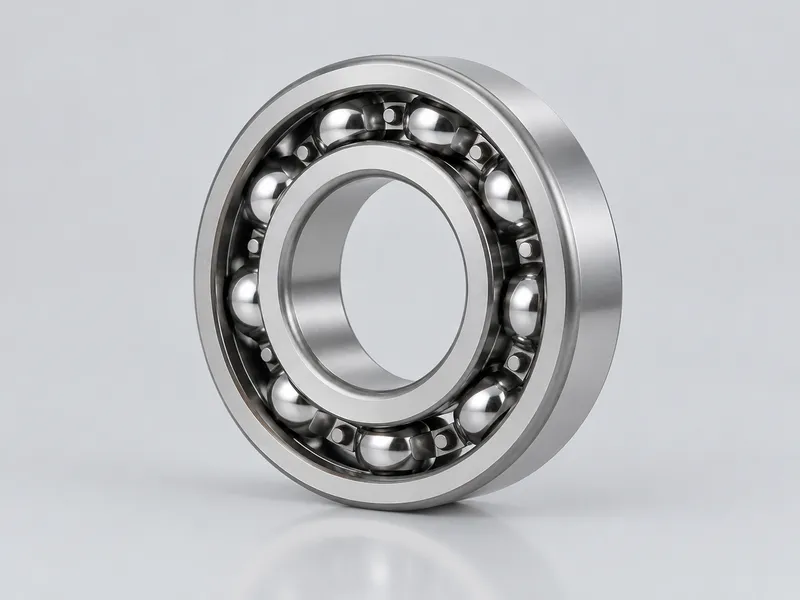
6000 series executions — open, ZZ, 2RS
6004 is the open execution; 6004 ZZ would add two metal shields and 6004 2RS two rubber contact seals, all sharing the same boundary dimensions. Our published evidence for the 6000 series currently covers the open execution, so the shielded and sealed cells below are shown as Confirm at quotation: we supply those executions on request after confirming the details, we do not quote them from this table. The designations 6023, 6025, 6027 and 6029 do not appear in our collected manufacturer catalog, so they appear here only in the note — send us the designation and we confirm availability at quotation.
| Base designation | Bore d (mm) | OD D (mm) | Width B (mm) | Cr (open) | Open | Shielded (ZZ) | Sealed (2RS) | RFQ |
|---|---|---|---|---|---|---|---|---|
| 6000 Koyo / JTEKT | 10 | 26 | 8 | 5.7 kN | 6000 Koyo / JTEKT | Confirm at quotation | Confirm at quotation | Request quote |
| 6001 Koyo / JTEKT | 12 | 28 | 8 | 6.4 kN | 6001 Koyo / JTEKT | Confirm at quotation | Confirm at quotation | Request quote |
| 6002 Koyo / JTEKT | 15 | 32 | 9 | 7 kN | 6002 Koyo / JTEKT | Confirm at quotation | Confirm at quotation | Request quote |
| 6003 Koyo / JTEKT | 17 | 35 | 10 | 7.5 kN | 6003 Koyo / JTEKT | Confirm at quotation | Confirm at quotation | Request quote |
| 6004 Koyo / JTEKT | 20 | 42 | 12 | 11.7 kN | 6004 Koyo / JTEKT | Confirm at quotation | Confirm at quotation | Request quote |
| 6005 Koyo / JTEKT | 25 | 47 | 12 | 12.6 kN | 6005 Koyo / JTEKT | Confirm at quotation | Confirm at quotation | Request quote |
| 6006 Koyo / JTEKT | 30 | 55 | 13 | 16.5 kN | 6006 Koyo / JTEKT | Confirm at quotation | Confirm at quotation | Request quote |
| 6007 Koyo / JTEKT | 35 | 62 | 14 | 19.9 kN | 6007 Koyo / JTEKT | Confirm at quotation | Confirm at quotation | Request quote |
| 6008 Koyo / JTEKT | 40 | 68 | 15 | 20.9 kN | 6008 Koyo / JTEKT | Confirm at quotation | Confirm at quotation | Request quote |
| 6009 Koyo / JTEKT | 45 | 75 | 16 | 26.2 kN | 6009 Koyo / JTEKT | Confirm at quotation | Confirm at quotation | Request quote |
| 6010 Koyo / JTEKT | 50 | 80 | 16 | 27.3 kN | 6010 Koyo / JTEKT | Confirm at quotation | Confirm at quotation | Request quote |
| 6011 Koyo / JTEKT | 55 | 90 | 18 | 35.3 kN | 6011 Koyo / JTEKT | Confirm at quotation | Confirm at quotation | Request quote |
| 6012 Koyo / JTEKT | 60 | 95 | 18 | 36.8 kN | 6012 Koyo / JTEKT | Confirm at quotation | Confirm at quotation | Request quote |
| 6013 Koyo / JTEKT | 65 | 100 | 18 | 38.1 kN | 6013 Koyo / JTEKT | Confirm at quotation | Confirm at quotation | Request quote |
| 6014 Koyo / JTEKT | 70 | 110 | 20 | 47.6 kN | 6014 Koyo / JTEKT | Confirm at quotation | Confirm at quotation | Request quote |
| 6015 Koyo / JTEKT | 75 | 115 | 20 | 49.4 kN | 6015 Koyo / JTEKT | Confirm at quotation | Confirm at quotation | Request quote |
| 6016 Koyo / JTEKT | 80 | 125 | 22 | 59.5 kN | 6016 Koyo / JTEKT | Confirm at quotation | Confirm at quotation | Request quote |
| 6017 Koyo / JTEKT | 85 | 130 | 22 | 61.8 kN | 6017 Koyo / JTEKT | Confirm at quotation | Confirm at quotation | Request quote |
| 6018 Koyo / JTEKT | 90 | 140 | 24 | 72.8 kN | 6018 Koyo / JTEKT | Confirm at quotation | Confirm at quotation | Request quote |
| 6019 Koyo / JTEKT | 95 | 145 | 24 | 75.5 kN | 6019 Koyo / JTEKT | Confirm at quotation | Confirm at quotation | Request quote |
| 6020 Koyo / JTEKT | 100 | 150 | 24 | 75.2 kN | 6020 Koyo / JTEKT | Confirm at quotation | Confirm at quotation | Request quote |
| 6021 Koyo / JTEKT | 105 | 160 | 26 | 90.4 kN | 6021 Koyo / JTEKT | Confirm at quotation | Confirm at quotation | Request quote |
| 6022 Koyo / JTEKT | 110 | 170 | 28 | 103 kN | 6022 Koyo / JTEKT | Confirm at quotation | Confirm at quotation | Request quote |
| 6024 Koyo / JTEKT | 120 | 180 | 28 | 106 kN | 6024 Koyo / JTEKT | Confirm at quotation | Confirm at quotation | Request quote |
| 6026 Koyo / JTEKT | 130 | 200 | 33 | 133 kN | 6026 Koyo / JTEKT | Confirm at quotation | Confirm at quotation | Request quote |
| 6028 Koyo / JTEKT | 140 | 210 | 33 | 137 kN | 6028 Koyo / JTEKT | Confirm at quotation | Confirm at quotation | Request quote |
| 6030 Koyo / JTEKT | 150 | 225 | 35 | 157 kN | 6030 Koyo / JTEKT | Confirm at quotation | Confirm at quotation | Request quote |
Sealed and shielded executions carry lower catalog limiting speeds than the open execution of the same designation. Details in 2RS vs ZZ: sealed or shielded bearing.
Same-bore companions across the other series
Within the ISO 15 dimension plan, several series share bores but trade width and outer diameter against load capacity: the extra-light 6000 series, the light 6200 series, the medium 6300 series and the thin-wall 6800 / 6900 series. For each 60xx designation, the companions below are published pages whose bore dimension was checked equal — a 62xx companion fits the same shaft in a taller, higher-load envelope, a 63xx companion in a wider and taller one still, and a thin-wall companion in a smaller housing envelope with a lower load capacity. Same bore is still only the first check: clearance class, seal design and speed capability can differ between series and brands, so confirm the substitution against your application or send us the original designation.
| 6000-series designation | Bore d (mm) | Published same-bore companions | Companion boundary (d × D × B, mm) |
|---|---|---|---|
| 6000 | 10 | 6200 (Koyo / JTEKT) , 6300 (Koyo / JTEKT) , 6800 (Koyo / JTEKT) , 6900 (Koyo / JTEKT) | 6200 (Koyo / JTEKT): 10 × 30 × 9 · 6300 (Koyo / JTEKT): 10 × 35 × 11 · 6800 (Koyo / JTEKT): 10 × 19 × 5 · 6900 (Koyo / JTEKT): 10 × 22 × 6 |
| 6001 | 12 | 6201 (Koyo / JTEKT) , 6301 (Koyo / JTEKT) , 6801 (Koyo / JTEKT) , 6901 (Koyo / JTEKT) | 6201 (Koyo / JTEKT): 12 × 32 × 10 · 6301 (Koyo / JTEKT): 12 × 37 × 12 · 6801 (Koyo / JTEKT): 12 × 21 × 5 · 6901 (Koyo / JTEKT): 12 × 24 × 6 |
| 6002 | 15 | 6202 (Koyo / JTEKT) , 6302 (Koyo / JTEKT) , 6802 (Koyo / JTEKT) , 6902 (Koyo / JTEKT) | 6202 (Koyo / JTEKT): 15 × 35 × 11 · 6302 (Koyo / JTEKT): 15 × 42 × 13 · 6802 (Koyo / JTEKT): 15 × 24 × 5 · 6902 (Koyo / JTEKT): 15 × 28 × 7 |
| 6003 | 17 | 6203 (Koyo / JTEKT) , 6303 (Koyo / JTEKT) , 6803 (Koyo / JTEKT) , 6903 (Koyo / JTEKT) | 6203 (Koyo / JTEKT): 17 × 40 × 12 · 6303 (Koyo / JTEKT): 17 × 47 × 14 · 6803 (Koyo / JTEKT): 17 × 26 × 5 · 6903 (Koyo / JTEKT): 17 × 30 × 7 |
| 6004 | 20 | 6204 (Koyo / JTEKT) , 6304 (Koyo / JTEKT) , 6804 (Koyo / JTEKT) , 6904 (Koyo / JTEKT) | 6204 (Koyo / JTEKT): 20 × 47 × 14 · 6304 (Koyo / JTEKT): 20 × 52 × 15 · 6804 (Koyo / JTEKT): 20 × 32 × 7 · 6904 (Koyo / JTEKT): 20 × 37 × 9 |
| 6005 | 25 | 6205 (Koyo / JTEKT) , 6305 (Koyo / JTEKT) , 6805 (Koyo / JTEKT) , 6905 (Koyo / JTEKT) | 6205 (Koyo / JTEKT): 25 × 52 × 15 · 6305 (Koyo / JTEKT): 25 × 62 × 17 · 6805 (Koyo / JTEKT): 25 × 37 × 7 · 6905 (Koyo / JTEKT): 25 × 42 × 9 |
| 6006 | 30 | 6206 (Koyo / JTEKT) , 6306 (Koyo / JTEKT) , 6806 (Koyo / JTEKT) , 6906 (Koyo / JTEKT) | 6206 (Koyo / JTEKT): 30 × 62 × 16 · 6306 (Koyo / JTEKT): 30 × 72 × 19 · 6806 (Koyo / JTEKT): 30 × 42 × 7 · 6906 (Koyo / JTEKT): 30 × 47 × 9 |
| 6007 | 35 | 6207 (Koyo / JTEKT) , 6307 (Koyo / JTEKT) , 6807 (Koyo / JTEKT) , 6907 (Koyo / JTEKT) | 6207 (Koyo / JTEKT): 35 × 72 × 17 · 6307 (Koyo / JTEKT): 35 × 80 × 21 · 6807 (Koyo / JTEKT): 35 × 47 × 7 · 6907 (Koyo / JTEKT): 35 × 55 × 10 |
| 6008 | 40 | 6208 (Koyo / JTEKT) , 6308 (Koyo / JTEKT) , 6808 (Koyo / JTEKT) , 6908 (Koyo / JTEKT) | 6208 (Koyo / JTEKT): 40 × 80 × 18 · 6308 (Koyo / JTEKT): 40 × 90 × 23 · 6808 (Koyo / JTEKT): 40 × 52 × 7 · 6908 (Koyo / JTEKT): 40 × 62 × 12 |
| 6009 | 45 | 6209 (Koyo / JTEKT) , 6309 (Koyo / JTEKT) , 6809 (Koyo / JTEKT) , 6909 (Koyo / JTEKT) | 6209 (Koyo / JTEKT): 45 × 85 × 19 · 6309 (Koyo / JTEKT): 45 × 100 × 25 · 6809 (Koyo / JTEKT): 45 × 58 × 7 · 6909 (Koyo / JTEKT): 45 × 68 × 12 |
| 6010 | 50 | 6210 (Koyo / JTEKT) , 6310 (Koyo / JTEKT) , 6810 (Koyo / JTEKT) , 6910 (Koyo / JTEKT) | 6210 (Koyo / JTEKT): 50 × 90 × 20 · 6310 (Koyo / JTEKT): 50 × 110 × 27 · 6810 (Koyo / JTEKT): 50 × 65 × 7 · 6910 (Koyo / JTEKT): 50 × 72 × 12 |
| 6011 | 55 | 6211 (Koyo / JTEKT) , 6311 (Koyo / JTEKT) , 6811 (Koyo / JTEKT) , 6911 (Koyo / JTEKT) | 6211 (Koyo / JTEKT): 55 × 100 × 21 · 6311 (Koyo / JTEKT): 55 × 120 × 29 · 6811 (Koyo / JTEKT): 55 × 72 × 9 · 6911 (Koyo / JTEKT): 55 × 80 × 13 |
| 6012 | 60 | 6212 (Koyo / JTEKT) , 6312 (Koyo / JTEKT) , 6812 (Koyo / JTEKT) , 6912 (Koyo / JTEKT) | 6212 (Koyo / JTEKT): 60 × 110 × 22 · 6312 (Koyo / JTEKT): 60 × 130 × 31 · 6812 (Koyo / JTEKT): 60 × 78 × 10 · 6912 (Koyo / JTEKT): 60 × 85 × 13 |
| 6013 | 65 | 6213 (Koyo / JTEKT) , 6313 (Koyo / JTEKT) , 6813 (Koyo / JTEKT) , 6913 (Koyo / JTEKT) | 6213 (Koyo / JTEKT): 65 × 120 × 23 · 6313 (Koyo / JTEKT): 65 × 140 × 33 · 6813 (Koyo / JTEKT): 65 × 85 × 10 · 6913 (Koyo / JTEKT): 65 × 90 × 13 |
| 6014 | 70 | 6214 (Koyo / JTEKT) , 6314 (Koyo / JTEKT) , 6814 (Koyo / JTEKT) , 6914 (Koyo / JTEKT) | 6214 (Koyo / JTEKT): 70 × 125 × 24 · 6314 (Koyo / JTEKT): 70 × 150 × 35 · 6814 (Koyo / JTEKT): 70 × 90 × 10 · 6914 (Koyo / JTEKT): 70 × 100 × 16 |
| 6015 | 75 | 6215 (Koyo / JTEKT) , 6315 (Koyo / JTEKT) , 6815 (Koyo / JTEKT) , 6915 (Koyo / JTEKT) | 6215 (Koyo / JTEKT): 75 × 130 × 25 · 6315 (Koyo / JTEKT): 75 × 160 × 37 · 6815 (Koyo / JTEKT): 75 × 95 × 10 · 6915 (Koyo / JTEKT): 75 × 105 × 16 |
| 6016 | 80 | 6216 (Koyo / JTEKT) , 6316 (Koyo / JTEKT) , 6816 (Koyo / JTEKT) , 6916 (Koyo / JTEKT) | 6216 (Koyo / JTEKT): 80 × 140 × 26 · 6316 (Koyo / JTEKT): 80 × 170 × 39 · 6816 (Koyo / JTEKT): 80 × 100 × 10 · 6916 (Koyo / JTEKT): 80 × 110 × 16 |
| 6017 | 85 | 6217 (Koyo / JTEKT) , 6317 (Koyo / JTEKT) , 6817 (Koyo / JTEKT) , 6917 (Koyo / JTEKT) | 6217 (Koyo / JTEKT): 85 × 150 × 28 · 6317 (Koyo / JTEKT): 85 × 180 × 41 · 6817 (Koyo / JTEKT): 85 × 110 × 13 · 6917 (Koyo / JTEKT): 85 × 120 × 18 |
| 6018 | 90 | 6218 (Koyo / JTEKT) , 6318 (Koyo / JTEKT) , 6818 (Koyo / JTEKT) , 6918 (Koyo / JTEKT) | 6218 (Koyo / JTEKT): 90 × 160 × 30 · 6318 (Koyo / JTEKT): 90 × 190 × 43 · 6818 (Koyo / JTEKT): 90 × 115 × 13 · 6918 (Koyo / JTEKT): 90 × 125 × 18 |
| 6019 | 95 | 6219 (Koyo / JTEKT) , 6319 (Koyo / JTEKT) , 6919 (Koyo / JTEKT) | 6219 (Koyo / JTEKT): 95 × 170 × 32 · 6319 (Koyo / JTEKT): 95 × 200 × 45 · 6919 (Koyo / JTEKT): 95 × 130 × 18 |
| 6020 | 100 | 6220 (Koyo / JTEKT) , 6320 (Koyo / JTEKT) , 6820 (Koyo / JTEKT) , 6920 (Koyo / JTEKT) | 6220 (Koyo / JTEKT): 100 × 180 × 34 · 6320 (Koyo / JTEKT): 100 × 215 × 47 · 6820 (Koyo / JTEKT): 100 × 125 × 13 · 6920 (Koyo / JTEKT): 100 × 140 × 20 |
| 6021 | 105 | 6221 (Koyo / JTEKT) , 6321 (Koyo / JTEKT) | 6221 (Koyo / JTEKT): 105 × 190 × 36 · 6321 (Koyo / JTEKT): 105 × 225 × 49 |
| 6022 | 110 | 6222 (Koyo / JTEKT) , 6322 (Koyo / JTEKT) | 6222 (Koyo / JTEKT): 110 × 200 × 38 · 6322 (Koyo / JTEKT): 110 × 240 × 50 |
| 6024 | 120 | 6224 (Koyo / JTEKT) , 6324 (Koyo / JTEKT) | 6224 (Koyo / JTEKT): 120 × 215 × 40 · 6324 (Koyo / JTEKT): 120 × 260 × 55 |
| 6026 | 130 | 6226 (Koyo / JTEKT) , 6326 (Koyo / JTEKT) | 6226 (Koyo / JTEKT): 130 × 230 × 40 · 6326 (Koyo / JTEKT): 130 × 280 × 58 |
| 6028 | 140 | 6228 (Koyo / JTEKT) , 6328 (Koyo / JTEKT) | 6228 (Koyo / JTEKT): 140 × 250 × 42 · 6328 (Koyo / JTEKT): 140 × 300 × 62 |
| 6030 | 150 | 6230 (Koyo / JTEKT) , 6330 (Koyo / JTEKT) | 6230 (Koyo / JTEKT): 150 × 270 × 45 · 6330 (Koyo / JTEKT): 150 × 320 × 65 |
Where the 6000 series fits
The 6000, 6200 and 6300 designations belong to the metric single-row deep groove ball bearing dimension plan codified by ISO 15 (implemented in the German standard DIN 625). That is why a 6004 from any conforming manufacturer occupies the same 20 × 42 × 12 mm boundary envelope: the dimension plan is standardized, and our published model pages confirm their dimensions against it. What the plan does not standardize away: internal clearance class, seal and shield design, cage material and noise characteristics can all differ between brands and executions — so treat any equivalent as a candidate, not a confirmed swap. The checking sequence is described in how to find a replacement for an existing bearing model.
This page covers the 6000 (extra-light) series only. The 6200 and 6300 series rows, and the open / ZZ / 2RS execution notes that apply to them, live on the main deep groove ball bearing cross reference hub, with the 62xx series on its own 6200 series cross reference page and the 63xx series on its own 6300 series cross reference page.
Failure modes in service — 6000 series
A cross-reference page earns its keep at the moment of substitution — and that moment is also where the 6000 series is most exposed. The extra-light section leaves the thinnest clearance budget and the least surplus steel in the deep groove plan, so everything the table does not print — the seat the old bearing left behind, the shelf the spare stood on, the drive the position was moved onto — decides whether the replacement survives. These are the documented ways a fresh 60xx dies early.
Clearance: the first thing a thinner ring spends
The 60xx ring section is the smallest of the standard plan, so a fit that a 62xx absorbs quietly consumes a proportionally larger share of a 6000-series bearing's internal clearance — and the mechanisms that spend clearance do not care which series you installed. A tight housing fit compresses the outer ring, a tight shaft fit expands the inner, and running temperature spends the rest; past zero, the bearing runs preloaded and hot from its first hour. At speed the arithmetic tightens further: "at high RPM, the inner ring can expand from centrifugal effects. If interference fit is inadequate, micro-slip or fretting can occur; if too tight, internal clearance may be lost, increasing heat and failure risk" (high-speed motor bearing selection guide).
When a substitution moves a position across series at the same bore, re-derive the clearance class from the actual fits and the operating temperature instead of carrying the old bearing's class over. The designation-level pages linked from the table publish the boundary and abutment dimensions these checks input; the clearance classes themselves are confirmed at quotation.
The seat behind the replacement
A cross-reference check verifies the bearing fits the drawing; it cannot verify the shaft still matches the drawing. The practitioner's caution is blunt: "the print describes what the shaft was supposed to be when new. It says nothing about what the shaft is today, after years of service, bearing removals, corrosion cleanup, and the occasional strategic pass with emery cloth. Shaft seats wear. Housings distort and wear oval… A seat that started at the top of its tolerance band a decade ago may be well below the bottom of it now — and nothing about it looks wrong to the eye" (bearing fits and tolerances documentation). On an extra-light ring, a degraded seat transfers straight into the raceway.
So measure before fitting: shaft seat diameter, housing bore and roundness, shoulder squareness. If the old bearing crept, the seat is the suspect — "when interference is insufficient… the rotating ring creeps and eventually spins on its seat… The fix is restoring the seat dimension, not just replacing the bearing" (bearing fits and tolerances documentation). A new 60xx on a worn seat is a scheduled repeat failure.
Storage and transit damage to the spare
The replacement bearing spends longer on a shelf than in a machine, and thin-ring bearings are the most vulnerable passengers of that interval. Storage guidance is explicit: "store bearings in their original packaging until the moment of installation… Keep the storage area clean, dry, and free of vibration. Vibration in a stationary bearing causes false brinelling, a type of surface damage on the raceways" (plant maintenance checklist). Unwrapped spares on a vibrating bench, or a housing-parked rotor under residual belt load, dent the raceways at rolling-element pitch before the first revolution.
The triage distinction that saves the post-mortem: "true brinelling is a static-load failure. A single overload event plastically dents the raceway… False brinelling is an oscillation/vibration failure… mechanical micro-wear of the surface caused by repeated micro-movements under cyclic vibration" (static vs dynamic load guide). Pitch-spaced, reddish marks on a 60xx that never ran mean the storage plan failed — replace the bearing and fix the shelf, do not run it in.
Skidding when the step down goes too far
Choosing the extra-light series for its slim section is legitimate; carrying it past its minimum load is not. A rolling bearing needs a minimum load for the elements to roll rather than skid — below it, the balls slide, lubrication breaks down and smearing follows. The field rule: "the bearing is not loaded enough to prevent skidding, so you need to select a different bearing that will meet the minimum load. Usually that just means a smaller bearing" (bearing selection discussion) — and when the position is already in the lightest series, the honest direction is a duty conversation, not a harder run.
The substitution trap runs the other way too: a 60xx fitted where the load spectrum was sized for a 62xx companion inherits the same duty on a smaller contact ellipse, so the load-per-ball rises exactly when the section is thinnest. Check the load calculation against the specific designation's published ratings before the swap, not the series name; each designation in the table links to its own model-bound page.
Electrical erosion on the drive end
Positions move onto variable-frequency drives between one bearing replacement and the next, and the failure that follows is electrical, not mechanical. The field observation belongs on every cross-reference page: "in inverter-duty service, shaft currents can discharge through the bearing. That electrical discharge damages the raceways and eventually creates fluting, noise, and repeat failures that look mysterious if the team is only thinking mechanically. Replacing the bearing with the same all-steel design often does not solve the problem. It just resets the clock" (motor bearing field guide).
The countermeasures are specified at selection, not at teardown: shaft grounding on the drive end, an insulated or ceramic-hybrid bearing, correct earthing — "without proper grounding, VSDs can create a condition known as common-mode voltage, which can lead to bearing damage or premature motor failure" (motor bearing damage-reduction guide). State the drive duty in the inquiry; we confirm the execution against it instead of quoting the same bearing a third time.
The damage atlas behind this section is in our bearing failure modes overview, and the clearance arithmetic in the internal clearance explainer. Each designation above links to its model-bound page for the dimensions these checks input.