
Deep Groove Ball Bearings
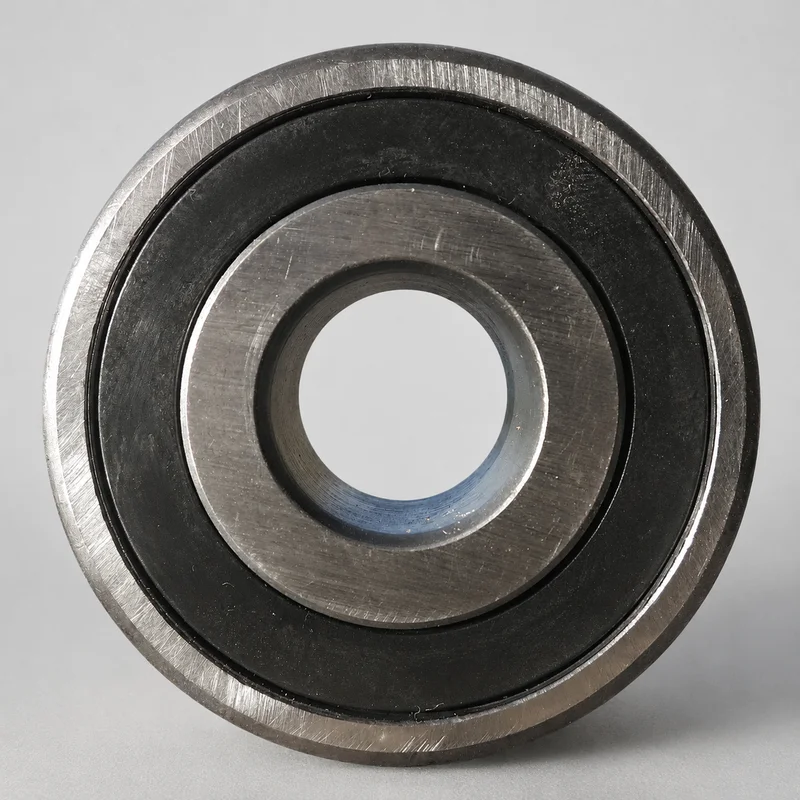
Deep groove ball bearing 6304 2RS
Deep groove ball bearing 6304 2RS, double contact seal, boundary dimensions 20 mm × 52 mm × 15 mm. Specifications below are model-bound published values; the source class is identified for each parameter. Send your application details through the RFQ for a confirmed quotation.
Last updated: 2026-11
Specifications
| Specification | Value | Parameter class | Source publisher |
|---|---|---|---|
| Bore diameter (d) | 20 mm | Model designation & boundary dimension | koyo.jtekt.co.jpManufacturer-published specification |
| Outside diameter (D) | 52 mm | Model designation & boundary dimension | koyo.jtekt.co.jpManufacturer-published specification |
| Width (B) | 15 mm | Model designation & boundary dimension | koyo.jtekt.co.jpManufacturer-published specification |
| Minimum chamfer (r min.) | 1.1 mm | Model designation & boundary dimension | koyo.jtekt.co.jpManufacturer-published specification |
| Basic dynamic load rating (Cr) | 19.9 kN Basic dynamic load rating is a catalog reference used in bearing-life calculations; confirm equivalent load, speed, reliability and required service life for the application. | Manufacturer catalog reference — not a supply guarantee | koyo.jtekt.co.jpManufacturer-published specification |
| Basic static load rating (C0r) | 7.85 kN Basic static load rating is a catalog reference; verify equivalent static load and the required static safety factor for the application. | Manufacturer catalog reference — not a supply guarantee | koyo.jtekt.co.jpManufacturer-published specification |
| Fatigue load limit (Cu) | 0.66 kN Fatigue load limit is a catalog reference, not a standalone allowable-load or service-life guarantee; verify application duty and lubrication conditions. | Manufacturer catalog reference — not a supply guarantee | koyo.jtekt.co.jpManufacturer-published specification |
| Limiting speed, grease lubrication | 9500 min-1 Catalog limiting speed for grease lubrication, not an application operating recommendation. Confirm lubricant, temperature, load, sealing and duty conditions before selection. | Manufacturer catalog reference — not a supply guarantee | koyo.jtekt.co.jpManufacturer-published specification |
| Shaft abutment diameter (da min.) | 26.5 mm | Model designation & boundary dimension | koyo.jtekt.co.jpManufacturer-published specification |
| Shaft abutment diameter (da max.) | 27 mm | Model designation & boundary dimension | koyo.jtekt.co.jpManufacturer-published specification |
| Housing abutment diameter (Da max.) | 45.5 mm | Model designation & boundary dimension | koyo.jtekt.co.jpManufacturer-published specification |
| Fillet radius (r max.) | 1 mm | Model designation & boundary dimension | koyo.jtekt.co.jpManufacturer-published specification |
| Reference mass | 0.144 kg | Manufacturer catalog reference — not a supply guarantee | koyo.jtekt.co.jpManufacturer-published specification |
Parameter classes: Model designation & boundary dimension — what identifies the model (boundary dimensions follow the designation). Manufacturer catalog reference — the named manufacturer's published catalog data for this designation; it is not a guarantee that every unit we supply reaches these exact figures. Industry reference — a third-party or industry-published value; it is not specific to the named manufacturer and is not a supply guarantee. Supplier-confirmed — a value we have confirmed for our own supply. Order-confirmed — the value fixed in a specific order. None of the values on this page are supplier-confirmed yet; supply-specific figures (tolerance class, clearance, seal variant availability, lead time) are confirmed with your quotation.
The source publisher shown on each row identifies where that parameter was published; it is not necessarily the manufacturer supplying your order. Manufacturer-published specifications are linked where the source is approved for public linking. Industry-reference publishers are shown as text.
All values above are model-bound catalog values traceable to a collected source. Fields without collected evidence are not published; ask with your inquiry and we confirm them at quotation.
Manufacturer / model attribution: Koyo / JTEKT — 6304 2RS (double contact seal). This is the manufacturer named by the model-evidence record; it does not establish that every item supplied for an inquiry comes from this manufacturer. The actual manufacturer, original model and supplying source are confirmed in the quotation.
Source per specification field
| Specification | Source |
|---|---|
| Bore diameter (d) | koyo.jtekt.co.jp — manufacturer-published specification |
| Outside diameter (D) | koyo.jtekt.co.jp — manufacturer-published specification |
| Width (B) | koyo.jtekt.co.jp — manufacturer-published specification |
| Minimum chamfer (r min.) | koyo.jtekt.co.jp — manufacturer-published specification |
| Basic dynamic load rating (Cr) | koyo.jtekt.co.jp — manufacturer-published specification |
| Basic static load rating (C0r) | koyo.jtekt.co.jp — manufacturer-published specification |
| Fatigue load limit (Cu) | koyo.jtekt.co.jp — manufacturer-published specification |
| Limiting speed, grease lubrication | koyo.jtekt.co.jp — manufacturer-published specification |
| Shaft abutment diameter (da min.) | koyo.jtekt.co.jp — manufacturer-published specification |
| Shaft abutment diameter (da max.) | koyo.jtekt.co.jp — manufacturer-published specification |
| Housing abutment diameter (Da max.) | koyo.jtekt.co.jp — manufacturer-published specification |
| Fillet radius (r max.) | koyo.jtekt.co.jp — manufacturer-published specification |
| Reference mass | koyo.jtekt.co.jp — manufacturer-published specification |
6304 sealed variants — JTEKT 2RS vs NSK DDU
These two manufacturer-listed sealed executions share the same 20 × 52 × 15 mm envelope, but their published load ratings, grease limiting speeds and shaft-shoulder ranges are not identical. Treat the suffix as part of the ordered bearing identity.
| Buyer check | Koyo / JTEKT 6304 2RS | NSK 6304DDU |
|---|---|---|
| Seal execution | Contact sealed | Rubber contact seal on both sides |
| Boundary dimensions (d × D × B) | 20 × 52 × 15 mm | 20 × 52 × 15 mm |
| Basic dynamic load rating | Cr = 19.9 kN | Cr = 17.5 kN |
| Basic static load rating | C0r = 7.85 kN | C0r = 7.90 kN |
| Fatigue load limit | Cu = 0.660 kN | Not listed on cited product page |
| Calculation factor | f0 = 12.3 | f0 = 12.4 |
| Grease limiting speed | 9,500 min⁻¹ | 10,000 min⁻¹ |
| Shaft abutment diameter (da) | 26.5–27 mm | 26.5–28 mm |
| Housing abutment (Da) | ≤ 45.5 mm | ≤ 45.5 mm |
| Fillet radius (ra) | ≤ 1 mm | ≤ 1 mm |
| Reference mass | 0.144 kg | Approx. 0.145 kg |
| Clearance / tolerance stated on cited page | Not stated on the cited product detail | CN / ISO Normal Class |
Selection implications: JTEKT publishes a 2.4 kN higher basic dynamic load rating for this exact 6304 2RS product page; NSK publishes a 0.05 kN higher basic static rating and a 500 min⁻¹ higher grease limiting speed. The NSK shaft-abutment upper limit is 28 mm, compared with 27 mm for the cited JTEKT execution. If the drawing requires a shaft shoulder above 27 mm and no more than 28 mm, the published interface range supports the cited NSK 6304DDU but not the cited JTEKT 6304 2RS.
Do not rank these bearings by one catalog number alone. Basic dynamic/static ratings are sizing inputs, not direct allowable working loads; limiting speed is not a guaranteed continuous operating speed. The two product pages do not provide a same-condition comparison of grease type/fill quantity, seal material, service temperature or actual contamination resistance. Obtain the exact suffix, operating temperature, lubricant, load spectrum, duty cycle and fit conditions before final selection.
Sources: Koyo / JTEKT 6304 2RS official product detail — specification and mounting dimensions; NSK 6304DDU official product detail — dimensions, load ratings, speed, abutment dimensions and properties.
6304 contact seals — material temperature is not the complete bearing temperature rating
Do not approve a 6304 sealed-bearing substitution from the suffix or the rubber-material temperature range alone. The exact NSK 6304DDU and SKF 6304-2RSH executions both have a 20 × 52 × 15 mm envelope and two-sided contact seals, but the published temperature figures describe different things. NSK's seal-material table gives NBR contact seals a −30 to +110 °C range, while its standard sealed-bearing table limits DDU standard bearings to −10 to +100 °C. SKF identifies 2RSH as a two-sided NBR contact seal and gives −40 to +100 °C, with up to +120 °C only for brief periods. These are not interchangeable continuous-duty ratings.
| Manufacturer / exact execution | Seal identity | Published temperature statement | What the number describes |
|---|---|---|---|
| NSK 6304DDU | DDU: rubber contact seals on both sides; NBR is the standard general-purpose material | Standard-bearing table: −10 to +100 °C. Seal-material table: NBR contact seal −30 to +110 °C. | Different layers in NSK's own catalogue: standard sealed-bearing operating guidance versus rubber-material selection range. The latter does not override the former. |
| SKF 6304-2RSH | 2RSH: NBR contact seals on both sides; SKF's 6300-series product table lists 6304 at 20 × 52 × 15 mm. | NBR: −40 to +100 °C; up to +120 °C for brief periods. | Seal-material range, not an unconditional complete-bearing continuous-duty approval. SKF notes that temperature peaks typically occur at the seal lip and that grease also limits bearing temperature. |
| Koyo / JTEKT 6304 2RS | Official product page identifies a contact-sealed 6304 2RS, 20 × 52 × 15 mm. | No seal-material or operating-temperature range is stated on the cited product page. | Missing public field: do not infer NBR, FKM, or a temperature limit from the generic “2RS” label. |
How to read the apparent NSK 10 °C difference: the +110 °C figure is the stated upper range for the NBR rubber contact-seal material; NSK separately lists +100 °C for a standard DDU sealed bearing. NSK says the standard-bearing range may be extended by changing to heat-/cold-resistant grease or changing the rubber type, and its material table describes a continuous-operation guideline whose value refers to the rubber seal itself. Therefore, “NSK DDU NBR +110 °C” is not enough to approve the complete standard 6304DDU at +110 °C. The exact grease and any special rubber execution must be confirmed.
Buyer decision example: if the stated steady operating temperature is 105 °C, the published standard-bearing ceiling for NSK 6304DDU (+100 °C) is exceeded, and SKF's standard 2RSH NBR seal range (+100 °C) is also exceeded. The fact that NSK's NBR material table reaches +110 °C does not by itself close that gap. JTEKT's cited 6304 2RS page gives no temperature or seal material, so it cannot be ranked as more heat-capable from the available record. Do not accept any of the three as a 105 °C continuous-duty replacement without written manufacturer confirmation for the exact suffix, grease and operating conditions.
Temperature measurement matters: SKF warns that temperature peaks typically occur at the seal lip. A housing, outer-ring or ambient temperature reading is not automatically the seal-lip temperature. For a meaningful supplier clarification, state where the temperature is measured, steady-state versus transient duration, cycle frequency, speed, load, ambient conditions and lubricant. Ask for both the complete bearing's permissible continuous operating range and the seal compound's range; keep short-duration peak limits separate from continuous limits.
RFQ / incoming-check fields: exact manufacturer and full designation (6304DDU, 6304-2RSH, 6304 2RS, including any grease or special material suffix); seal material and compound; grease manufacturer/type and temperature class; permissible continuous bearing temperature; permitted short-time peak and duration; temperature measurement point; and written confirmation for the actual speed/load/duty cycle. If the application needs frequent washdown or high-pressure cleaning, obtain the seal's specific contamination/water-ingress performance separately—temperature figures do not establish sealing performance.
Scope and limits: this comparison concerns the published standard contact-seal executions and general manufacturer guidance for 6304-size deep-groove ball bearings. It is not a same-condition thermal test, does not establish service life at any temperature, and does not approve cross-brand interchangeability. The NSK catalogue's +100 °C standard-bearing guidance and +110 °C NBR material guidance are retained as two distinct statements; no attempt is made to choose one as the “correct” replacement for the other. Special grease, special elastomer, seal geometry, bearing speed, load, fit, heat generation and lubrication may change the application limit.
Sources: NSK Rolling Bearings for Industrial Machinery, CAT. No. E1103C, Part C, “Design, Types, and Features,” Table 1 “Features of Sealed Ball Bearings” (printed p. C005; DDU standard-bearing range −10 to +100 °C and note below table); and “Features and Operating Temperature Range of Ball Bearing Seal Material,” Table 1 (printed p. C016; continuous-operation guideline; NBR contact seal −30 to +110 °C; temperature refers to rubber seal material). Open NSK E1103C Part C. NSK Technical Insight — Seals and Shields for Single Row Deep Groove Ball Bearings, document reference SRDG SEALS / ATI /23, Tables 1–2 (DDU contact-seal characteristics and NBR material range −30 to +110 °C). Open NSK Technical Insight (2023). NSK 6304DDU official product record (20 × 52 × 15 mm; DDU rubber contact seals on both sides). SKF SKF Explorer deep groove ball bearings with RSL and RSH seals, document 6270 EN, “Common properties of the seal designs,” p. 2 (RSH/RSL NBR −40 to +100 °C, up to +120 °C briefly) and RSH/RS1 comparison, p. 3. Open SKF seal-design publication. SKF Bearings and Mounted Products, PUB 100-700, 2018, designation table (printed p. 33; 2RSH = NBR contact seals on both sides) and Series 6300 product table, 6304 row (20 × 52 × 15 mm; 2RSH limiting speed 9,500 r/min). Open SKF 2018 catalogue. SKF Deep groove ball bearing temperature limits (NBR −40 to +100 °C, brief +120 °C; seal-lip temperature peaks; lubricant is another limit; accessed 2026-11-25). Koyo / JTEKT 6304 2RS official product record (contact-sealed execution and dimensions; no seal material or temperature range stated on the cited page).
6304 2RS vs NSK 6304DDU — what the dynamic-load difference means for basic rating life
The cited Koyo / JTEKT 6304 2RS and NSK 6304DDU have the same 20 × 52 × 15 mm envelope and are both double-sided contact-sealed deep-groove ball bearings, but their published basic dynamic radial load ratings differ: 19.9 kN versus 17.5 kN. That 13.7% rating difference is not a 13.7% life difference. For a ball bearing, ISO 281 basic rating life varies with the cube of C/P.
| Calculation item | Koyo / JTEKT 6304 2RS | NSK 6304DDU | Buyer interpretation |
|---|---|---|---|
| Boundary dimensions | 20 × 52 × 15 mm | 20 × 52 × 15 mm | Same nominal envelope only |
| Basic dynamic radial rating, C | 19.9 kN | 17.5 kN | Manufacturer-published rating inputs |
| Basic static radial rating, C₀r | 7.85 kN | 7.90 kN | Static rating is a separate check; do not substitute it into the dynamic-life equation |
| Calculated basic-life ratio, same P | ((19.9 / 17.5)³) = 1.470 | About 47.0% higher theoretical L₁₀ for JTEKT in the restricted comparison case below | |
Calculation and units: ISO 281 basic rating life is L₁₀ = (C / P)ᵖ, where C and equivalent dynamic bearing load P use the same force unit, L₁₀ is in millions of revolutions, and p = 3 for ball bearings. For this comparison only, assume the same constant, purely radial load Fr on both bearings, negligible axial load so that P = Fr for both, and otherwise compare the same operating case. Then:
L₁₀(JTEKT) / L₁₀(NSK) = (19.9 kN / 17.5 kN)³ = 1.470.
This is a calculated ratio of basic rating lives, not a measured life result. At equal rotational speed it is also the same ratio of basic-rating-life hours; at different speeds, hours must be recalculated using each speed. The basic L₁₀ is a statistical fatigue-life measure at 90% reliability, not a promise that an individual bearing will last that long.
Where this comparison stops: if axial load is material, do not assume both bearings have the same P. Calculate each manufacturer's equivalent dynamic load with its own applicable X/Y factors and threshold conditions first; the cited product pages list f₀ = 12.3 for JTEKT and 12.4 for NSK but do not, by themselves, provide every input needed for a complete combined-load calculation. The comparison also does not account for different grease, seal friction, contamination, fit, temperature, vibration, or life-modification factors. SKF's ISO 281 guidance explicitly distinguishes basic L₁₀ from modified rating life incorporating lubrication, contamination and fatigue-load-limit effects.
Procurement decision: for a radial-load-only preliminary screen, the published C values imply a 1.470 basic-life ratio under the stated equal-load assumptions; they do not establish a 47% longer field service life or prove interchangeability. Before approving either brand as a substitute, confirm the actual radial/axial load spectrum, speed, reliability target, lubricant and fill, operating temperature, contamination, fits, and exact ordered suffix. Keep the static-load / safety-factor check separate from this dynamic-life comparison.
Scope: exact Koyo / JTEKT 6304 2RS versus exact NSK 6304DDU only. The calculation is a transparent ISO 281 basic-life comparison under equal constant purely radial load; it is not a modified-life calculation, product test, application guarantee, or cross-brand approval. The published load ratings remain manufacturer-attributed data, not supplier measurements or an assertion about current stock.
Sources: Koyo / JTEKT, official 6304 2RS product detail, “Specification data”: d = 20 mm, D = 52 mm, B = 15 mm, Cr = 19.9 kN, C₀r = 7.85 kN, f₀ = 12.3 (online product record; accessed 2026-11-25); NSK, official 6304DDU product detail, “Boundary Dimensions”, “Basic Load Ratings”, “Calculation factors”: d = 20 mm, D = 52 mm, B = 15 mm, Cr = 17,500 N, C₀r = 7,900 N, f₀ = 12.4 (online product record; accessed 2026-11-25); SKF, Rolling bearings, PUB BU/P1 17000/1 EN, October 2018, Section B.3 “Bearing size”, “Basic rating life”, printed page 89 (ISO 281 formula, 90% reliability, C/P definitions and p = 3 for ball bearings); same section, “Life modification factor, aSKF”, printed page 94 (lubrication, contamination and fatigue-load-limit effects). Open SKF catalogue PDF.
6304 variants — 3 published executions
The 6304 designation fixes the boundary dimensions. The published executions below share the same base designation and verified manufacturer attribution. Each row retains its own source-record configuration; choose only after checking the manufacturer, sealing arrangement and lubrication requirements.
| Model | Manufacturer record | Source configuration | Bore d (mm) | Outside D (mm) | Width B (mm) | Execution | Cr (kN) |
|---|---|---|---|---|---|---|---|
| 6304 | Koyo / JTEKT | open | 20 mm | 52 mm | 15 mm | open | 19.9 kN |
| 6304 ZZ | Koyo / JTEKT | double metal shield | 20 mm | 52 mm | 15 mm | ZZ shielded | 19.9 kN |
| 6304 2RS | Koyo / JTEKT | double contact seal | 20 mm | 52 mm | 15 mm | 2RS sealed | 19.9 kN |
Every row identifies the manufacturer and configuration from that exact variant's evidence record. Parameter cells are that page's own model-bound catalog values; unpublished fields are not shown. A manufacturer record is not a promise of the order's supplying source. Click a column header to sort. If you need an execution not listed here, send it in the inquiry and we confirm availability at quotation.
6304 2RS vs 6303 vs 6305 ZZ vs 6305 — same-manufacturer series comparison
Nearest published designations in the same series. A manufacturer is named only when the evidence record identifies a bearing maker; otherwise the column says it is not identified. Source configuration and each field's publisher attribution remain separate. When more than one manufacturer appears, this is a cross-manufacturer catalog comparison, not an equivalence, interchangeability or common-source claim. Highlighted rows are the parameters that differ across these published records; unhighlighted rows have identical published values, not necessarily identical performance in service.
| Parameter | 6304 2RS (this page) Manufacturer: Koyo / JTEKT Source configuration: double contact seal | 6303 Manufacturer: Koyo / JTEKT Source configuration: open, boundary dimensions | 6305 ZZ Manufacturer: Koyo / JTEKT Source configuration: double metal shield | 6305 Manufacturer: Koyo / JTEKT Source configuration: open |
|---|---|---|---|---|
| Bore diameter (d) | 20 mm standard-model · koyo.jtekt.co.jp · Manufacturer-published specification | 17 mm standard-model · jtekt.co.jp · Manufacturer-published specification | 25 mm standard-model · koyo.jtekt.co.jp · Manufacturer-published specification | 25 mm standard-model · jtekt.co.jp · Manufacturer-published specification |
| Outside diameter (D) | 52 mm standard-model · koyo.jtekt.co.jp · Manufacturer-published specification | 47 mm standard-model · jtekt.co.jp · Manufacturer-published specification | 62 mm standard-model · koyo.jtekt.co.jp · Manufacturer-published specification | 62 mm standard-model · jtekt.co.jp · Manufacturer-published specification |
| Width (B) | 15 mm standard-model · koyo.jtekt.co.jp · Manufacturer-published specification | 14 mm standard-model · jtekt.co.jp · Manufacturer-published specification | 17 mm standard-model · koyo.jtekt.co.jp · Manufacturer-published specification | 17 mm standard-model · jtekt.co.jp · Manufacturer-published specification |
| Basic dynamic load rating (Cr) | 19.9 kN reference-manufacturer · koyo.jtekt.co.jp · Manufacturer-published specification · Basic dynamic load rating is a catalog reference used in bearing-life calculations; confirm equivalent load, speed, reliability and required service life for the application. | 17 kN reference-manufacturer · jtekt.co.jp · Manufacturer-published specification · Basic dynamic load rating is a catalog reference used in bearing-life calculations; confirm equivalent load, speed, reliability and required service life for the application. | 25.7 kN reference-manufacturer · koyo.jtekt.co.jp · Manufacturer-published specification · Basic dynamic load rating is a catalog reference used in bearing-life calculations; confirm equivalent load, speed, reliability and required service life for the application. | 25.7 kN reference-manufacturer · jtekt.co.jp · Manufacturer-published specification · Basic dynamic load rating is a catalog reference used in bearing-life calculations; confirm equivalent load, speed, reliability and required service life for the application. |
| Basic static load rating (C0r) | 7.85 kN reference-manufacturer · koyo.jtekt.co.jp · Manufacturer-published specification · Basic static load rating is a catalog reference; verify equivalent static load and the required static safety factor for the application. | 6.65 kN reference-manufacturer · jtekt.co.jp · Manufacturer-published specification · Basic static load rating is a catalog reference; verify equivalent static load and the required static safety factor for the application. | 11.3 kN reference-manufacturer · koyo.jtekt.co.jp · Manufacturer-published specification · Basic static load rating is a catalog reference; verify equivalent static load and the required static safety factor for the application. | 11.3 kN reference-manufacturer · jtekt.co.jp · Manufacturer-published specification · Basic static load rating is a catalog reference; verify equivalent static load and the required static safety factor for the application. |
| Fatigue load limit (Cu) | 0.66 kN reference-manufacturer · koyo.jtekt.co.jp · Manufacturer-published specification · Fatigue load limit is a catalog reference, not a standalone allowable-load or service-life guarantee; verify application duty and lubrication conditions. | 0.55 kN reference-manufacturer · jtekt.co.jp · Manufacturer-published specification · Fatigue load limit is a catalog reference, not a standalone allowable-load or service-life guarantee; verify application duty and lubrication conditions. | 0.86 kN reference-manufacturer · koyo.jtekt.co.jp · Manufacturer-published specification · Fatigue load limit is a catalog reference, not a standalone allowable-load or service-life guarantee; verify application duty and lubrication conditions. | Not published for this designation |
| Limiting speed, grease | 9500 min-1 reference-manufacturer · koyo.jtekt.co.jp · Manufacturer-published specification · Catalog limiting speed for grease lubrication, not an application operating recommendation. Confirm lubricant, temperature, load, sealing and duty conditions before selection. | 15000 min-1 reference-manufacturer · jtekt.co.jp · Manufacturer-published specification · Catalog limiting speed for grease lubrication, not an application operating recommendation. Confirm lubricant, temperature, load, sealing and duty conditions before selection. | 11000 min-1 reference-manufacturer · koyo.jtekt.co.jp · Manufacturer-published specification · Catalog limiting speed for grease lubrication, not an application operating recommendation. Confirm lubricant, temperature, load, sealing and duty conditions before selection. | 11000 min-1 reference-manufacturer · jtekt.co.jp · Manufacturer-published specification · Catalog limiting speed for grease lubrication, not an application operating recommendation. Confirm lubricant, temperature, load, sealing and duty conditions before selection. |
| Limiting speed, oil | — not published Not published for this designation | 18000 min-1 reference-manufacturer · jtekt.co.jp · Manufacturer-published specification · Catalog limiting speed for oil lubrication, not an application operating recommendation. Confirm lubricant, temperature, load, sealing and duty conditions before selection. | Not published for this designation | 13000 min-1 reference-manufacturer · jtekt.co.jp · Manufacturer-published specification · Catalog limiting speed for oil lubrication, not an application operating recommendation. Confirm lubricant, temperature, load, sealing and duty conditions before selection. |
Each published cell carries its own parameter tier and publisher attribution; each column identifies the manufacturer only when the evidence record names one, plus the source configuration. A source publisher is not necessarily the supplying source for an order. Cross-manufacturer values are shown for catalog context only: they do not establish interchangeability, equivalent quality, common manufacturing origin or a preferred supply route. Compare values only within the stated parameter class, publisher, configuration and operating conditions. Industry-reference values are not manufacturer-specific. Confirm fit, load, speed, clearance, sealing and actual supplying source for your application in the quotation.
Applications and selection notes
Deep groove ball bearings are the default radial bearing for electric motors, fans, pumps, gearboxes, agricultural machinery and general industrial equipment. The single-row design carries radial load and a limited axial load in both directions, needs no adjustment after mounting, and runs at higher speeds than most alternative types of the same size.
In the sealed (2RS) and shielded (ZZ) executions, the bearing is lubricated for life and maintenance-free under normal operating conditions, which is why motor and appliance manufacturers standardise on them. In the open execution, the bearing is lubricated from the housing or shaft — the usual choice when the surrounding assembly provides filtration, re-lubrication or oil-bath lubrication.
How to read the specification table
Read the specification table against three limits. Boundary dimensions (bore, outside diameter, width) decide whether the bearing fits the shaft and housing — these are standardised designation-bound values and interchangeable across conforming manufacturers. Load ratings (Cr, C0r) describe different failure checks: Cr is used for rolling-fatigue life under dynamic load; C0r is the ISO 76 basic static rating tied to a defined contact-stress / permanent-deformation criterion, not a universal allowable working load.
Do not approve a bearing from C0r alone. For a deep-groove ball bearing, first convert the actual radial/axial load combination to the equivalent static load P0 using the exact maker’s X0/Y0 factors, then calculate s0 = C0r / P0. The required s0 is an application criterion, not a suffix or a universal constant: NTN’s Precision Rolling Bearings catalogue (Table 3.3) gives minimum values for ball bearings of 2 for quiet-rotation applications, 1.5 for impact-load applications and 1 for normal-rotation applications, and explicitly says vibration/shock requires a shock-load factor in P0 max. SKF’s 2018 general catalogue separately classifies rotating versus non-rotating duty, quiet-running requirement and shock severity in Table 5, and says to use the maximum load that can occur. These tables are not a common test or a directly transferable brand ranking; their application categories differ. For ordinary aligned arrangements, use the exact maker’s C0r, X0/Y0 and stated duty assumptions. Where shaft/housing tilt, misalignment, moment load or operating clearance materially changes rolling-element load sharing, the simplified ISO 76 C0/P0 check may miss the peak-loaded element: ask for an effective static safety-factor calculation using ISO 17956:2025 or an equivalent documented internal-load-distribution method. ISO 17956 adds tilt/misalignment, operating clearance and internal load distribution; it checks static deformation only, not fatigue life, false brinelling, wear or microspalling. In the RFQ, provide peak radial and axial loads, shock duration/direction, rotation state, required quietness, operating clearance, shaft/housing misalignment and moment load; request the maker’s P0 factors, selected s0 basis and calculation assumptions. Do not use Cr as a substitute for this static check or treat a passing basic C0/P0 ratio as proof for a tilted or moment-loaded assembly.
Limiting speeds are catalog values established for the manufacturer’s execution, clearance and lubrication; they are not an operating recommendation for your application. Sealed and shielded executions, heavy fits, elevated temperature or misalignment all reduce the usable speed. Confirm the speed and clearance choice against your actual conditions before ordering — the internal-clearance class in particular should follow fit, temperature and speed, not a default.
Related engineering knowledge
Background reading that supports the selection decision on this page — failure modes, seal trade-offs and lubrication behavior. These articles explain the engineering; the specifications and supply commitments live on this page and in the quotation.
6304 2RS — buying questions
What does 2RS mean on 6304 2RS, and how does it compare with the ZZ or open execution?
2RS denotes contact seals on both sides: the bearing is greased for life, keeps dirt and water out better, and runs with slightly more friction. ZZ denotes metal shields, which admit less friction but seal less tightly, and the open execution has neither and is lubricated from the surrounding assembly. The boundary dimensions are identical, so the choice is sealing and speed, not size — the trade-offs are set out in our 2RS vs ZZ guide.
Are the catalog load rating and speed of 6304 2RS enough for my application?
The table lists Basic dynamic load rating (Cr) = 19.9 kN and grease-lubricated limit 9500 min-1. The load rating is the starting point of a life calculation, and each speed is a catalog limit for the manufacturer’s execution, not an application operating recommendation. Seals, fits, temperature and lubrication all affect the usable speed in a real assembly. Only the grease-lubricated limit is published here; this table does not establish an oil-lubricated limit for this execution. Send the application conditions with your inquiry and we confirm suitability before quoting; do not size from the catalog speed alone.
What information do you need to quote 6304 2RS?
Four things, in one message: the designation (and execution — seals, clearance class, precision class, if not standard), the quantity, the destination country, and any documents you require. Application conditions such as speed, load direction and temperature are welcome and let us verify the execution instead of assuming it. Quotation, lead time and the exact document set come back in writing.
Ordering & documentation
Documents
The documents available for 6304 2RS depend on the actual supplying source and order. State any required export, origin, material or inspection documents in your inquiry; the available document set is confirmed in writing with the quotation.
Quotation
To quote 6304 2RS, send: the designation and required execution, quantity, destination country, and any required documents. Adding the application conditions (speed, load direction, temperature, fit) lets us confirm the execution and clearance class instead of quoting blind.
Sample & supply
If you need an evaluation sample of 6304 2RS, state the required quantity and timing. Sample feasibility, source, price and dispatch timing are confirmed in the quotation; sample availability is not assumed from the standard designation alone.
Lead time for this designation and quantity is confirmed in the quotation against the actual supplying source and availability. Any applicable certificates and quality documents are confirmed for the actual supplying source and product; available documents are stated in the quotation.
Storage & shipping
Store bearings flat in their original, unopened packaging in a dry indoor area away from temperature swings. Confirm the actual preservation method, packaging, marking and transport protection for the supplying source and order before shipment. Do not rotate a bearing through its rolling elements during handling or mounting.