
Spherical Roller Bearings
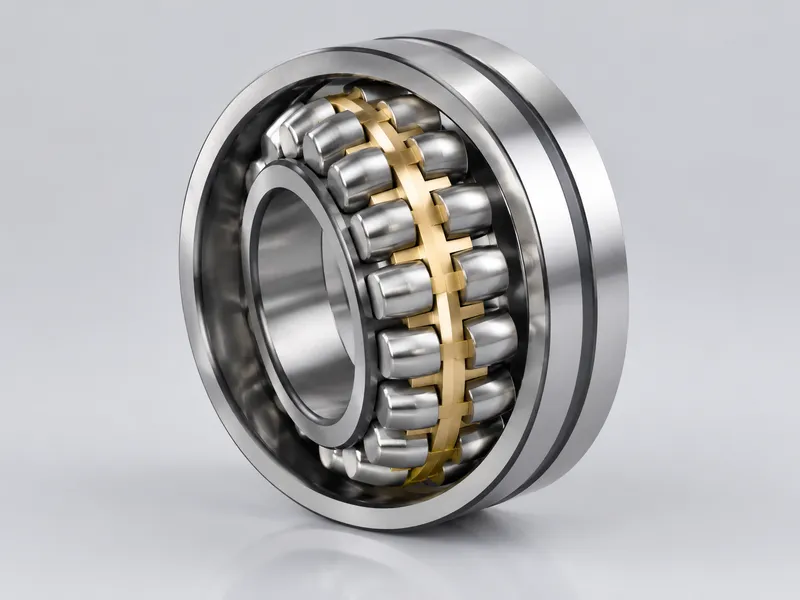
Spherical roller bearing 22228RHR
Spherical roller bearing 22228RHR, spherical roller, 222 series, boundary dimensions 140 mm × 250 mm × 68 mm. Specifications below are model-bound published values; the source class is identified for each parameter. Send your application details through the RFQ for a confirmed quotation.
Last updated: 2026-11
Specifications
| Specification | Value | Parameter class | Source publisher |
|---|---|---|---|
| Bore diameter (d) | 140 mm | Model designation & boundary dimension | jtekt.co.jpManufacturer-published specification |
| Outside diameter (D) | 250 mm | Model designation & boundary dimension | jtekt.co.jpManufacturer-published specification |
| Width (B) | 68 mm | Model designation & boundary dimension | jtekt.co.jpManufacturer-published specification |
| Basic dynamic load rating (Cr) | 947 kN Basic dynamic load rating is a catalog reference used in bearing-life calculations; confirm equivalent load, speed, reliability and required service life for the application. | Manufacturer catalog reference — not a supply guarantee | jtekt.co.jpManufacturer-published specification |
| Basic static load rating (C0r) | 1030 kN Basic static load rating is a catalog reference; verify equivalent static load and the required static safety factor for the application. | Manufacturer catalog reference — not a supply guarantee | jtekt.co.jpManufacturer-published specification |
| Minimum chamfer (r min.) | 3 mm | Model designation & boundary dimension | jtekt.co.jpManufacturer-published specification |
| Fatigue load limit (Cu) | 85.2 kN Fatigue load limit is a catalog reference, not a standalone allowable-load or service-life guarantee; verify application duty and lubrication conditions. | Manufacturer catalog reference — not a supply guarantee | jtekt.co.jpManufacturer-published specification |
| Limiting speed, grease lubrication | 1800 min-1 Catalog limiting speed for grease lubrication, not an application operating recommendation. Confirm lubricant, temperature, load, sealing and duty conditions before selection. | Manufacturer catalog reference — not a supply guarantee | jtekt.co.jpManufacturer-published specification |
| Limiting speed, oil lubrication | 2300 min-1 Catalog limiting speed for oil lubrication, not an application operating recommendation. Confirm lubricant, temperature, load, sealing and duty conditions before selection. | Manufacturer catalog reference — not a supply guarantee | jtekt.co.jpManufacturer-published specification |
| Shaft abutment diameter (da min.) | 154 mm | Model designation & boundary dimension | jtekt.co.jpManufacturer-published specification |
| Housing abutment diameter (Da max.) | 236 mm | Model designation & boundary dimension | jtekt.co.jpManufacturer-published specification |
| Fillet radius (r max.) | 2.5 mm | Model designation & boundary dimension | jtekt.co.jpManufacturer-published specification |
| Reference mass | 14.5 kg | Manufacturer catalog reference — not a supply guarantee | jtekt.co.jpManufacturer-published specification |
Parameter classes: Model designation & boundary dimension — what identifies the model (boundary dimensions follow the designation). Manufacturer catalog reference — the named manufacturer's published catalog data for this designation; it is not a guarantee that every unit we supply reaches these exact figures. Industry reference — a third-party or industry-published value; it is not specific to the named manufacturer and is not a supply guarantee. Supplier-confirmed — a value we have confirmed for our own supply. Order-confirmed — the value fixed in a specific order. None of the values on this page are supplier-confirmed yet; supply-specific figures (tolerance class, clearance, seal variant availability, lead time) are confirmed with your quotation.
The source publisher shown on each row identifies where that parameter was published; it is not necessarily the manufacturer supplying your order. Manufacturer-published specifications are linked where the source is approved for public linking. Industry-reference publishers are shown as text.
All values above are model-bound catalog values traceable to a collected source. Fields without collected evidence are not published; ask with your inquiry and we confirm them at quotation.
Manufacturer / model attribution: Koyo / JTEKT — 22228RHR (spherical roller, 222 series). This is the manufacturer named by the model-evidence record; it does not establish that every item supplied for an inquiry comes from this manufacturer. The actual manufacturer, original model and supplying source are confirmed in the quotation.
Source per specification field
| Specification | Source |
|---|---|
| Bore diameter (d) | jtekt.co.jp — manufacturer-published specification |
| Outside diameter (D) | jtekt.co.jp — manufacturer-published specification |
| Width (B) | jtekt.co.jp — manufacturer-published specification |
| Basic dynamic load rating (Cr) | jtekt.co.jp — manufacturer-published specification |
| Basic static load rating (C0r) | jtekt.co.jp — manufacturer-published specification |
| Minimum chamfer (r min.) | jtekt.co.jp — manufacturer-published specification |
| Fatigue load limit (Cu) | jtekt.co.jp — manufacturer-published specification |
| Limiting speed, grease lubrication | jtekt.co.jp — manufacturer-published specification |
| Limiting speed, oil lubrication | jtekt.co.jp — manufacturer-published specification |
| Shaft abutment diameter (da min.) | jtekt.co.jp — manufacturer-published specification |
| Housing abutment diameter (Da max.) | jtekt.co.jp — manufacturer-published specification |
| Fillet radius (r max.) | jtekt.co.jp — manufacturer-published specification |
| Reference mass | jtekt.co.jp — manufacturer-published specification |
22228 C3 — bore type changes the initial clearance band; tapered-bore mounting targets are maker-specific
Buyer conclusion: do not treat “22228 C3” as one universal micrometre range or one universal installation adjustment. For the 140 mm bore, three independent manufacturers publish the same pre-mount C3 ranges by bore type: 145–190 μm for a cylindrical bore and 160–200 μm for a tapered bore. The tapered-bore range is deliberately higher because fitting the inner ring onto a taper reduces radial clearance. After that, the mounting instructions diverge: for a 1:12 taper in the 120–140 mm bore band, JTEKT and NSK specify different clearance-reduction and axial-movement values. Use the actual bearing maker’s procedure; do not average or transfer another maker’s push-in target.
Initial C3 clearance — same size band, different bore type
The 140 mm nominal bore is in the “over 120 up to 140 mm” band; the upper limit is included. All three catalogues distinguish cylindrical and tapered bores and agree on the following C3 limits.
| Original manufacturer / source | Cylindrical bore C3 | Tapered bore C3 | Measurement basis stated by source |
|---|---|---|---|
| JTEKT, CAT. NO. BS008EN-1DS, Table 4-6 (1)/(2) | 145–190 μm | 160–200 μm | Manufacturer's pre-mount clearance table; separate tables by bore form |
| SKF, Publication 100-700, Version 4/2018, Tables 1–2 | 145–190 μm | 160–200 μm | Zero measuring load, before mounting; table references ISO 5753-1991 |
| NSK, CAT. No. E125f (2008), Table 3.12 | 145–190 μm | 160–200 μm | Separate cylindrical- and tapered-bore columns |
The difference is not a brand ranking: the same C3 label maps to two distinct initial-clearance bands because bore form is a hidden condition. At 140 mm, the tapered-bore lower limit is 15 μm higher and its upper limit is 10 μm higher than the cylindrical-bore band. The ranges overlap from 160 to 190 μm, so the suffix alone still cannot tell a buyer the actual measured clearance of an individual bearing.
Tapered-bore installation — the maker's clearance-reduction target is not interchangeable
For the same 120–140 mm bore band and a 1:12 taper, the public installation guides do not give identical instructions.
| Original manufacturer / instruction | Clearance reduction range | C3 target specified by instruction | Axial movement for 1:12 taper | Minimum residual C3 clearance |
|---|---|---|---|---|
| JTEKT, Basic Bearing Knowledge, Table 15-4 | 65–90 μm | Use the maximum listed reduction: 90 μm | 1.0–1.2 mm | 80 μm |
| NSK, Handling Instructions for Spherical Roller Bearings, Table 4.2 | 60–70 μm | For C3, aim for the maximum listed reduction: 70 μm | 0.90–1.10 mm | 0.080 mm (80 μm) |
What can and cannot be concluded: both manufacturers explain that pushing a tapered-bore bearing farther onto the shaft or sleeve expands the inner ring and reduces radial internal clearance; both require clearance reduction to be measured during mounting, and both list an 80 μm minimum residual C3 clearance for this bore band. Their recommended C3 reduction targets differ by 20 μm (90 versus 70 μm), and their axial-movement ranges are not identical. These are maker-specific installation instructions, not a same-condition comparative test. The public sources do not explain why the recommended values differ. Do not convert the difference into a quality ranking or average the two targets.
Unresolved JTEKT boundary: JTEKT's own published tapered-bore C3 initial-clearance band is 160–200 μm, while Table 15-4 says C3 mounting should aim for a 90 μm reduction and separately lists 80 μm as the minimum residual clearance. A simple boundary check at the lower initial limit gives 160 − 90 = 70 μm, below the stated 80 μm residual minimum. This is an arithmetic screening observation, not a measured bearing result or a conclusion that the catalogue is wrong. The public documents do not explain how the lower end of the initial-clearance band is reconciled with the C3 reduction target. Obtain JTEKT's written clarification for the actual measured initial clearance and installation method before setting the final push-in.
RFQ, receiving and mounting checks
- State the exact original manufacturer, complete designation, 140 × 250 × 68 mm envelope, bore form (cylindrical or tapered), and taper ratio (1:12 or other) separately from the C3 suffix.
- Request the manufacturer's current initial-clearance limits for that exact bore form, the measurement method/load, and a batch measurement record; do not accept “C3” alone as a numeric certificate.
- For a tapered bore, request the maker-specific clearance-reduction target, corresponding axial movement range, minimum residual clearance and the approved mounting method (direct tapered shaft, adapter sleeve or withdrawal sleeve).
- During mounting, record the measured initial clearance, measure the reduction progressively with a thickness gauge at multiple positions, and verify the residual clearance after the prescribed push-in. Do not use axial movement alone as a substitute for clearance measurement.
- If the supplied bearing is not from the maker whose installation guide is being used, obtain written installation instructions from the actual bearing manufacturer before mounting.
Scope and limits: the clearance comparison is for the 140 mm bore band of spherical roller bearings, with cylindrical and tapered bore values kept separate. The mounting comparison is for the 120–140 mm band and 1:12 taper in the cited JTEKT and NSK instructions. It does not establish that the exact JTEKT, SKF and NSK bearings are otherwise interchangeable, does not prove a universal C3 range for every bearing type or size, and does not replace batch measurement. No same-shaft installation trial, actual bearing measurement, or written resolution of the JTEKT residual-clearance boundary was obtained.
Sources: JTEKT, Large Size Ball & Roller Bearings, CAT. NO. BS008EN-1DS, Table 4-6 (1) and (2), printed pp.54–55 (spherical-roller C3 initial clearance for cylindrical/tapered bores); JTEKT, Basic Bearing Knowledge — Bearing mounting, §15-3-2, Table 15-4 (120–140 mm bore band, 1:12 taper, clearance reduction, axial movement and minimum residual clearance; accessed 2026-11-25): JTEKT CAT. NO. BS008EN-1DS; JTEKT bearing mounting guidance. SKF, SKF bearings and mounted products, Publication 100-700, Version 4/2018, spherical-roller radial internal clearance Tables 1–2, printed pp.160–161 (cylindrical/tapered C3 ranges; zero measuring load and before mounting): SKF catalogue PDF; SKF official product record for 22228 CCK/C3W33 (140 × 250 × 68 mm, tapered bore 1:12, C3; accessed 2026-11-25). NSK, Large-Size Rolling Bearings, CAT. No. E125f (2008), Table 3.12, printed pp.A42–A43 (C3 ranges by cylindrical/tapered bore); NSK, Handling Instructions for Spherical Roller Bearings, §4, Tables 4.1–4.2, printed pp.21–22 (initial clearance, tapered-bore clearance reduction, 1:12 axial movement and residual C3 minimum; publication date not stated on the cover, accessed 2026-11-25): NSK CAT. No. E125f; NSK handling instructions; NSK product record for 22228CDKE4C3 (140 × 250 × 68 mm, K tapered-bore execution, C3; accessed 2026-11-25).
Koyo / JTEKT 22228RHR — load ratings and lubrication-specific limiting speeds
JTEKT's exact-model product record identifies 22228RHR as a cylindrical-bore spherical roller bearing, 140 × 250 × 68 mm. Its published load ratings and limiting speeds are listed separately below so buyers can distinguish load capacity reference values from speed limits for grease and oil lubrication.
| Manufacturer parameter | 22228RHR value | Buyer interpretation |
|---|---|---|
| Basic dynamic radial load rating Cr | 947 kN | Manufacturer basic rating used in bearing-life calculations; not an allowable continuous application load |
| Basic static radial load rating C0r | 1,030 kN | Manufacturer basic static rating used in static-equivalent-load and safety-factor assessment |
| Fatigue load limit Cu | 85.2 kN | Fatigue-load reference for the manufacturer's life calculation method; not a standalone external-load limit |
| Limiting speed — grease lubrication | 1,800 min⁻¹ | Keep separate from the oil-lubricated value |
| Limiting speed — oil lubrication | 2,300 min⁻¹ | Do not treat as interchangeable with the grease-lubricated limit |
Scope: Koyo / JTEKT cylindrical-bore 22228RHR only. The manufacturer separately lists tapered-bore 22228RHRK; this section does not assign the values to another maker's same-size bearing or to an unverified order. Catalogue limiting speeds are reference limits, not a guarantee that a particular machine can run at that speed. Actual suitability requires the application's load spectrum, lubricant type and supply, operating temperature, bearing arrangement and required life to be assessed together. Cr, C0r and Cu are manufacturer rating parameters, not permitted external loads. Confirm the actual manufacturer and execution for the order.
Source: JTEKT official 22228RHR Product detail, exact designation row (d = 140 mm, D = 250 mm, B = 68 mm; Cr = 947 kN; C0r = 1,030 kN; Cu = 85.2 kN; grease limiting speed = 1,800 min⁻¹; oil limiting speed = 2,300 min⁻¹). The same rating values are cross-listed in JTEKT Large Size Ball & Roller Bearings, CAT. NO. B2002E-2, spherical roller bearing specification table, printed pages 376–377. Open the official JTEKT 22228RHR product detail; Open the JTEKT Koyo large-size bearing catalogue (CAT. NO. B2002E-2).
22228 speed ratings — grease/oil limits, thermal reference speed and mechanical ceiling are different questions
Buyer conclusion: do not choose a 22228 replacement by taking the largest catalogue rpm. The published 1,400–3,200 min⁻¹ values for same-envelope spherical roller bearings describe different speed criteria, lubrication systems and bearing executions. A 3,200 min⁻¹ mechanical/forced-oil figure is not an oil-bath operating limit; a thermal reference rating is not a mechanical ceiling; and a grease/oil limiting speed may need a load-ratio correction before it can be used for the actual machine.
| Original manufacturer / exact published execution | Grease | Oil-bath / oil | Thermal reference / rating | Mechanical limit | Execution disclosed |
|---|---|---|---|---|---|
| Koyo / JTEKT 22228RHR | Limiting 1,800 min⁻¹ | Limiting 2,300 min⁻¹ (JTEKT describes its catalogue oil value as oil bath) | Not published on cited exact-model record | Not published on cited exact-model record | 140 × 250 × 68 mm; cylindrical bore; exact page does not state cage or clearance class |
| NSK 22228CAME4C3 | 1,400 min⁻¹ | 1,700 min⁻¹ (product page labels oil-bath) | 2,600 min⁻¹, ISO 15312 oil-bath thermal speed rating | 3,200 min⁻¹, properly designed and controlled forced-circulation oil | 140 × 250 × 68 mm; C3; machined brass cage M; P0 |
| SKF 22228 CC/C4W33 | Not separately stated on cited product record | Not separately stated on cited product record | Reference speed 2,400 r/min | Limiting speed 3,200 r/min | 140 × 250 × 68 mm; C4; sheet-metal cage; W33 relubrication feature |
Why these values cannot be ranked as one speed scale
1. The same word “limiting” does not mean the same table architecture. JTEKT's bearing guidance says its grease and oil catalogue speeds apply to standard designs under normal load, approximately C/P ≥ 16 and Fₐ/Fᵣ ≤ 0.25; above 80% of the catalogue value it asks users to consult JTEKT. If C/P falls below 16 or Fₐ/Fᵣ exceeds 0.25, it requires a corrected speed nₐ = f₁ × f₂ × n. Thus 2,300 min⁻¹ is not a universal 22228RHR operating permission.
NSK's E1103 technical section defines grease/oil limiting speeds as empirical continuous-operation values. For spherical roller bearings it sets its normal-load basis at C/P ≥ 12 and Fₐ/Fᵣ ≤ approximately 0.2; above roughly P = 7% C or Fₐ/Fᵣ = 0.2 it calls for correction factors. The trigger is therefore not the same as JTEKT's: for example, an axial/radial ratio of 0.22 is already outside NSK's stated normal-load band but remains below JTEKT's 0.25 trigger. That changes when the buyer must request a corrected speed, even before comparing the numerical rpm values.
2. Thermal speed and mechanical speed answer separate questions. NSK's 2,600 min⁻¹ thermal speed rating follows ISO 15312 reference conditions (inner ring rotating, outer ring fixed, ambient 20 °C, outer ring 70 °C, radial load 0.05 C₀ᵣ, oil bath and ISO VG32, normal clearance). Its 3,200 min⁻¹ mechanical limit instead assumes properly designed and controlled forced-circulation oil lubrication and ideal heat dissipation/temperature conditions. The 600 min⁻¹ difference is not a permitted “upgrade margin”; it separates a reference thermal calculation from a mechanical/kinematic ceiling.
SKF uses a similar two-value structure: reference speed is thermal, while limiting speed is mechanical. Its current 22228 CC/C4W33 record lists 2,400 r/min reference and 3,200 r/min limiting. ISO 15312:2018 defines thermal speed rating for oil-bath-lubricated bearings under reference conditions; it does not make that value a universal operating speed or remove mechanical constraints. The numerical proximity of SKF 2,400 and NSK 2,600 is not proof of equivalent thermal performance: SKF's cited execution is C4 with a sheet-metal cage and W33, whereas NSK's is C3 with a machined-brass cage M. The cited pages do not provide a matched test or complete common execution.
3. A product-page label and a general catalogue sentence need to be reconciled. NSK's exact 22228CAME4C3 product page explicitly labels 1,700 min⁻¹ as “Oil (Oil-bath)”. E1103 Table 5.1 defines “Limiting Speed (Oil)” as oil-bath, while the following §5.1 paragraph says the oil value in its bearing tables is for forced-circulation oil lubrication. These statements are not fully aligned. Do not silently choose one interpretation for a purchase specification: request NSK to confirm in writing which lubrication arrangement the 1,700 min⁻¹ exact-model field assumes for the current order.
Selection and RFQ decision path
- Write the exact manufacturer and full designation first; 22228RHR, 22228CAME4C3 and 22228 CC/C4W33 are same-envelope but not identical executions.
- State whether the proposed system is grease, oil bath, circulating oil, oil-air, oil mist or jet lubrication. “Oil lubricated” alone is insufficient.
- Provide actual dynamic equivalent load P, basic rating C for the exact offered bearing, Fₐ/Fᵣ, speed duty cycle, ring rotation, ambient temperature, target bearing temperature and shaft/housing heat-dissipation conditions.
- Ask the maker to apply its own load and combined-load correction method and return the corrected permissible speed with calculation basis; do not transfer JTEKT f₁/f₂ or NSK correction charts across brands.
- For ISO 15312 thermal comparison, confirm reference-standard edition and disclose the actual clearance, fit-related clearance reduction, lubricant viscosity at operating temperature and heat rejection. For operation near a mechanical limit, obtain maker approval for the exact cage, lubrication supply and arrangement.
- At receiving, verify maker, complete suffix, clearance and cage marking, plus the quoted lubrication/speed basis. A catalogue rpm is not a batch test certificate or a machine-level speed guarantee.
Scope and limits: this is a definition-and-application-boundary comparison of the cited 140 × 250 × 68 mm cylindrical-bore spherical roller bearing records, not a same-condition speed test or cross-brand interchange approval. JTEKT's exact-model page does not publish a thermal or mechanical speed rating; absence from that page is not evidence that the design cannot be assessed at higher speed. NSK's product page and E1103 generic wording leave an oil-lubrication terminology point to be clarified. SKF's cited execution is C4 rather than C3. No actual shaft/housing fit, operating clearance, load spectrum, oil flow, viscosity, temperature or cooling data were supplied, so no safe operating rpm can be approved here.
Sources: Koyo / JTEKT, official 22228RHR product detail (140 × 250 × 68 mm; grease limiting 1,800; oil limiting 2,300 min⁻¹; accessed 2026-11-25); JTEKT, Basic Bearing Knowledge — Limiting speed, §“Limiting speed” (C/P ≥ 16, Fₐ/Fᵣ ≤ 0.25, oil bath, 80% consultation threshold) and Correction of limiting speed, §8, Eq. (8-1), Figs. 8-1a/8-2 (corrected speed and load triggers): Limiting speed; Correction of limiting speed. NSK, official 22228CAME4C3 product detail (grease 1,400; oil-bath 1,700; thermal 2,600; mechanical forced-circulation oil 3,200 min⁻¹; C3, M cage, P0; accessed 2026-11-25); Rolling Bearings for Industrial Machinery, CAT. No. E1103, Part A §5.1/Table 5.1 and §§5.1.1, 5.2, 5.3, printed pp. A97–A99 (speed definitions, normal-load criteria, correction triggers and ISO 15312 conditions; catalog edition/date not stated in retrieved copy): NSK E1103 catalogue. SKF, official 22228 CC/C4W33 product detail (reference 2,400; limiting 3,200 r/min; C4, sheet-metal cage, W33; accessed 2026-11-25); Rolling bearings, PUB BU/P1 17000/1 EN, October 2018, §B.5 “Operating temperature and speed”, printed pp. 135–136 (reference speed thermal conditions and mechanical limiting-speed criteria): SKF Rolling bearings catalogue. ISO, ISO 15312:2018 Rolling bearings — Thermal speed rating — Calculation, Edition 2, 2018-02, official status page (current, reviewed and confirmed 2023; scope/definition): ISO 15312:2018.
22228RHR size class — JTEKT base model vs NSK 22228CAME4C3
Two manufacturers publish cylindrical-bore spherical roller bearings in the same 140 × 250 × 68 mm envelope, but their exact designations and catalog figures differ. This comparison is a specification-screening aid, not a claim that the two products are interchangeable or that the NSK C3 clearance and machined-brass cage are present on the JTEKT 22228RHR.
| Published item | Koyo / JTEKT 22228RHR | NSK 22228CAME4C3 |
|---|---|---|
| Boundary dimensions d × D × B | 140 × 250 × 68 mm | 140 × 250 × 68 mm |
| Basic dynamic radial load rating Cr | 947 kN | 835 kN |
| Basic static radial load rating C0r | 1,030 kN | 945 kN |
| Fatigue load limit Cu | 85.2 kN | Not published on the cited NSK product page |
| Grease speed value | Limiting speed 1,800 min⁻¹ | Limiting speed 1,400 min⁻¹ |
| Oil-bath speed value | Limiting speed 2,300 min⁻¹ | Oil-bath limiting speed 1,700 min⁻¹; thermal speed rating 2,600 min⁻¹ |
| Forced-circulation oil speed | Not separately published on cited product page | Mechanical limit 3,200 min⁻¹ under properly designed and controlled forced-circulation oil lubrication |
| Calculation factors | e = 0.26; Y1 = 2.60; Y2 = 3.87; Y0 = 2.54 | e = 0.26; Y2 = 3.9; Y3 = 2.6; Y0 = 2.5 |
| Shaft / housing abutment | da(min.) = 154 mm; Da(max.) = 236 mm; ra(max.) = 2.5 mm | da(min.) = 154 mm; Da(min.) = 221 mm; Da(max.) = 236 mm; ra(max.) = 2.5 mm |
| NSK-specific execution information | Not established by the cited JTEKT product page | Cylindrical bore; machined brass cage M; C3 radial internal clearance; P0 tolerance |
| Reference mass | 14.5 kg | Approximately 14.5 kg |
What the comparison changes for initial screening: for this same envelope, the cited JTEKT product record lists Cr 112 kN higher and C0r 85 kN higher than the cited NSK execution. The catalog speed labels are not equivalent: NSK separately publishes thermal oil-bath rating, mechanical forced-circulation-oil limit, grease limit and oil-bath limit. Do not compare its 3,200 min⁻¹ forced-oil figure with JTEKT's 2,300 min⁻¹ oil-lubricated limit as if both described the same lubrication system.
The NSK suffix C3 and cage code M are explicit properties of 22228CAME4C3; they must not be copied to JTEKT 22228RHR. Likewise, JTEKT's Cu value is not a permitted external load, and Cr / C0r are basic rating inputs rather than allowable operating loads. For combined radial and axial loading, use the calculation factors belonging to the selected manufacturer's exact designation and its own equivalent-load method.
Scope: this comparison covers only JTEKT 22228RHR and NSK 22228CAME4C3 as published on the cited manufacturer product pages. Equal d × D × B establishes envelope similarity only; it does not establish equal internal geometry, clearance, cage, lubrication, fit, interchangeability or current order availability. NSK's product page explicitly identifies C3 clearance, machined brass cage M and P0 tolerance; the JTEKT page cited here does not publish equivalent execution details. Confirm the actual brand, full suffix, clearance marking, lubricant, load spectrum, temperature and speed before selecting or substituting.
Sources: JTEKT official 22228RHR product detail (exact model, dimensions, Cr/C0r/Cu, lubrication-specific limiting speeds, e/Y1/Y2/Y0 and mounting dimensions); NSK official 22228CAME4C3 product detail (exact designation, dimensions, load ratings, speed categories, abutment limits, calculation factors, C3 clearance, machined brass cage and P0 tolerance).
22228 cross-brand load ratings — equal envelope does not establish equal life or allowable load
Buyer decision: treat 22228 load ratings as a first-pass screening input, not as a brand ranking or a direct substitution limit. Three manufacturers publish the same 140 × 250 × 68 mm envelope but different basic dynamic and static ratings. The difference is large enough to change a preliminary catalogue comparison; it does not, by itself, prove that one bearing will last longer in the buyer's machine or that its C₀ value is an allowable working load.
| Original manufacturer / exact cylindrical-bore execution | d × D × B | Basic dynamic rating | Basic static rating | Execution details explicitly published in the cited source |
|---|---|---|---|---|
| Koyo / JTEKT — 22228RHR | 140 × 250 × 68 mm | Cr = 947 kN | C₀r = 1,030 kN | Cylindrical bore; Cu = 85.2 kN; e = 0.26; Y₁ = 2.60; Y₂ = 3.87; Y₀ = 2.54 |
| NSK — 22228CAME4C3 | 140 × 250 × 68 mm | Cr = 835 kN | C₀r = 945 kN | Cylindrical bore; machined-brass cage M; C3 clearance; P0 tolerance |
| SKF — 22228 CC/W33 | 140 × 250 × 68 mm | C = 743.0 kN (converted) | C₀ = 900.0 kN (converted) | SKF Explorer execution; W33 relubrication feature; cited product data sheet identifies this exact designation |
What the numerical spread does — and does not — establish
On the published figures, JTEKT's Cr is 13.4% above the cited NSK execution and 27.5% above the cited SKF execution; NSK's Cr is 12.4% above SKF's. For C₀r/C₀, the corresponding gaps are 9.0%, 14.4% and 5.0%. These percentages are arithmetic comparisons of the published catalogue numbers only. They are not measured test differences, safety margins, or proof of longer service life.
Basic dynamic rating C is an input to fatigue-life calculation, not the applied load. For roller bearings, the basic rating-life relationship is L₁₀ = (C/P)^(10/3) million revolutions, where P is the dynamic equivalent load. Therefore, a C ratio cannot be converted into a valid cross-brand life ratio unless the same load case, equivalent-load method, reliability basis and applicable rating standard are confirmed. Under combined radial and axial loading, P depends on the selected bearing's own e/X/Y factors; do not transplant one maker's factors to another. The JTEKT and NSK 22228 pages publish similar but not identical factor labels and values, which is another reason to recalculate each exact execution rather than compare C alone.
There is also a public-documentation version gap to resolve before treating the figures as a fully harmonized rating comparison. JTEKT's online basic-bearing guidance states that its basic dynamic ratings are prescribed by ISO 281:1990, while ISO's current published edition is ISO 281:2007 (Edition 2, 2007-02; last reviewed and confirmed in 2021). JTEKT's static-rating guidance literally cites “ISO 78/1987”; ISO's current static-load standard is ISO 76:2006, which replaced ISO 76:1987. The public JTEKT page may contain a typographical or legacy reference; the available evidence does not establish which calculation basis was applied to the current 22228RHR product record. Ask JTEKT to confirm the rating-standard editions used for the ordered execution. Do not silently correct the source wording or assume nonconformity.
C₀ is not a permissible static working load
ISO 76:2006 defines the static-rating method for conventional rolling-bearing designs using a contact-stress basis; for radial roller bearings the basic static rating corresponds to 4,000 MPa at the most heavily loaded rolling-element/raceway contact, associated with total permanent deformation of approximately 0.0001 times the roller diameter. C₀ is therefore a standardized reference for calculating static equivalent load and static safety factor, not a universal allowable load for a machine.
ISO 76:2006 also states that its calculation does not give satisfactory results where contact is considerably truncated or the load distribution departs from normal, including application misalignment, preload or extra-large clearance, and certain special surface treatments or coatings. In those cases the standard directs users to consult the bearing manufacturer for evaluation of static equivalent load. This is especially important when a buyer is replacing a bearing in a misaligned, preloaded or unusually-clearance arrangement: the larger catalogue C₀ alone cannot close the decision.
RFQ, substitution and receiving decision path
- Fix the original manufacturer's complete designation, including bore form, clearance, cage, lubrication groove and any application-specific suffix. “22228” plus 140 × 250 × 68 mm is not a complete substitute specification.
- For dynamic life, provide the actual radial and axial load spectrum, speed/duty cycle and required reliability; ask each manufacturer to state its own e/X/Y factors and calculate P for that exact execution.
- Ask the manufacturer to confirm the edition of ISO 281 used for Cr and the current product-specific rating data. For the JTEKT 22228RHR public reference, explicitly reconcile the ISO 281:1990 wording with the current ISO 281:2007 basis.
- For static/impact cases, provide peak Fr/Fa, stationary or oscillating duration, impact severity, misalignment, preload, clearance class and surface/coating details; request P₀, the chosen static safety factor and a written manufacturer assessment where ISO 76 assumptions are not met.
- At receiving, verify brand, complete designation, bore form, clearance, cage and W33/relubrication execution against the approved quotation and bearing markings. Do not accept “same dimensions” or a higher C/C₀ figure as sole evidence of equivalence.
Scope and limits: this is a published-data comparison of JTEKT 22228RHR, NSK 22228CAME4C3 and SKF 22228 CC/W33, all listed at 140 × 250 × 68 mm. It does not prove equal internal geometry, steel cleanliness, heat treatment, manufacturing quality, clearance, cage, lubrication state, actual batch performance or interchangeability. No common-condition endurance test or independently verified order-batch data was found. The cited JTEKT guidance contains legacy/ambiguous standard references; their applicability to the current product rating requires written confirmation. No machine-specific life, allowable load or replacement approval is calculated here.
Sources: Koyo / JTEKT, official 22228RHR product detail (140 × 250 × 68 mm; Cr 947 kN; C₀r 1,030 kN; Cu 85.2 kN; e/Y factors); Large Size Ball & Roller Bearings, CAT. NO. B2002E-2, spherical roller bearing specification table, printed pp. 376–377; catalogue PDF. JTEKT, Calculation of service life, §§5-2-1 to 5-2-2 (ISO 281/1990 wording and L₁₀ conditions); Basic static load rating and static equivalent load, §§5-5-1 to 5-5-3 (4,000 MPa, approximately 0.0001 roller-diameter deformation, “ISO 78/1987” wording and safety factor). NSK, official 22228CAME4C3 product detail (Cr 835 kN; C₀r 945 kN; exact designation, dimensions and execution properties; accessed 2026-11-25). SKF, 22228 CC/W33 product record and SKF-generated product data sheet (24 October 2025, printed p.4/8: original C = 167,033 lbf and C₀ = 202,328 lbf; converted values are 743.0 kN and 900.0 kN using 1 kN = 224.808943 lbf; SKF Explorer; e/Y factors). ISO, ISO 281:2007, Edition 2 (2007-02), current published edition confirmed 2021; ISO 76:2006, Edition 3 (2006-05), last reviewed and confirmed 2020, Scope and static-rating method; ISO 76:2006/Amd 1:2017. The ISO 76 preview's definition and contact-stress basis are on printed p.2.
Koyo / JTEKT 22228RHR — shaft and housing abutment dimensions
The JTEKT product record and the matching row in its large-size spherical-roller bearing catalogue publish the mounting references for the exact cylindrical-bore designation 22228RHR (140 × 250 × 68 mm). Use these values to screen the shaft shoulder, housing shoulder and corner radius on the assembly drawing.
| JTEKT mounting item | 22228RHR value | Drawing interpretation |
|---|---|---|
| Minimum shaft abutment diameter da(min.) | 154 mm | The shaft-side shoulder diameter must meet or exceed the published minimum |
| Maximum housing abutment diameter Da(max.) | 236 mm | The housing-side shoulder diameter must not exceed the published maximum |
| Maximum mating corner radius ra(max.) | 2.5 mm | Limit the shaft / housing shoulder fillet radius to this catalogue maximum |
| Bearing minimum chamfer r(min.) | 3 mm | Bearing-edge chamfer reference; keep distinct from the 2.5 mm mating fillet limit |
Practical drawing check: verify da and Da at their respective shaft-side and housing-side abutments, then check that the mating corner radius does not exceed ra(max.) = 2.5 mm. The bearing's r(min.) = 3 mm is a separate edge-chamfer dimension; it is not permission to use a 3 mm shaft or housing fillet. Do not swap the da and Da limits or interpret either as the shaft-seat / housing-bore fit diameter.
Scope: Koyo / JTEKT cylindrical-bore 22228RHR only. JTEKT's catalogue lists tapered-bore 22228RHRK separately; although the paired row also displays mounting references, this section does not assign the cylindrical-bore product page's parameters to 22228RHRK or to another manufacturer's bearing. These are abutment and corner-clearance references, not shaft or housing fit tolerances, surface-finish requirements, axial-retention dimensions, or an installation result. Actual fits and residual operating clearance depend on load direction, rotating ring, shaft / housing tolerances, temperature and specified clearance class; confirm those against the machine drawing and order.
Sources: JTEKT official 22228RHR product detail (exact designation, 140 × 250 × 68 mm and r(min.) = 3 mm); JTEKT / Koyo Large Size Ball & Roller Bearings, CAT. NO. B2002E-2, spherical-roller bearing specification table, 140 mm bore row / 22228RHR column, printed pages 376–377 (da = 154 mm, Da = 236 mm, ra = 2.5 mm). Open the official JTEKT large-size bearing catalogue.
Applications and selection notes
Spherical roller bearings carry very heavy radial load together with a limited axial component in both directions, and tolerate several degrees of shaft misalignment and deflection through the sphered outer raceway. Typical service: vibrating screens, crushers, fans, paper-machine rolls, marine propulsion and heavy gearboxes — positions with heavy load, shaft bending or mounting inaccuracies.
The series on this page are the standard 213xx (tapered bore, high axial capacity) and 222xx/230xx/231xx/232xx/240xx/241xx (bore and capacity spread) executions; the suffix letters denote the seal, lubrication or bore execution of the same boundary dimensions, and tapered-bore executions mount with an adapter sleeve on plain shafts.
How to read the specification table
Read the table against three limits: Cr for life under rotating radial load, C0r for static and slow-oscillation limits, and the limiting speed for the manufacturer’s execution. The misalignment the type absorbs inside the raceway does not remove the need for adequate fit and clearance — heavy fits and thermal growth on this type make the clearance class a real selection decision, not a default.
Where an application sits between two adjacent sizes, size from life at the actual load spectrum rather than from the larger rating alone; a bearing running cool well inside its rating survives the conditions that kill an overloaded one. Confirm execution, clearance class and any sleeve requirement at quotation with your application conditions.
Related engineering knowledge
Background reading that supports the selection decision on this page — failure modes, seal trade-offs and lubrication behavior. These articles explain the engineering; the specifications and supply commitments live on this page and in the quotation.
22228RHR — buying questions
What does the designation 22228RHR mean?
22228RHR is a standard boundary-dimension designation: the dimension series fixes the outside diameter and width proportions, and the bore code fixes the bore diameter — 140 mm for this bearing. Two bearings carrying the same designation from conforming manufacturers are dimensionally interchangeable; execution (seals, clearance class, cage) is the part that can differ, so state the execution you need when you request a quotation.
Are the catalog load rating and speed of 22228RHR enough for my application?
The table lists Basic dynamic load rating (Cr) = 947 kN and grease-lubricated limit 1800 min-1 and oil-lubricated limit 2300 min-1. The load rating is the starting point of a life calculation, and each speed is a catalog limit for the manufacturer’s execution, not an application operating recommendation. Seals, fits, temperature and lubrication all affect the usable speed in a real assembly. Both lubricant-specific limits are listed; compare each only under its stated lubricant and manufacturer execution. Send the application conditions with your inquiry and we confirm suitability before quoting; do not size from the catalog speed alone.
What information do you need to quote 22228RHR?
Four things, in one message: the designation (and execution — seals, clearance class, precision class, if not standard), the quantity, the destination country, and any documents you require. Application conditions such as speed, load direction and temperature are welcome and let us verify the execution instead of assuming it. Quotation, lead time and the exact document set come back in writing.
Ordering & documentation
Documents
The documents available for 22228RHR depend on the actual supplying source and order. State any required export, origin, material or inspection documents in your inquiry; the available document set is confirmed in writing with the quotation.
Quotation
To quote 22228RHR, send: the designation and required execution, quantity, destination country, and any required documents. Adding the application conditions (speed, load direction, temperature, fit) lets us confirm the execution and clearance class instead of quoting blind.
Sample & supply
If you need an evaluation sample of 22228RHR, state the required quantity and timing. Sample feasibility, source, price and dispatch timing are confirmed in the quotation; sample availability is not assumed from the standard designation alone.
Lead time for this designation and quantity is confirmed in the quotation against the actual supplying source and availability. Any applicable certificates and quality documents are confirmed for the actual supplying source and product; available documents are stated in the quotation.
Storage & shipping
Store bearings flat in their original, unopened packaging in a dry indoor area away from temperature swings. Confirm the actual preservation method, packaging, marking and transport protection for the supplying source and order before shipment. Do not rotate a bearing through its rolling elements during handling or mounting.