
Spherical Roller Bearings
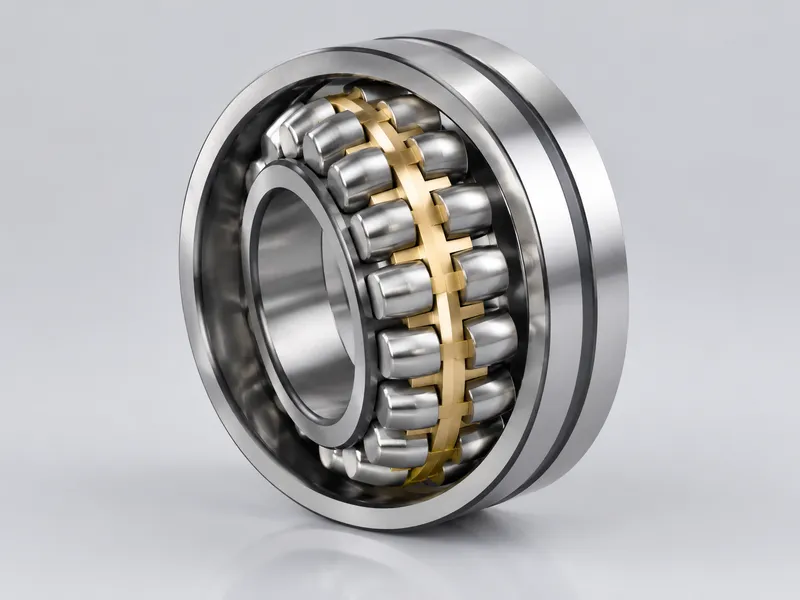
Spherical roller bearing 22220RHR
Spherical roller bearing 22220RHR, spherical roller, 222 series, boundary dimensions 100 mm × 180 mm × 46 mm. Specifications below are model-bound published values; the source class is identified for each parameter. Send your application details through the RFQ for a confirmed quotation.
Last updated: 2026-11
Specifications
| Specification | Value | Parameter class | Source publisher |
|---|---|---|---|
| Bore diameter (d) | 100 mm | Model designation & boundary dimension | jtekt.co.jpManufacturer-published specification |
| Outside diameter (D) | 180 mm | Model designation & boundary dimension | jtekt.co.jpManufacturer-published specification |
| Width (B) | 46 mm | Model designation & boundary dimension | jtekt.co.jpManufacturer-published specification |
| Basic dynamic load rating (Cr) | 470 kN Basic dynamic load rating is a catalog reference used in bearing-life calculations; confirm equivalent load, speed, reliability and required service life for the application. | Manufacturer catalog reference — not a supply guarantee | jtekt.co.jpManufacturer-published specification |
| Basic static load rating (C0r) | 481 kN Basic static load rating is a catalog reference; verify equivalent static load and the required static safety factor for the application. | Manufacturer catalog reference — not a supply guarantee | jtekt.co.jpManufacturer-published specification |
| Minimum chamfer (r min.) | 2.1 mm | Model designation & boundary dimension | jtekt.co.jpManufacturer-published specification |
| Fatigue load limit (Cu) | 47.6 kN Fatigue load limit is a catalog reference, not a standalone allowable-load or service-life guarantee; verify application duty and lubrication conditions. | Manufacturer catalog reference — not a supply guarantee | jtekt.co.jpManufacturer-published specification |
| Limiting speed, grease lubrication | 2600 min-1 Catalog limiting speed for grease lubrication, not an application operating recommendation. Confirm lubricant, temperature, load, sealing and duty conditions before selection. | Manufacturer catalog reference — not a supply guarantee | jtekt.co.jpManufacturer-published specification |
| Limiting speed, oil lubrication | 3400 min-1 Catalog limiting speed for oil lubrication, not an application operating recommendation. Confirm lubricant, temperature, load, sealing and duty conditions before selection. | Manufacturer catalog reference — not a supply guarantee | jtekt.co.jpManufacturer-published specification |
| Shaft abutment diameter (da min.) | 112 mm | Model designation & boundary dimension | jtekt.co.jpManufacturer-published specification |
| Housing abutment diameter (Da max.) | 168 mm | Model designation & boundary dimension | jtekt.co.jpManufacturer-published specification |
| Fillet radius (r max.) | 2 mm | Model designation & boundary dimension | jtekt.co.jpManufacturer-published specification |
| Reference mass | 5.11 kg | Manufacturer catalog reference — not a supply guarantee | jtekt.co.jpManufacturer-published specification |
Parameter classes: Model designation & boundary dimension — what identifies the model (boundary dimensions follow the designation). Manufacturer catalog reference — the named manufacturer's published catalog data for this designation; it is not a guarantee that every unit we supply reaches these exact figures. Industry reference — a third-party or industry-published value; it is not specific to the named manufacturer and is not a supply guarantee. Supplier-confirmed — a value we have confirmed for our own supply. Order-confirmed — the value fixed in a specific order. None of the values on this page are supplier-confirmed yet; supply-specific figures (tolerance class, clearance, seal variant availability, lead time) are confirmed with your quotation.
The source publisher shown on each row identifies where that parameter was published; it is not necessarily the manufacturer supplying your order. Manufacturer-published specifications are linked where the source is approved for public linking. Industry-reference publishers are shown as text.
All values above are model-bound catalog values traceable to a collected source. Fields without collected evidence are not published; ask with your inquiry and we confirm them at quotation.
Manufacturer / model attribution: Koyo / JTEKT — 22220RHR (spherical roller, 222 series). This is the manufacturer named by the model-evidence record; it does not establish that every item supplied for an inquiry comes from this manufacturer. The actual manufacturer, original model and supplying source are confirmed in the quotation.
Source per specification field
| Specification | Source |
|---|---|
| Bore diameter (d) | jtekt.co.jp — manufacturer-published specification |
| Outside diameter (D) | jtekt.co.jp — manufacturer-published specification |
| Width (B) | jtekt.co.jp — manufacturer-published specification |
| Basic dynamic load rating (Cr) | jtekt.co.jp — manufacturer-published specification |
| Basic static load rating (C0r) | jtekt.co.jp — manufacturer-published specification |
| Minimum chamfer (r min.) | jtekt.co.jp — manufacturer-published specification |
| Fatigue load limit (Cu) | jtekt.co.jp — manufacturer-published specification |
| Limiting speed, grease lubrication | jtekt.co.jp — manufacturer-published specification |
| Limiting speed, oil lubrication | jtekt.co.jp — manufacturer-published specification |
| Shaft abutment diameter (da min.) | jtekt.co.jp — manufacturer-published specification |
| Housing abutment diameter (Da max.) | jtekt.co.jp — manufacturer-published specification |
| Fillet radius (r max.) | jtekt.co.jp — manufacturer-published specification |
| Reference mass | jtekt.co.jp — manufacturer-published specification |
Koyo / JTEKT 22220RHR — radial internal clearance by class
JTEKT identifies 22220RHR as the cylindrical-bore spherical roller bearing with a 100 mm bore. Its large-size bearing catalogue gives pre-mount radial-clearance limits for cylindrical-bore spherical roller bearings by bore range. The 100 mm bore falls in the “over 80 up to 100 mm” row of Table 4-6.
| Clearance class | JTEKT Table 4-6 range | Buyer selection meaning |
|---|---|---|
| C2 | 35–60 μm | Smaller-than-normal radial clearance class |
| CN | 60–100 μm | Normal radial clearance class |
| C3 | 100–135 μm | Greater-than-normal radial clearance class |
| C4 | 135–180 μm | Higher radial clearance class |
| C5 | 180–225 μm | Highest listed clearance class in this table |
These are JTEKT's catalogue ranges before mounting, not installed or operating residual clearance. Press fits can reduce radial clearance, and temperature differences between inner and outer rings can reduce it further. JTEKT's clearance method starts from the original clearance and accounts for fit-related and temperature-related reductions; the actual result therefore depends on shaft and housing fits, ring temperatures and operating conditions.
Scope: cylindrical-bore Koyo / JTEKT 22220RHR only. Do not transfer this table to the tapered-bore 22220RHRK, another maker's 22220, or an order with a different clearance class. The base designation 22220RHR does not itself identify which clearance class will be supplied; confirm the requested class, actual manufacturer and batch documentation in the quotation.
Sources: JTEKT Large Size Ball & Roller Bearings, Table 4-6, printed page 54 (cylindrical-bore spherical-roller radial clearance; 80–100 mm bore row); specification table, printed page 374 (22220RHR cylindrical-bore designation and 100 mm bore); and the official Koyo / JTEKT 22220RHR product page. The catalogue's section 4, printed page 48, defines operating clearance as the original clearance adjusted for fit and temperature effects. Open the JTEKT large-size bearing catalogue.
22220RHRK C3 — tapered-bore clearance is not the cylindrical-bore 22220 range
Buyer decision: do not carry the existing cylindrical-bore 22220RHR C3 range (100–135 μm) over to a tapered-bore 22220RHRK. JTEKT publishes a separate tapered-bore table: for the 100 mm bore, C3 is 110–140 μm before mounting. The bore form changes the applicable initial-clearance band even though the nominal bore, outside diameter and width remain 100 × 180 × 46 mm.
| Manufacturer / exact evidence | Bore form and identity | C3 initial radial clearance | Interpretation |
|---|---|---|---|
| Koyo / JTEKT — Table 10-9 (1) | Cylindrical bore; 22220RHR; d = 100 mm | 100–135 μm | Valid for the cylindrical-bore table only; not the RHRK value. |
| Koyo / JTEKT — Table 10-9 (2) | Tapered bore; 22220RHRK; d = 100 mm | 110–140 μm | Use the tapered-bore row for the RHRK execution. |
| Schaeffler / FAG — Table 7.12 | Tapered bore; 80 < d ≤ 100 mm row | 0.11–0.14 mm (110–140 μm) | Independent manufacturer table agrees with the JTEKT tapered-bore band. |
| SKF — 22220 EK/C3 product data sheet | Tapered bore 1:12; 100 × 180 × 46 mm | 0.0043–0.0055 in (109.2–139.7 μm, converted) | Close to 110–140 μm; the inch values are rounded source values, not a meaningful 1 μm conflict. |
| NSK — 22220EAKE4C3 product record | Design K, tapered bore; 100 × 180 × 46 mm; C3 | Numeric min/max not published on the accessible product record | Confirms a real tapered-bore C3 execution, but does not independently establish its clearance limits. |
What the cross-check establishes: JTEKT's own table is decisive about the bore-form split: at the same 100 mm nominal bore, the cylindrical-bore C3 band is 100–135 μm, while the tapered-bore C3 band is 110–140 μm. Schaeffler's tapered-bore table independently gives 110–140 μm. SKF's exact 22220 EK/C3 sheet gives 0.0043–0.0055 in; converting the published endpoints gives approximately 109.2–139.7 μm, consistent with the same nominal band at the precision of the inch figures. NSK confirms the 22220EAKE4C3 is a 100 mm, 1:12 tapered-bore C3 product, but its accessible record does not expose numeric min/max clearance, so no NSK numerical range is inferred.
Procurement consequence: a quotation that says only “22220 C3” leaves out a decision-relevant condition. RFQ and receiving records should identify cylindrical versus tapered bore, taper ratio, full manufacturer designation and clearance group. If replacing 22220RHR with 22220RHRK, do not treat the 100–135 μm cylindrical-bore range as the acceptance band for the tapered version. Ask the maker to confirm the exact pre-mount clearance range and retain the batch measurement or inspection statement.
This initial-clearance comparison is separate from mounting clearance reduction and post-mount residual clearance. It does not authorize a cross-brand substitute, determine the required operating clearance, or establish that two bearings with overlapping C3 ranges have equivalent internal geometry, load capacity or service life. The mounting instructions already compared for 22220RHRK remain manufacturer- specific and must not be replaced by this pre-mount table.
Scope and limits: nominal 100 mm bore, 22220 spherical roller bearing family, C3 initial radial clearance before mounting. The JTEKT comparison uses its 80 < d ≤ 100 mm rows and its separately labelled cylindrical- and tapered-bore tables. Schaeffler's value is the tapered-bore 80–100 mm row. SKF's converted range is arithmetic conversion from published inch values (1 in = 25.4 mm); it is not an additional SKF metric tolerance. The NSK record verifies designation, bore form and C3 but omits numeric clearance limits. No batch-specific clearance measurements, common measurement trial, operating clearance calculation or substitute approval is available here.
Sources: Koyo / JTEKT, Basic Bearing Knowledge, “Operating clearance”, Table 10-9 (1) cylindrical-bore and (2) tapered-bore spherical roller bearings, 80 < d ≤ 100 mm row, C3 columns: JTEKT Table 10-9; Koyo / JTEKT, Large Size Rolling Bearings, CAT. NO. BS002JA-1DS, printed p.374, 22220RHR / 22220RHRK 100 × 180 × 46 mm product rows: JTEKT large-size catalogue. Schaeffler, Mounting and Dismounting of Rolling Bearings, WL 80 100/3, printed p.104, Table 7.12 “Radial Clearance of FAG Spherical Roller Bearings with Tapered Bore”, C3 row over 80 to 100 mm: Schaeffler WL 80 100/3. SKF, 22220 EK/C3 — Spherical roller bearings, product data sheet, generated 24 October 2025, printed p.5/8, “Radial internal clearance”: SKF 22220 EK/C3 data sheet; SKF official product record confirms 100 × 180 × 46 mm, tapered bore 1:12 and C3: SKF 22220 EK/C3. NSK official 22220EAKE4C3 product record, Boundary Dimensions and Properties (100 × 180 × 46 mm, Design K tapered bore, radial internal clearance C3; numeric limits not exposed): NSK 22220EAKE4C3.
Koyo / JTEKT 22220RHR — combined radial and axial load calculation
JTEKT publishes model-specific factors for the cylindrical-bore 22220RHR: e = 0.25, Y1 = 2.74, Y2 = 4.08 and Y0 = 2.68. These factors let a buyer screen a combined radial-and-axial load case using the manufacturer's equivalent-radial-load method rather than treating the radial rating Cr as the complete applied load.
| Factor | 22220RHR value | Use in the JTEKT method |
|---|---|---|
| e | 0.25 | Boundary for selecting the dynamic-load equation from Fa / Fr |
| Y1 | 2.74 | Dynamic axial-load factor when Fa / Fr ≤ 0.25 |
| Y2 | 4.08 | Dynamic axial-load factor when Fa / Fr > 0.25 |
| Y0 | 2.68 | Static equivalent-radial-load axial factor |
| Load case | JTEKT calculation for 22220RHR |
|---|---|
| Dynamic, Fa / Fr ≤ 0.25 | Pr = Fr + 2.74 Fa |
| Dynamic, Fa / Fr > 0.25 | Pr = 0.67 Fr + 4.08 Fa |
| Static | P0r = Fr + 2.68 Fa |
Use Fr and Fa in the same force unit (for example, both kN); compare the ratio Fa / Fr with 0.25 before choosing the dynamic branch. At exactly 0.25, the first branch applies. The factors are dimensionless coefficients, not load ratings and not allowable axial-force values.
Scope: the JTEKT / Koyo cylindrical-bore 22220RHR record only. Do not transfer these coefficients to 22220RHRK, another manufacturer's 22220, or another bearing size without its own manufacturer row. This calculation is a load-conversion step, not a completed bearing-life or static-safety check; actual service life and suitability still depend on the load spectrum, speed, lubrication, clearance, mounting and operating conditions. Confirm the exact manufacturer, designation and ordered clearance in the quotation.
Sources: JTEKT official 22220RHR product detail (e, Y1, Y2 and Y0); JTEKT Large Size Ball & Roller Bearings, CAT. NO. BS008EN-1DS, spherical-roller calculation method, printed page 373 (dynamic and static equivalent radial load equations), and spherical-roller specification table, printed page 374 (22220RHR row). Open the JTEKT large-size bearing catalogue.
22220 — same radial/axial load can cross different manufacturers' calculation branches
Buyer decision: do not transfer the equivalent-load factors from one 22220 brand to another. Three manufacturers publish the same nominal 100 × 180 × 46 mm envelope, but their model-specific threshold e and axial factors differ. At a load ratio close to the threshold, the same machine load can select a different calculation branch before the equivalent dynamic load is compared with that manufacturer's own Cr.
| Original manufacturer / exact designation | Cr / C0r | e | Lower-branch factor | Upper-branch factor | Static axial factor Y0 |
|---|---|---|---|---|---|
| Koyo / JTEKT 22220RHR | 470 / 481 kN | 0.25 | Y1 = 2.74 | Y2 = 4.08 | 2.68 |
| NTN-SNR 22220EA | 472 / 495 kN | 0.24 | Y1 = 2.84 | Y2 = 4.23 | 2.78 |
| NSK 22220EAE4 | 455 / 490 kN | 0.24 | Y3 = 2.90 | Y2 = 4.30 | 2.80 |
The labels themselves are not a universal lookup key. JTEKT and NTN-SNR use Y1 for the Fa / Fr ≤ e branch; NSK's spherical-roller method calls that lower-branch factor Y3. All three use Y2 for the Fa / Fr > e branch, but the numerical Y2 values still differ. Use the complete formula and factors from the same maker and exact designation.
Worked comparison — a threshold-sensitive load case
Illustrative inputs only: radial load Fr = 100 kN and simultaneous axial load Fa = 24.5 kN, so Fa / Fr = 0.245. The forces use the same unit; the load case is not a measured machine condition.
| Maker | Branch selected from its own e | Manufacturer formula | Calculated dynamic equivalent radial load P |
|---|---|---|---|
| JTEKT 22220RHR | 0.245 ≤ 0.25: lower branch | P = Fr + 2.74 Fa | 167.13 kN |
| NTN-SNR 22220EA | 0.245 > 0.24: upper branch | P = 0.67 Fr + 4.23 Fa | 170.64 kN |
| NSK 22220EAE4 | 0.245 > 0.24: upper branch | P = 0.67 Fr + 4.30 Fa | 172.35 kN |
In this constructed example, NTN-SNR's calculated P is about 2.1% above the JTEKT result, and NSK's is about 3.1% above it. This difference comes from both the e threshold selecting a different branch and the model-specific factors within the selected branch. It is not a measured difference in bearing performance, a life ratio, or proof that one brand is inferior.
The static factor Y0 is a separate input for static-equivalent-load evaluation; do not reuse the dynamic P result as a static check. The three published Cr values also differ (455–472 kN), so comparing P alone is not a life comparison: each candidate must be evaluated with its own Cr, its own manufacturer method, the actual load spectrum and the applicable life/safety criteria.
What this changes in a replacement RFQ
- Give the supplier the simultaneous radial and axial loads at the individual bearing, not just the external machine load. Include load direction, arrangement, duty cycle, peak/shock events and how the shaft's bearing reactions were obtained.
- Require the calculation to identify the exact manufacturer and complete designation, its e threshold, the selected Fa / Fr branch, X and Y factors, the resulting P, that model's Cr, and the resulting life calculation.
- Request a separate static check using that manufacturer's static-equivalent load method, Y0 and C0r, plus the required static safety factor for the application's shock/vibration and precision conditions.
- Confirm the exact clearance, bore, cage, lubrication groove/hole execution and mounting arrangement. Equal boundary dimensions do not prove equal internal geometry, load distribution, cage execution or drop-in suitability.
Scope and limits: this is a method comparison of three exact cylindrical-bore 22220 product records with nominal dimensions 100 × 180 × 46 mm: Koyo / JTEKT 22220RHR, NTN-SNR 22220EA and NSK 22220EAE4. The records are not identical executions: the SNR record lists CN clearance and no lubrication holes/groove; the NSK 22220EAE4 record lists a pressed-steel cage, CN clearance and E4 oil groove/holes. The numerical example is an explicitly assumed calculation, not an observed load or test result. No life or substitution approval is made; actual bearing reaction loads, load history, operating clearance, fits, lubrication, speed, temperature and required life are not supplied. Do not transfer these factors to tapered-bore suffixes, other 22220 variants or other manufacturers.
Sources: Koyo / JTEKT, official 22220RHR product record (Cr, C0r, e, Y1, Y2 and Y0; accessed 2026-11-25): 22220RHR product detail; JTEKT, Large Size Ball & Roller Bearings, CAT. NO. BS008EN-1DS, spherical-roller dynamic/static equivalent-load formulas, printed p.373, and 22220RHR specification row, printed p.374: official catalogue PDF. NTN-SNR, official 22220EA product record (100 × 180 × 46 mm, Cr 472 kN, C0 495 kN, e 0.24, Y1 2.84, Y2 4.23, Y0 2.78; accessed 2026-11-25): 22220EA - SNR; NTN, Ball and Roller Bearings, CAT. No. 2203/E, §4.4.1 “Dynamic equivalent load”, printed p. A-41, Pr = XFr + YFa: official NTN catalogue PDF. NSK, official 22220EAE4 product record (Cr 455 kN, C0r 490 kN, e 0.24, Y2 4.3, Y3 2.9, Y0 2.8; accessed 2026-11-25): 22220EAE4 product detail; NSK, Rolling Bearings for Industrial Machinery, E1103C Part A, §4.6 Example 4, printed pp. A-54–A-55, lower branch P = Fr + Y3Fa and upper branch P = 0.67Fr + Y2Fa: official NSK Part A PDF.
22220 spherical roller bearings — catalogue speed fields are not interchangeable operating limits
Buyer decision: do not choose a 22220 replacement by sorting the largest RPM shown in a catalogue. The same 100 × 180 × 46 mm cylindrical-bore spherical roller bearing is published with different kinds of speed values: grease/oil-bath limiting speed, ISO thermal reference speed, and a mechanical ceiling that assumes controlled forced-circulation oil. First match the speed definition to the proposed lubrication and cooling system; then correct or validate it against the actual load and operating conditions.
| Original manufacturer / exact model | Grease field | Oil-bath / thermal field | Mechanical field | What the number means |
|---|---|---|---|---|
| Koyo / JTEKT 22220RHR 100 × 180 × 46 mm | 2,600 r/min | 3,400 r/min Oil-bath limiting speed | Not separately published on this product record | JTEKT labels both published values as limiting speeds; the oil-lubrication value is specified in its catalogue as oil bath. |
| NSK 22220EAE4 100 × 180 × 46 mm | 2,800 r/min | 3,600 r/min Thermal speed rating / oil-bath value | 4,300 r/min Forced-circulation oil | NSK separates ISO 15312 thermal rating from the mechanical limit achievable under properly designed and controlled forced-circulation oil lubrication. |
| SKF 22220 E 100 × 180 × 46 mm | No separate grease speed in this product table | 3,400 r/min Reference speed | 4,500 r/min Limiting speed | SKF defines reference speed as thermal and limiting speed as mechanical; the two are different checks, not two interchangeable maximum-speed options. |
The apparent “same RPM” trap: JTEKT's 3,400 r/min is an oil-bath limiting speed; SKF's 3,400 r/min is a thermal reference speed based on standardized heat-balance conditions. Their numerical equality does not make them the same rating. Likewise, SKF's 4,500 r/min mechanical limit and NSK's 4,300 r/min mechanical limit are not a direct ranking: NSK explicitly ties its figure to controlled forced-circulation oil, while SKF's mechanical limit is a component-strength/kinematic ceiling that still requires proper lubrication and application-specific thermal assessment.
Grease values are closer in category, but still not a performance ranking. JTEKT's 2,600 and NSK's 2,800 r/min are both published grease limiting speeds. However, JTEKT states its normal-load basis as approximately C/P ≥ 16 and Fa/Fr ≤ 0.25; NSK states C/P ≥ 12 for spherical roller bearings and Fa/Fr ≤ approximately 0.2. The load envelopes are not identical. The 200 r/min difference therefore does not establish that NSK is a drop-in higher-speed substitute.
Manufacturer-specific corrections that change the buyer's next step
- JTEKT: its catalogue says the listed limiting speeds apply to standard designs under approximately C/P ≥ 16 and Fa/Fr ≤ 0.25. If C/P < 16 or Fa/Fr > 0.25, use its own correction equation na = f1 × f2 × n, with f1 from load magnitude and f2 from combined load. JTEKT also advises consultation when actual speed exceeds 80% of its catalogue value. The graph factors must be read from the applicable JTEKT chart; they are not transferable to NSK or SKF.
- NSK: its catalogue requires correction of grease/oil limiting speeds when P exceeds approximately 7% of C or Fa exceeds 20% of Fr, using NSK's own load-ratio and combined-load charts. It separately defines thermal speed rating under ISO 15312 and mechanical speed under properly designed and controlled forced-circulation oil. Do not apply a grease/oil correction chart as if it redefined those separate thermal and mechanical fields.
- SKF: its reference speed is based on thermal equilibrium under ISO 15312 reference conditions, including light load P = 0.05 C0 for radial bearings, mineral oil ISO VG 32, a nominal 50 °C temperature rise above 20 °C ambient, clean conditions, sufficient operating clearance, horizontal shaft, rotating inner ring and stationary outer ring. SKF recommends an adjusted reference-speed calculation using actual load and lubricant viscosity; a detailed thermal analysis is needed when actual heat dissipation must be included. The mechanical limiting speed is a separate maximum for the standard execution and should not be exceeded without adapting the bearing design and application.
Practical selection path: if the machine uses grease, start with the manufacturer's grease limiting speed and check the manufacturer's load correction rules. If it uses an oil bath, distinguish an oil-bath limiting speed from an ISO thermal reference speed. If it uses forced-circulation oil, confirm that the exact bearing's mechanical-speed entry applies to that lubrication architecture and that oil flow, viscosity, cooling and temperature control are actually designed and monitored. If the required speed approaches the published boundary, obtain the original manufacturer's application assessment rather than extrapolating a percentage from another brand.
For RFQ and technical clarification, state the continuous and peak speed, duty cycle, radial and axial loads (or C/P and Fa/Fr), lubrication method, lubricant grade and viscosity at operating temperature, grease fill or oil flow, shaft/housing fit, initial and operating clearance target, ambient and bearing temperatures, cooling/heat-dissipation arrangement, mounting orientation, and exact manufacturer/model/cage execution. Ask the supplier to identify the speed field being quoted, its reference conditions, any correction factors used, and the supporting calculation or manufacturer approval.
Scope and limits: this comparison is limited to three published 22220 spherical roller bearing records with nominal dimensions 100 × 180 × 46 mm. The listed values are manufacturer data, not measurements of delivered stock and not a guarantee for a specific machine. JTEKT and NSK product records identify cylindrical-bore models; SKF 22220 E is the cylindrical-bore designation in its product table. Internal designs, cages, clearances, lubricant formulations, fit, cooling, duty cycle and load spectrum are not demonstrated to be identical. No corrected operating RPM is calculated because no buyer-specific load, viscosity, temperature or heat-dissipation inputs were supplied. The published charts and application limits remain manufacturer-specific.
Sources: Koyo / JTEKT, official 22220RHR product record, Specification data, dimensions and “Limiting speeds (Grease lub.) / (Oil lub.)” fields (100 × 180 × 46 mm; 2,600 / 3,400 min⁻¹; accessed 2026-11-25): JTEKT 22220RHR product detail; Koyo / JTEKT, Ball & Roller Bearings, CAT. NO. BS004EN-2DS, §8 “Limiting speed”, printed pp. A84–A85 (normal-load conditions, equation na = f1 × f2 × n, correction charts and 80% consultation note): JTEKT CAT. NO. BS004EN-2DS. NSK, official 22220EAE4 product record, Boundary Dimensions / Speeds / Properties (100 × 180 × 46 mm; 2,800 grease; 3,600 thermal/oil-bath; 4,300 mechanical forced-circulation oil; accessed 2026-11-25): NSK 22220EAE4 product detail; NSK, Rolling Bearings for Industrial Machinery, CAT. No. E1103, §5 “Speeds”, Table 5.1, printed p. A97, §5.1 printed p. A98 and §5.1.1 printed p. A99 (speed definitions, normal-load assumptions and correction triggers): NSK CAT. No. E1103. SKF, Spherical roller bearings, PUB BU/P2 18406 EN, April 2019, printed p. 26, product table row 100 × 180 × 46 mm, 22220 E / 22220 EK (reference speed 3,400; limiting speed 4,500 r/min): SKF spherical roller bearings catalogue; SKF, Rolling bearings, PUB BU/P1 17000/1 EN, October 2018, §B.5 “Operating temperature and speed”, printed p. 135 (reference-speed ISO 15312 conditions, adjusted reference speed and mechanical speed limit): SKF PUB BU/P1 17000/1 EN.
22220 spherical roller bearings — minimum load depends on the maker's rule and lubrication
Buyer conclusion: do not treat a minimum-load figure as a fixed percentage that can be transferred between 22220 brands. SKF's spherical-roller product section gives a base minimum equivalent load of 1% of C₀, but explicitly reduces it for oil-lubricated bearings according to actual speed divided by reference speed. Schaeffler's current general guide gives a recommended spherical-roller minimum load of P > C₀/100 without that oil-speed adjustment. The two methods are not interchangeable, and neither is a substitute for an application calculation using the exact bearing and duty cycle.
| Manufacturer / source | Published minimum-load rule | Product-specific inputs / meaning | Buyer boundary |
|---|---|---|---|
| SKF — spherical roller bearings, Section 9 “Loads” | Base: Pm = 0.01 C₀. For oil: n/nr ≤ 0.3, Pm = 0.003 C₀; for 0.3 < n/nr ≤ 2, Pm = 0.003 C₀ [1 + 2√(n/nr − 0.3)]. | SKF 22220 EK/C3 product data: C₀ = 490 kN; reference speed nr = 3,400 r/min; 100 × 180 × 46 mm; tapered bore 1:12. | Use the oil adjustment only for the SKF rule and oil-lubricated application. Do not apply it to grease or another manufacturer's bearing. |
| Schaeffler — HR 1, §1.8, Table 3 | For spherical roller bearings, recommended minimum load P > C₀/100. | The table is a general recommended radial/axial minimum-load guide; it does not publish an oil-specific n/nr correction in this table. | Keep the Schaeffler guide with the Schaeffler product and its own load calculation; do not replace it with SKF's oil adjustment. |
What the published values mean for a 22220 size envelope
For SKF 22220 EK/C3, the base value is 0.01 × 490 = 4.90 kN. At 1,000 r/min with oil lubrication, n/nr = 1,000/3,400 = 0.294, which is within the ≤ 0.3 branch; the SKF product-section equation gives Pm = 0.003 × 490 = 1.47 kN. This is a calculated threshold from SKF's published rule, not a measured bearing result. It is not valid for grease lubrication or a non-SKF bearing.
For Schaeffler 22220-E1-XL, the Schaeffler-generated product sheet dated 31 May 2021 lists C₀r = 475 kN. Applying Schaeffler HR 1's own guide gives P > 475/100 = 4.75 kN. The 4.75 kN value is a calculated guide threshold, not a batch test or an approval for every 22220 suffix. The SKF and Schaeffler examples share the 100 × 180 × 46 mm envelope but are different manufacturer-specific executions; this comparison does not establish interchangeability.
SKF's general selection chapter also gives 0.02 C as a broad rule for roller bearings, then says more accurate minimum-load requirements are in the product sections. For a spherical roller bearing, use the more specific Section 9 rule rather than mechanically applying the generic 0.02 C rule. This distinction matters: for SKF 22220 EK/C3, 0.02 × 433 kN would be 8.66 kN, while the product-specific base rule is 4.90 kN before any applicable oil adjustment.
Minimum load is not static capacity or the equivalent-load branch
Minimum load is intended to avoid unstable rolling, skidding and smearing at light load, especially during rapid acceleration, start/stop operation or high speed. It is a separate check from C₀-based static safety and from the equivalent-load formula used for rating life. For SKF 22220 EK/C3, calculate the dynamic equivalent load with that exact product's factors: when Fa/Fr ≤ e = 0.24, P = Fr + 2.8 Fa; when Fa/Fr > 0.24, P = 0.67 Fr + 4.2 Fa. Do not compare radial force Fr alone with Pm, and do not borrow another manufacturer's e/Y factors.
The JTEKT 22220RHR product record gives C₀r = 481 kN but does not state a radial minimum-load formula in that product record. That omission is not a zero minimum-load requirement and does not authorize importing the SKF or Schaeffler formula. Ask JTEKT for the current model-specific minimum-load instruction when the operating load is light.
RFQ and application review
- State the exact manufacturer and full designation, including bore form, clearance, cage and lubrication features; do not specify only “22220 equivalent”.
- Provide the minimum, normal and peak Fr/Fa values, speed range, acceleration/start-stop profile, duty cycle and whether the bearing is oil- or grease-lubricated.
- For oil, state oil type and viscosity at the lowest start-up and normal operating temperatures, plus the supply method. SKF's speed adjustment does not remove the need to check viscosity and lubrication condition.
- Ask the manufacturer to identify the applicable minimum-load equation, the product-table C₀ and reference-speed values, the equivalent-load equation and any additional low-temperature/high-viscosity allowance.
- If the minimum load cannot be met, obtain the maker's application review before changing bearing size, adding preload or changing lubrication; these changes can affect heat, life and the rest of the bearing arrangement.
Scope and limits: the SKF numerical example is for SKF 22220 EK/C3 and its published product data; the Schaeffler example is for Schaeffler 22220-E1-XL using its 2021 product sheet and the 2025 HR 1 guide. The two products share nominal boundary dimensions but are not identical executions. The 1.47 kN and 4.75 kN values are calculated guide thresholds, not measured loads, test results, permissible continuous loads or substitute approvals. Schaeffler's P > C₀/100 is a general recommendation; SKF's oil correction is specific to its own spherical-roller guidance. No actual machine load, temperature, oil viscosity, acceleration or duty-cycle data were supplied.
Sources: SKF, Rolling bearings, PUB BU/P1 17000/1 EN, October 2018, §B.3 “Bearing size”, printed p.106 (general 0.02 C roller-bearing guideline and instruction to use product-section requirements); §9 “Spherical roller bearings” / “Loads”, printed p.783 (Pm = 0.01 C₀; oil-lubricated n/nr corrections; symbol definitions); official SKF 22220 EK/C3 product record, “Performance” and “Calculation data” (100 × 180 × 46 mm, C₀ = 490 kN, nr = 3,400 r/min, e = 0.24, Y₁ = 2.8, Y₂ = 4.2): SKF PUB BU/P1 17000/1 EN; SKF 22220 EK/C3 product record. Schaeffler, Rolling Bearings — Technical principles and product data, HR 1, February 2025, §1.8 “Requisite minimum load”, printed pp.43–44, Table 3 (spherical roller bearings P > C₀/100 and slippage rationale); Schaeffler-generated technical data sheet for 22220-E1-XL, Schaeffler ID 0167042150000, dated 31 May 2021 (100 × 180 × 46 mm, C₀r = 475,000 N): Schaeffler HR 1; Schaeffler 22220-E1-XL technical data sheet (hosted by MISUMI). Koyo / JTEKT, official 22220RHR product record, “Specification data” (C₀r = 481 kN; accessed 2026-11-25): JTEKT 22220RHR.
Applications and selection notes
Spherical roller bearings carry very heavy radial load together with a limited axial component in both directions, and tolerate several degrees of shaft misalignment and deflection through the sphered outer raceway. Typical service: vibrating screens, crushers, fans, paper-machine rolls, marine propulsion and heavy gearboxes — positions with heavy load, shaft bending or mounting inaccuracies.
The series on this page are the standard 213xx (tapered bore, high axial capacity) and 222xx/230xx/231xx/232xx/240xx/241xx (bore and capacity spread) executions; the suffix letters denote the seal, lubrication or bore execution of the same boundary dimensions, and tapered-bore executions mount with an adapter sleeve on plain shafts.
How to read the specification table
Read the table against three limits: Cr for life under rotating radial load, C0r for static and slow-oscillation limits, and the limiting speed for the manufacturer’s execution. The misalignment the type absorbs inside the raceway does not remove the need for adequate fit and clearance — heavy fits and thermal growth on this type make the clearance class a real selection decision, not a default.
Where an application sits between two adjacent sizes, size from life at the actual load spectrum rather than from the larger rating alone; a bearing running cool well inside its rating survives the conditions that kill an overloaded one. Confirm execution, clearance class and any sleeve requirement at quotation with your application conditions.
Related engineering knowledge
Background reading that supports the selection decision on this page — failure modes, seal trade-offs and lubrication behavior. These articles explain the engineering; the specifications and supply commitments live on this page and in the quotation.
22220RHR — buying questions
What does the designation 22220RHR mean?
22220RHR is a standard boundary-dimension designation: the dimension series fixes the outside diameter and width proportions, and the bore code fixes the bore diameter — 100 mm for this bearing. Two bearings carrying the same designation from conforming manufacturers are dimensionally interchangeable; execution (seals, clearance class, cage) is the part that can differ, so state the execution you need when you request a quotation.
Are the catalog load rating and speed of 22220RHR enough for my application?
The table lists Basic dynamic load rating (Cr) = 470 kN and grease-lubricated limit 2600 min-1 and oil-lubricated limit 3400 min-1. The load rating is the starting point of a life calculation, and each speed is a catalog limit for the manufacturer’s execution, not an application operating recommendation. Seals, fits, temperature and lubrication all affect the usable speed in a real assembly. Both lubricant-specific limits are listed; compare each only under its stated lubricant and manufacturer execution. Send the application conditions with your inquiry and we confirm suitability before quoting; do not size from the catalog speed alone.
What information do you need to quote 22220RHR?
Four things, in one message: the designation (and execution — seals, clearance class, precision class, if not standard), the quantity, the destination country, and any documents you require. Application conditions such as speed, load direction and temperature are welcome and let us verify the execution instead of assuming it. Quotation, lead time and the exact document set come back in writing.
Ordering & documentation
Documents
The documents available for 22220RHR depend on the actual supplying source and order. State any required export, origin, material or inspection documents in your inquiry; the available document set is confirmed in writing with the quotation.
Quotation
To quote 22220RHR, send: the designation and required execution, quantity, destination country, and any required documents. Adding the application conditions (speed, load direction, temperature, fit) lets us confirm the execution and clearance class instead of quoting blind.
Sample & supply
If you need an evaluation sample of 22220RHR, state the required quantity and timing. Sample feasibility, source, price and dispatch timing are confirmed in the quotation; sample availability is not assumed from the standard designation alone.
Lead time for this designation and quantity is confirmed in the quotation against the actual supplying source and availability. Any applicable certificates and quality documents are confirmed for the actual supplying source and product; available documents are stated in the quotation.
Storage & shipping
Store bearings flat in their original, unopened packaging in a dry indoor area away from temperature swings. Confirm the actual preservation method, packaging, marking and transport protection for the supplying source and order before shipment. Do not rotate a bearing through its rolling elements during handling or mounting.